


Six different kinds of software compete for the phrase "customer retention software," and they are built around four incompatible ideas of what a customer even is. Picking the wrong category costs more than picking the wrong vendor inside the right one, because the mismatch only becomes obvious after you have migrated your data. This guide sorts the categories first, publishes the prices that vendors actually disclose, explains what the research supports, and names the one situation this entire market handles badly.
Turn Walk-Ins Into Contacts You Can Reach
VISU captures an identity from a physical visit, so the tools you already run have someone to work with.
The 5 Percent Number, Read Properly
Almost every page about retention opens with the same claim: hold on to 5 percent more customers and profits jump. The number is real. The way it gets used is not.
Where it comes from: Frederick Reichheld and W. Earl Sasser published "Zero Defections: Quality Comes to Services" in the Harvard Business Review in September 1990. Bain's summary of that article states that companies can raise profits by almost 100 percent by retaining just 5 percent more of their customers.
What gets left out: that headline sits on top of three specific case studies, in three service industries, with three very different results.
- 85 percent profit increase in one bank's branch system
- 50 percent in an insurance brokerage
- 30 percent in an auto service chain
The spread is the useful part. Same intervention, same 5 percent, and the payoff varied by nearly three times depending on the industry.
What that means for a buying decision: retention economics depend on three things. How long a customer normally stays, how much they spend per visit, and what it costs to serve them.
A business with long relationships and high margins gets the bank's result. A business with thin margins and casual customers gets closer to the auto chain's.
So the honest version is not a promise of a specific percentage. It is that retention pays off unevenly, and the only way to know your number is to measure your own repeat rate before buying anything.
What "Customer Retention Software" Actually Means
Nobody builds a product called customer retention software. At least six distinct software categories market themselves with the phrase, and they solve genuinely different problems.
The distinction that matters is the retention object: the thing the software watches to decide whether you still have a customer.
- Loyalty and rewards. Points, tiers, referrals. Object: the order or the visit. Buyer: marketing or retail operations.
- Marketing automation. Email and SMS lifecycle campaigns, winback flows. Object: the contact record. Buyer: ecommerce marketing.
- Customer data platforms. Unify identity across sources and feed the other tools. Object: the unified profile. Buyer: data or growth teams.
- Subscription and churn management. Dunning, failed payment recovery, cancellation flows. Object: the subscription. Buyer: subscription operations.
- Customer success platforms. Health scores, renewal risk, account reviews. Object: the account. Buyer: B2B customer success teams.
- Reviews and feedback. NPS, review collection, sentiment tracking. Object: the review. Buyer: CX and brand.
- POS native loyalty. Punch cards and visit rewards at the register. Object: the visit. Buyer: the store or restaurant owner.
Here is the structural fact worth knowing before you shop. The first six categories assume a digital identity that already exists. An account, an email address, a prior order. Something that already links this person to a record.

The seventh is the only one designed for someone who simply walks in. And it is tied to whoever supplies your payment terminal.
First Question: Is Your Churn Voluntary or Involuntary?
This question eliminates entire categories in one step, and most buyers skip it.
Voluntary churn is a customer choosing to leave. Involuntary churn is a customer losing access because a payment failed. A card expired, a bank flagged the renewal, a limit was hit. The customer never decided anything.
Recurly publishes median annual churn rates from its own subscription network, updated with July 2026 data:
- All industries: 3.60 percent total, 2.34 percent voluntary, 1.25 percent involuntary
- SaaS: 3.22 percent total, 1.06 percent involuntary
- Ecommerce: 4.25 percent total, 1.38 percent involuntary
- Education: 4.99 percent total, 1.69 percent involuntary
Roughly a third of all churn is involuntary. That is a billing problem wearing a loyalty problem's clothes.
If you run subscriptions and have never measured the split, payment recovery software may beat any rewards program you could buy. It is cheaper, it is faster to deploy, and it recovers customers who were never trying to leave.
Pro tip: Pull last quarter's cancellations and sort them by reason code before you take a single sales call. If failed payments are a third of the list, you are shopping in the wrong category.
One caveat on the numbers above: they come from Recurly's own customer network, not from the economy at large. Treat them as a reference point, not a law.
You May Have the Tools and Be Missing the Input
Loyalty and automation platforms work once a customer is known. Capturing that identity in a physical space is the step before them.
What It Costs, Where Cost Is Public
Public pricing in this category follows a pattern worth noticing. Every vendor that publishes a price bills on ecommerce order count or on seats. Every vendor serving physical retail or enterprise hides pricing behind a sales call.
What vendors publish
Loyalty for ecommerce. Smile.io runs free up to 200 orders per month, then 15 dollars monthly for 500 orders, 79 for 1,000, and 199 for 2,500 with overage charges above that. LoyaltyLion publishes Classic at 199 dollars monthly including 500 orders, with higher tiers quoted.
Marketing automation. Klaviyo has a free tier and paid plans from 45 dollars monthly, scaling by number of profiles stored.
Reviews. Trustpilot publishes Starter from 99 dollars monthly, Plus from 319, and Premium from 799, each billed annually and priced per domain.
POS native loyalty. Square prices its Plus plan at 49 dollars monthly per location and Premium at 149 per location, with loyalty as an add-on and SMS metered on top.
No public pricing at all: Braze, Antavo, Talon.One, Gainsight, Yotpo. These quote on data volume or seat count after a demo.
Why the billing model matters more than the price
The billing model matters more than the sticker price. Order-count pricing punishes businesses with many small transactions. A cafe doing 3,000 low-value sales a month lands in the same tier as a brand doing 3,000 orders at ten times the value.
Profile-count pricing has the same shape of problem. You pay for the size of your list, including the dormant half of it, not for the results the software produces.
Does Any of It Work? What Forty Years of Research Says
The strongest available evidence is a meta-analysis published in the Journal of the Academy of Marketing Science in 2022. It covers 429 effect sizes from studies published between 1990 and 2020.
The finding: strong evidence that loyalty programs do increase customer loyalty. With an important qualification.
They mainly change behavior, not feeling. Loyalty programs reliably lift behavioral loyalty, meaning repeat purchases and visit frequency. Shifting attitudinal loyalty, meaning how customers actually feel about the brand, is considerably harder.
Effectiveness also varies systematically with program design, specifically the structure, the reward content and how rewards are delivered, and with the industry it runs in.
Translated into a buying decision: expect a well-designed program to make existing customers come back more often. Do not expect it to manufacture affection for a business people do not otherwise like. Software will not fix a product problem or a service problem.
Six Questions That Narrow the Field Fast
These are questions about your business, not feature checkboxes. Answer them in order and most of the market disqualifies itself.
1. What is your retention object? An order, a subscription, an account, or a visit. This single answer removes roughly four of the seven categories immediately.
2. Where does customer identity come from? Ecommerce tools inherit identity at checkout, for free. In a physical business you have no identity at all until you create one. That capture step is the actual project, and software that assumes identity already exists does not help with it.
3. What does integration really look like? A Shopify loyalty app installs in an afternoon. POS native loyalty ties you to that terminal vendor. A business running both a storefront and a website faces the hardest and most expensive case.
4. Are you paying per contact or per result? Most billing scales with your list size or order volume rather than with outcomes. Budget for the whole list, dormant contacts included.
5. What is the time to value? Ecommerce apps deploy in hours. Enterprise loyalty engines and CDPs take quarters and require engineering time. Ask vendors for the integration timeline, never the setup timeline.
6. Behavioral or attitudinal? If your goal is more frequent visits, the research supports the purchase. If your goal is fixing how customers feel, start elsewhere.
The Blind Spot: Most Retail Still Happens in Person
Here is the number that reframes the whole category.
Ecommerce accounted for 16.9 percent of total US retail sales in the first quarter of 2026. That comes from Census Bureau data published through the Federal Reserve Bank of St. Louis.
The figure has climbed slowly and steadily, from 16.0 percent a year earlier.
Which means roughly 83 percent of American retail still happens in physical space. Meanwhile essentially every tool in this category is architected around an ecommerce order.
The identity gap is the concrete version of this problem. A customer walks into a store, buys something, and leaves. No account was created. No email was captured. No record links that purchase to a person. Every tool in categories one through six needs that record to exist before it can do anything at all.
POS native loyalty is the partial answer, with real constraints. It works, but it requires running that vendor's payment hardware, and it bills per location, which punishes multi-site operators and rules out anything without a fixed register.
That last part matters more than it sounds. A market stall, a pop-up, a food truck, a fair, a festival, a conference: high-intent visitors, real money changing hands, and no terminal to attach loyalty to.
And pricing opacity compounds it. An independent gym or restaurant cannot evaluate the physical-world options without booking demos, because those vendors do not publish prices.
Where VISU Fits
VISU is not a CRM and not a loyalty suite. It addresses the step that has to happen before any tool in this category can function.
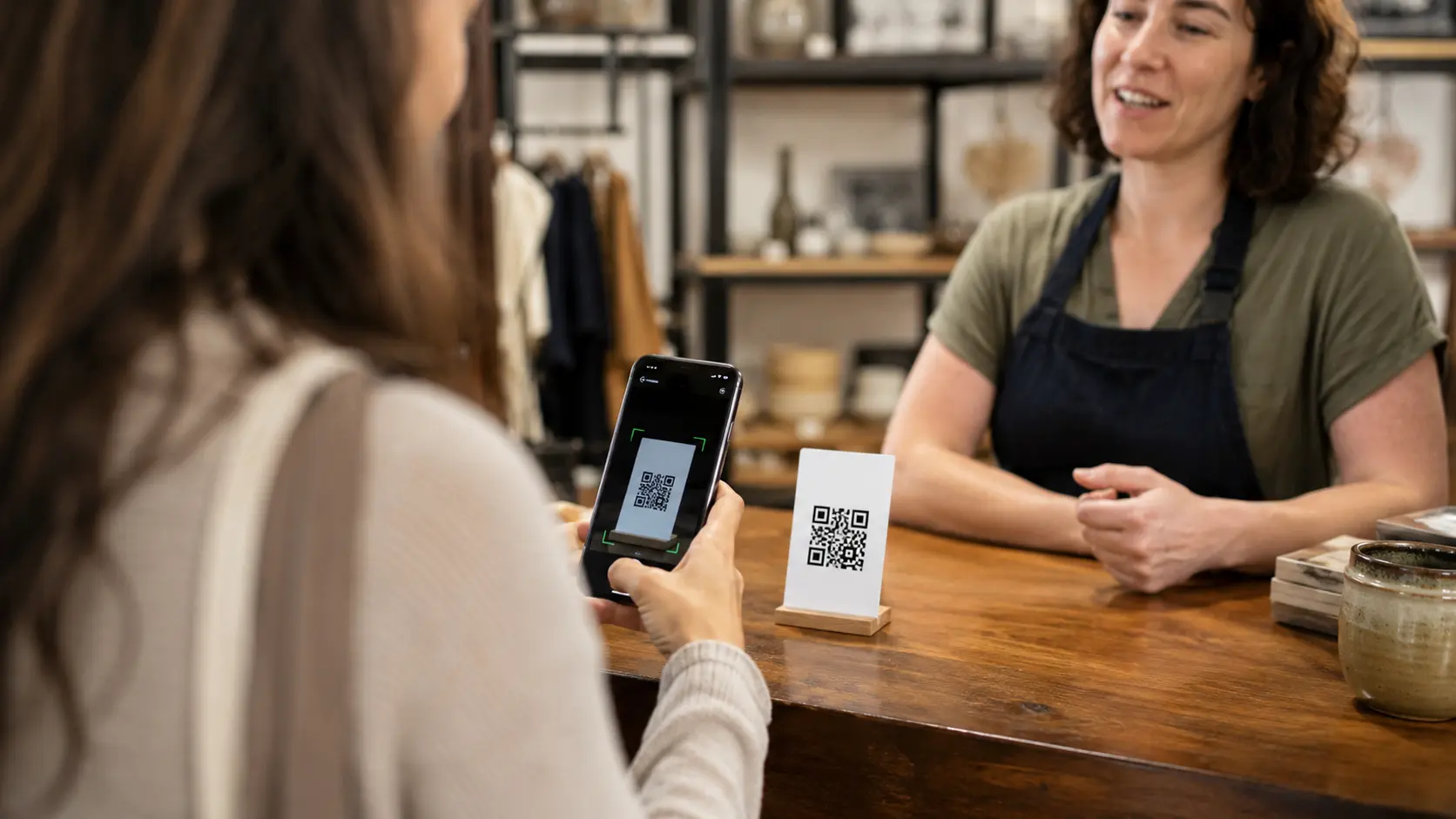
The job is identity capture in physical space. A visitor scans a QR code, receives a reward for doing it, and becomes a known contact you can reach again. No payment terminal required, no per-location hardware, and it works at a stall or an event exactly as it works in a store.
From there, the contact feeds whatever stack you already run. If you use Klaviyo for email or Smile for points, VISU sits in front of them rather than replacing them.
The honest limit: if your customers already have accounts and order histories, you do not have an identity problem. A conventional loyalty or automation tool is the better buy.
Start Capturing Identities From Foot Traffic
A scan, a reward, and a contact that did not exist a second earlier. No terminal required.
FAQ: Customer Retention Software
What is customer retention software?
Software that helps a business keep existing customers buying, by rewarding repeat behavior, recovering failed payments, automating lifecycle messaging, or flagging at-risk accounts. It is not a single product category. At least six distinct software types market themselves under the term, each built around a different object: an order, a subscription, an account, or a visit.
What is the difference between a CRM and customer retention software?
A CRM is a system of record. It stores who your customers are and what happened. Retention software is a system of action. It triggers rewards, messages or interventions to change what happens next. Many retention tools read from a CRM, and few replace one.
How much does customer retention software cost?
Published pricing ranges from free, on Smile.io up to 200 orders per month, to 15 and 199 dollars monthly for small business ecommerce loyalty, 99 to 799 dollars monthly for review platforms, and 49 to 149 dollars monthly per location for POS native loyalty. Enterprise platforms including Braze, Antavo, Talon.One and Gainsight publish no pricing and quote on data volume or seats.
Does customer retention software actually work?
The peer reviewed answer is a qualified yes. A meta analysis of 429 effect sizes covering 1990 to 2020, published in the Journal of the Academy of Marketing Science in 2022, found loyalty programs reliably increase behavioral loyalty, meaning repeat purchases. Changing attitudinal loyalty, meaning how customers feel, is much harder. Results depend heavily on program design and industry rather than on tool choice alone.
What is a good churn rate?
It depends on the industry. Across Recurly's subscription network in July 2026, median annual churn was 3.60 percent overall, 3.22 percent in SaaS, 4.25 percent in ecommerce and 4.99 percent in education. Around a third of that churn was involuntary, caused by failed payments rather than by customers deciding to leave.
Can retention software work for a physical store or restaurant?
Partially. Most tools require an existing customer account or online order, which a walk-in customer does not have. POS native loyalty works but requires that vendor's payment hardware and bills per location. The unsolved step is capturing an identity from an anonymous in-person visitor in the first place.