

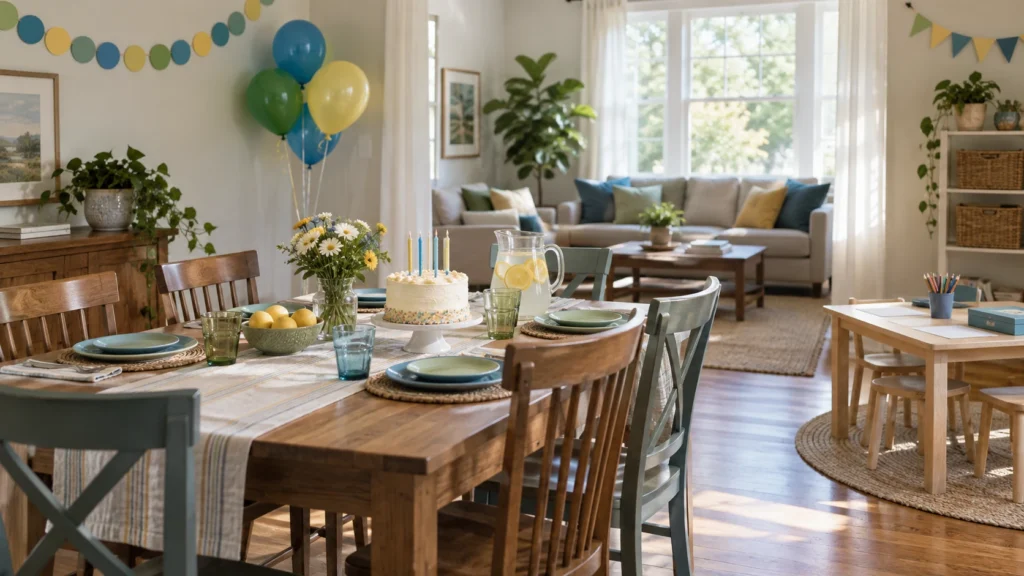
A useful birthday theme does more than choose colors. It gives the host one clear activity, a food direction, a restrained visual rule and a cleanup plan that fit the guests and the room. Start with those limits and the theme becomes a planning shortcut instead of another shopping list.
Put the Practical Details in One Place
A VISU Link page can hold the map, contact route and links to an external gallery or form in one public destination.
Choose Before You Decorate
Write down the youngest likely guest, the largest group you can supervise and the part of the venue that may actually be used. Then choose one central activity that works even if half the guests arrive at once. A theme is strong when a late arrival can understand it quickly and a guest can opt for a quieter role. Avoid building the plan around costumes, specialist knowledge or a long sequence that fails when timing shifts. For a teen-specific version of the same planning task, the guide to 13-year-old birthday party ideas compares formats, places and supervision.
Use three filters. First, movement: seated, mixed or active. Second, attention: one shared project or short rotations. Third, mess: dry materials, contained food work or washable craft. A compact apartment usually benefits from a seated project and one food point. A yard can carry movement, but still needs a weather fallback. A mixed-age group needs roles with different difficulty, such as drawing, sorting, building or presenting within the same activity. If weather or space moves the party indoors, these indoor activities for kids help match the activity to age and energy.
Fourteen Flexible Themes With a Job to Do
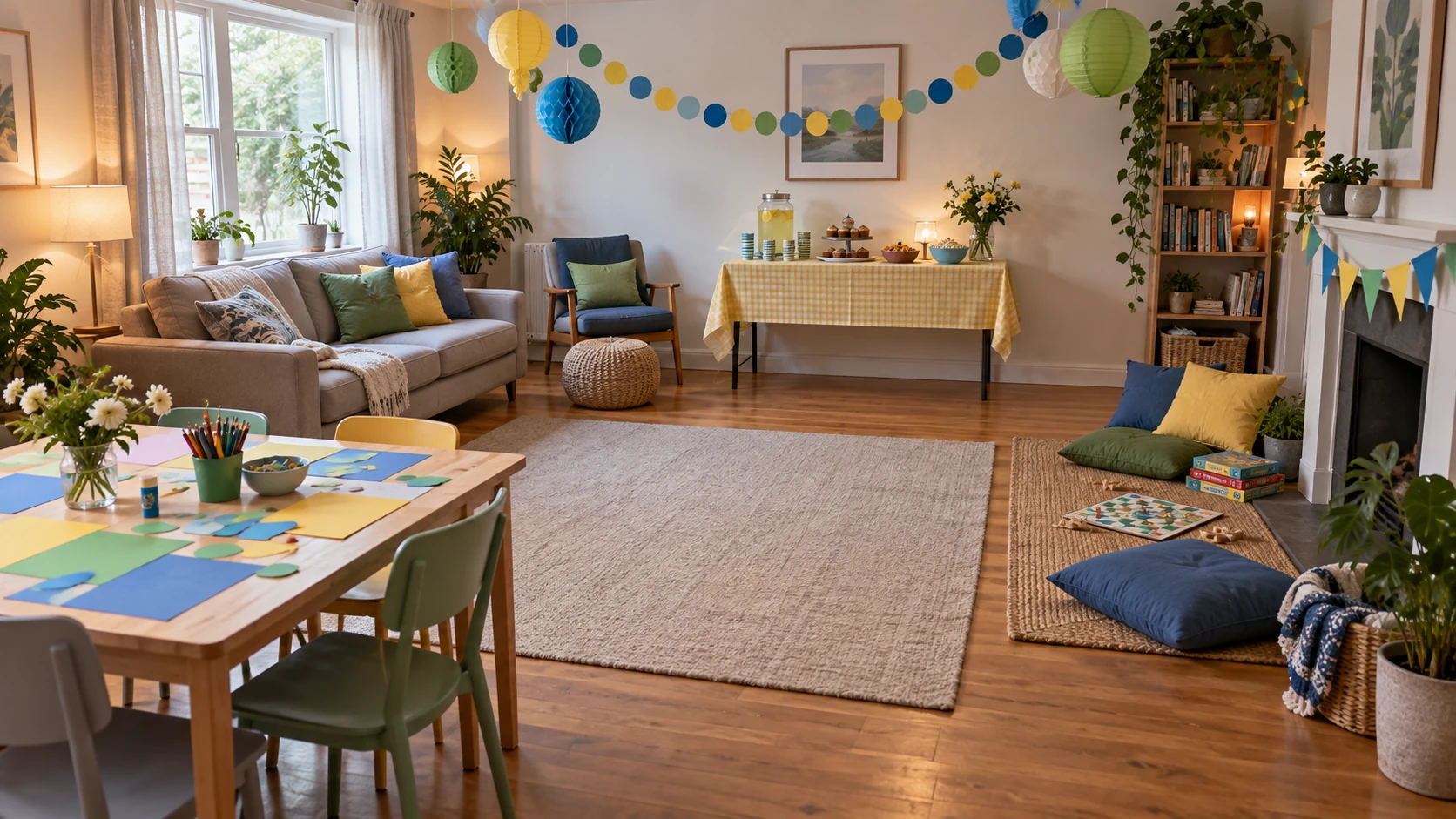
A useful birthday theme does more than choose colors. It gives the host one clear activity, a food direction, a restrained visual rule and a cleanup plan that fit the guests and the room. Start with those limits and the theme becomes a planning shortcut instead of another shopping list.
| Theme | Flexible age | Space fit | Central activity | Food direction | Restrained decor | Cleanup |
|---|---|---|---|---|---|---|
| Color Lab | 5 to adult | Kitchen, patio or covered tables | Mix washable colors in paper crafts or drinks | Fruit cups, colored dips and plain cake | One color wheel plus solid tableware | Table covers and one bin per material |
| Tiny Museum | 7 to adult | Living room, classroom or hall | Each guest makes and labels a small exhibit | Gallery-style finger food and label cards | Blank frames, clips and neutral backdrop | Take-home envelopes for each exhibit |
| Night Sky Camp | 6 to teen | Bedroom, yard or dim hall | Constellation hunt and short story circle | Star sandwiches, popcorn and dark berry cups | Paper stars and two warm light strings | Roll blankets, collect paper stars in one box |
| Cardboard City | 5 to 12 | Garage, patio or large room | Teams build shops, parks and roads from boxes | Build-your-own flatbreads and block fruit | Road tape and reused boxes only | Flatten boxes and lift tape in sections |
| Mini Food Studio | 8 to adult | Kitchen or venue with prep tables | Decorate one simple snack within set stations | The activity is the food; add water and fruit | Aprons, menu cards and one backdrop | Lined trays and labeled ingredient tubs |
| Time Traveler Station | 7 to teen | Any room with three corners | Solve three era-inspired clues | One familiar snack renamed for each station | Three signs, clocks and one suitcase prop | Pack each station into its own crate |
| Pocket Garden | 6 to adult | Patio, balcony or wipeable indoor table | Plant a small herb or assemble a paper garden | Herb flatbread, vegetables and lemonade | Kraft paper, plant tags and green napkins | Soil trays or paper-only indoor version |
| Soundtrack Workshop | 9 to adult | Living room, studio or hall | Build a shared playlist and design cover cards | Snack boards labeled by mood | Two poster boards and reusable headphones sign | Collect pens and cards; wipe one food station |
Share the Final Plan
Once the venue, timing and external form are confirmed, keep those links together so guests can check the latest practical information.
| Theme | Flexible age | Space fit | Central activity | Food direction | Restrained decor | Cleanup |
|---|---|---|---|---|---|---|
| Detective Desk | 8 to adult | Dining room, library room or café table | Solve a compact evidence-file mystery | Envelope sandwiches and clue-numbered snacks | Folders, string board and desk lamps | One envelope per player captures all paper |
| Maker Arcade | 7 to teen | Garage, hall or wide living room | Rotate through paper skill challenges | Tickets exchange for two simple snack choices | Score cards and geometric tape lines | Stack stations; recycle score sheets |
| Weather Station | 5 to 10 | Patio or indoor floor space | Build wind streamers and test a forecast course | Cloud popcorn, rainbow fruit and water | Blue paper bands and reusable weather symbols | Bag streamers; sweep one marked test zone |
| Storybook Portal | 4 to 9 | Bedroom, living room or library room | Guests add a page to one shared adventure | Picnic bites tied to three story locations | One doorway frame and printed chapter signs | Pages go into a binder; fabric folds away |
| Future Post Office | 6 to adult | Table-based indoor or shaded outdoor space | Write or draw messages for a chosen future date | Parcel-shaped sandwiches and stamp cookies | Paper stamps, twine and one sorting shelf | Each guest seals work; recycle offcuts |
| Micro Festival | 10 to adult | Yard, terrace or hall | Guests choose two of four short stations | One central snack bar with labeled options | Four coded signs and one bunting line | Close one station at a time into labeled tubs |
Match the Theme to the Space and Group
For fewer than eight guests, choose one shared table or floor zone and let the finished work become part of the decoration. For eight to sixteen, use two synchronized stations so nobody waits too long. Larger groups need repeated stations, visible signs and an adult assigned to each activity. More stations are useful only when each can run independently.
In a small indoor room, protect circulation first. Keep coats, gifts and bags away from the activity, and place drinks where spills will not cross the main path. Outdoors, decide where the group moves if rain, wind or strong sun arrives. In a rented venue, check wall, tape, food and disposal rules before buying decoration. The best-looking concept still fails if setup conflicts with the room.
Plan Food, Decor and Cleanup Together
Choose food that supports the activity rather than copying every visual cue. One themed item is enough when the rest is familiar and easy to serve. Label common allergens and keep a plain option. A cooking activity needs defined ingredients, clean utensils and a separate finished-food area; it should not become an improvised free-for-all.
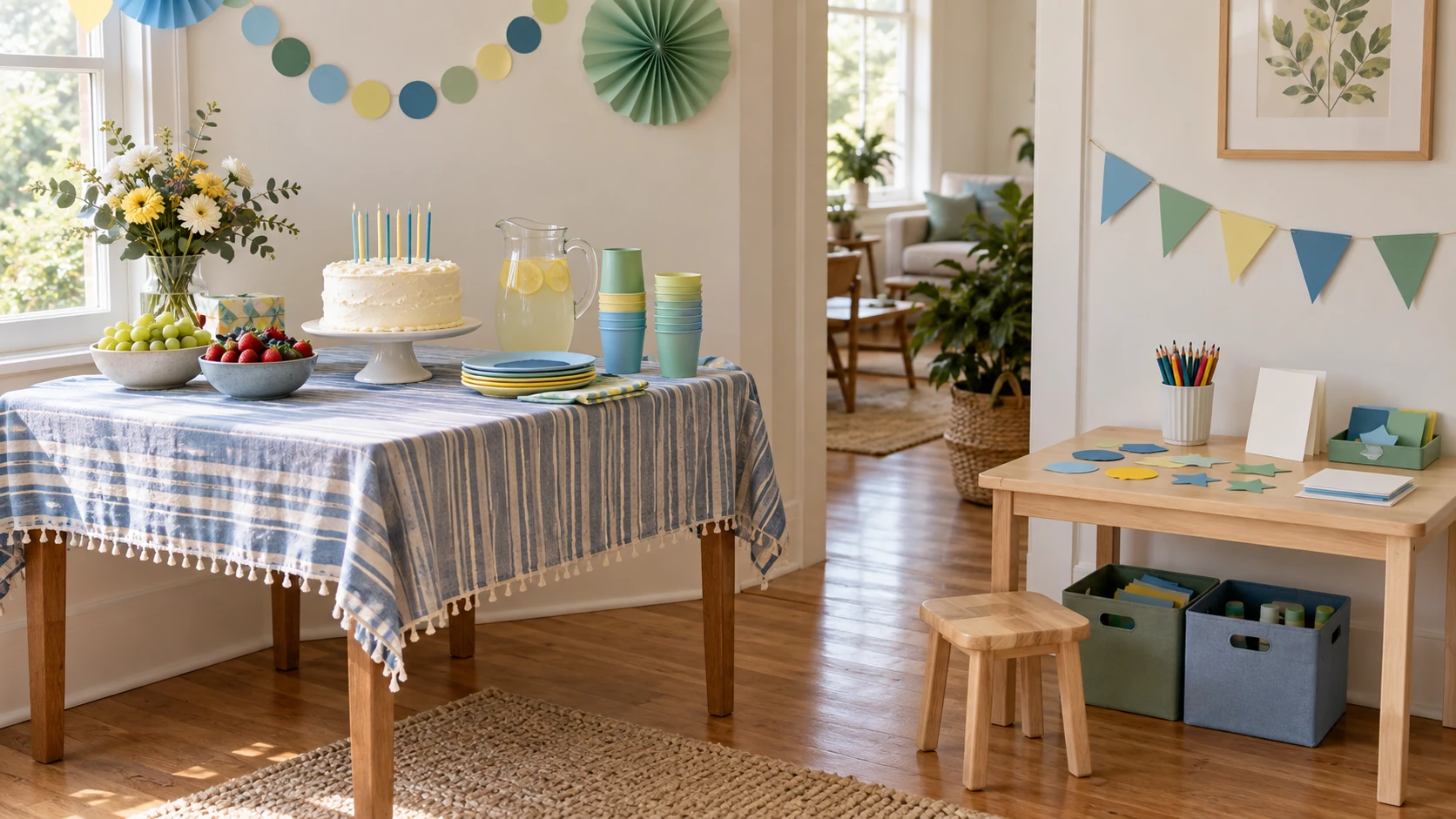
Limit decoration to a backdrop, a table treatment and a few directional signs. Repeating one shape or two colors creates coherence without filling every surface. Before buying anything, ask where it will be used again, recycled or sent home. The cleanup column in the matrix is part of the design: trays contain soil, envelopes contain paper, and labeled tubs let a station close without mixing supplies.
Build a Calm Setup Timeline
Two weeks before, confirm the space, guest range and central activity. One week before, test the activity with the actual materials and time it. Three days before, buy fresh food and group every station in its own container. The day before, prepare signs, labels and any pieces that do not need refrigeration.
On the day, set the room in this order: circulation, activity, food, decoration. Photograph each supply tub before opening it so helpers know what returns where. Leave ten quiet minutes between the activity and cake or the final food moment. Close stations gradually rather than creating one large cleanup at the end.
Assign one decision to each helper. One person can welcome guests and point out bags, water and restrooms. Another can reset materials, while a third watches food and allergy labels. Write those roles down so the host is not the only source of instructions.
Keep a reduced version of the activity ready for the final twenty minutes. A drawing card, last clue or message envelope lets early finishers stay involved while families begin leaving and avoids a second high-energy game delaying cleanup.
Make the Day Easy to Find
Publish the map, contact link and other useful destinations on one page. VISU Link does not provide native RSVP management.
Frequently Asked Questions
How many themes should I combine?
Usually one main theme and one supporting visual rule are enough. Combining several full themes creates extra props, instructions and food work without making the party clearer.
How do I choose a theme for mixed ages?
Choose one activity with roles at different difficulty levels. Building, drawing, sorting and presenting can happen inside the same theme without separating guests by age.
What works in a small apartment?
Use a seated activity, one food station and decoration that stays on one wall or table. Protect the walking route and avoid games that require queues or running.
How can I reduce party cleanup?
Choose contained materials, line trays, assign a bin to each material and close stations one at a time. Decide the cleanup method while choosing the theme.
Does every food item need to match the theme?
No. One named snack or cake detail can carry the idea. Familiar, easy-to-serve food and a plain option are usually more useful than a fully themed menu.
Can VISU Link collect RSVPs?
VISU Link can organize a map, contact route and a link to an external RSVP form on a public page. RSVP collection is not a native VISU Link feature.