

Most cashback lists were written for an American shopper and then had the currency swapped. That is why they recommend apps that do not work at a British till, and skip the ones that actually pay here. This is the UK version: which apps genuinely operate in Britain, what they pay in pounds, how the money reaches your bank, and where the whole model quietly stops being worth it. If you want the global picture first, start with the general guide to cashback apps.
The short version: UK cashback splits into two completely different things that get lumped together. Online cashback portals pay you for clicking through before you buy. Grocery cashback apps pay you for what is printed on a receipt. They pay different amounts, on different timescales, and mixing them up is why people conclude cashback "does not work".
Earn Without Spending First
Every app on this page needs you to buy something before it pays anything. VISU works the other way round: you earn from attention rather than from spending, and the balance is yours whether or not you shopped that week.
The Two Types Nobody Separates
Ask ten people in Britain what a cashback app is and you get two incompatible answers. Both are correct, and they describe products that have almost nothing in common.
Online cashback portals sit between you and a retailer. You open the retailer through the portal, buy as normal, and the portal passes back part of the commission it earns. The rate is a percentage of what you spent, it applies to thousands of shops, and the money arrives weeks or months later once the retailer confirms you did not return anything.
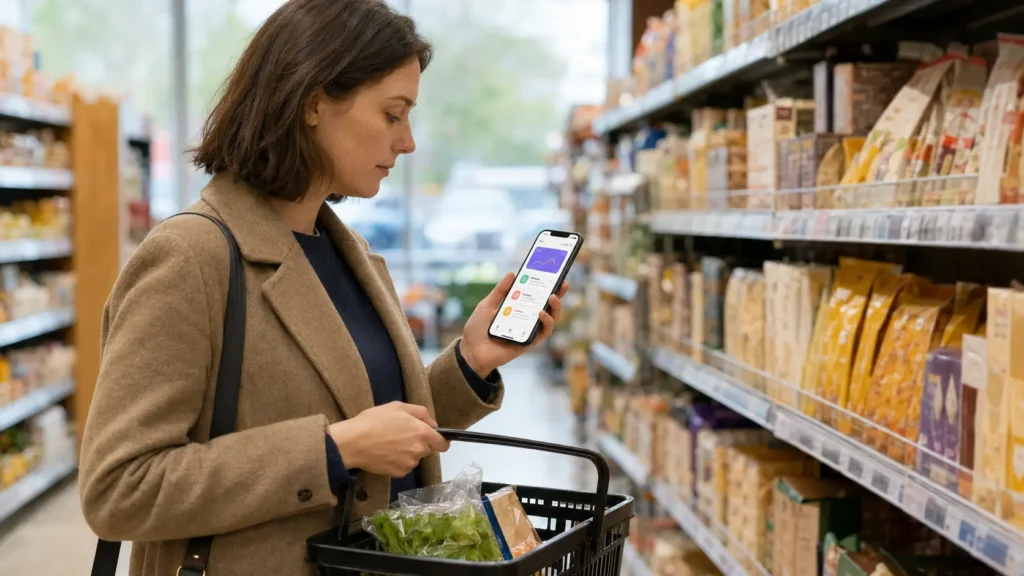
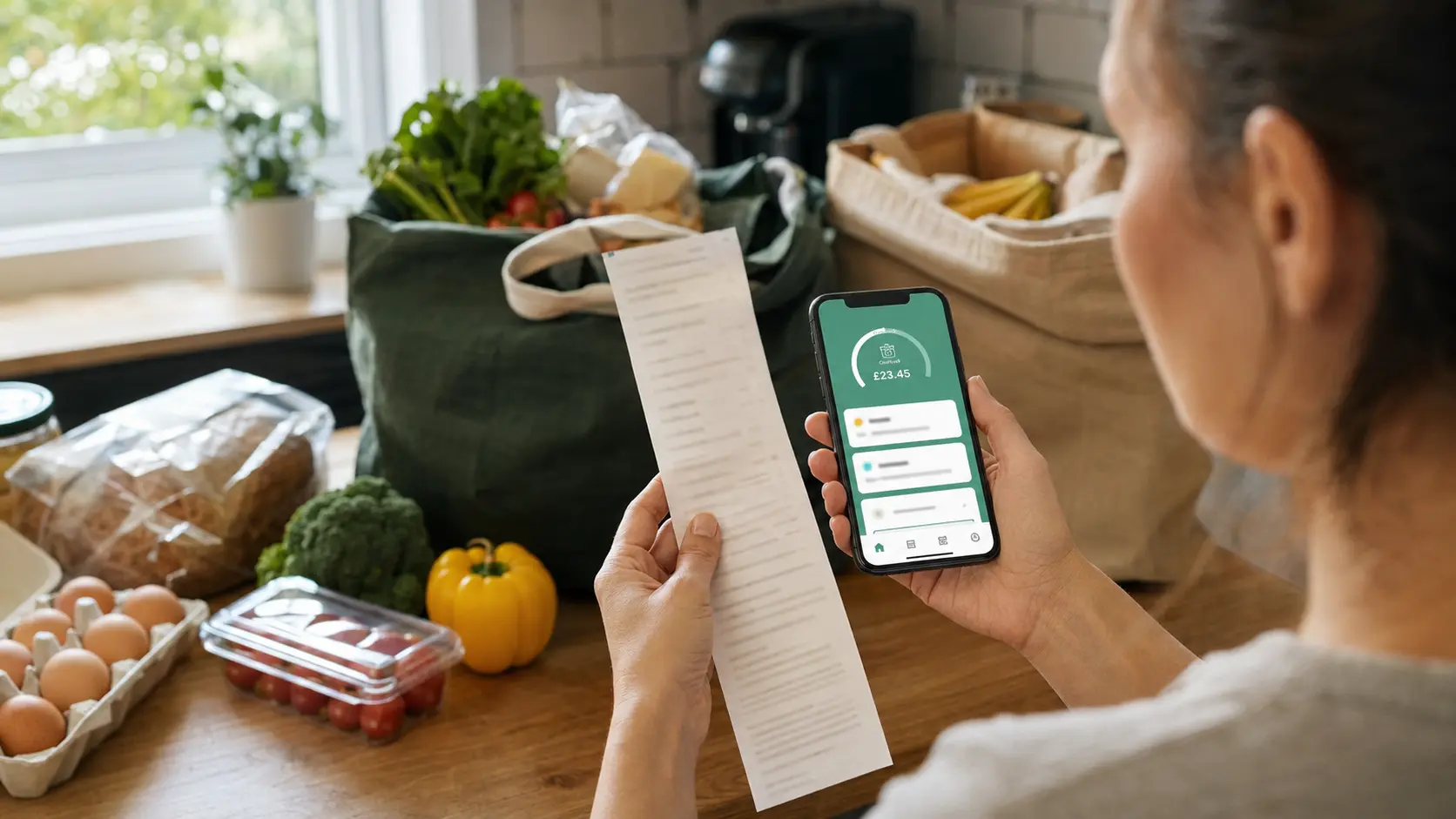
Grocery and receipt apps ignore the retailer entirely. They pay you for buying specific products, usually a named brand in a named size, and you claim by photographing the receipt. The payment is a fixed amount rather than a percentage, and it is usually confirmed within days.
The practical difference is what they suit. Portals reward large, planned, infrequent purchases: insurance, broadband, a holiday, a laptop. Receipt apps reward the weekly shop. Someone who tries to earn meaningful money from a portal on their groceries will conclude cashback is pointless, and they will be right about the portal.
There is a third category worth naming so you can rule it out: card-linked offers built into your banking app. These pay automatically when you spend with a linked card, require no click-through and no receipt, and generally pay less than a portal would for the same purchase. They are convenient rather than lucrative.
Online Cashback Portals in the UK
Britain has a genuinely mature portal market, which is unusual. Two names dominate and have done for years, which matters because portal cashback depends on the company still existing when your payment clears.
TopCashback and Quidco are the two that cover most UK retailers. Both operate the same way: search the retailer, click through, shop normally. The rate varies by retailer and changes constantly, so the useful habit is checking both before any purchase over about thirty pounds rather than committing to one.
Things that catch people out with UK portals, in order of how often they cause a missing payment:
- Ad blockers and cookie banners. The tracking that credits your purchase is a cookie. Block it, or reject cookies on the retailer's banner, and the sale is invisible to the portal.
- Opening the retailer in another tab first. If you already had the retailer open, the last click before checkout may not be the portal's. Start from the portal, finish in the same tab.
- Voucher codes from elsewhere. Applying a code the portal did not supply frequently voids the cashback, and the code is usually worth less.
- The confirmation delay. Retailers hold payment through the returns window. Three months from purchase to payable is normal, not a sign of a problem.
The category where UK portals genuinely pay well is not shopping at all. It is switching: insurance, energy, broadband and mobile contracts often carry cashback in the tens of pounds because the retailer is paying to acquire a customer rather than sharing a margin on a product. A single car insurance switch can outearn a year of grocery cashback.
Grocery and Receipt Apps
The UK grocery cashback apps work on brand-funded offers. A manufacturer wants trial of a product, funds a rebate, and the app distributes it. That is why the offers are for specific items rather than "ten per cent off your shop", and why they rotate weekly.
What this means in practice is that the earning ceiling is set by how much your normal shopping already overlaps with what brands are promoting. If you buy own-brand almost everything, the overlap is small and honesty demands saying so. If you buy branded regularly, the offers frequently cover items you were buying anyway.
Photograph the receipt the same day. Thermal receipts fade, claim windows are typically short, and a rejected claim for an unreadable receipt cannot usually be resubmitted. This is also why the paper receipt still matters at self-checkout even when you would rather not take one.
Receipt scanning as a category goes beyond cashback offers, and the mechanics are worth understanding separately if you shop weekly. That is covered in the guide to making money from receipts.
What You Realistically Earn in a Year
Any UK cashback figure quoted without the spending behind it is meaningless, because cashback is a percentage of money you already spent. The honest framing is a rate, not a total.
Portal rates on everyday retail typically sit in the low single digits. Switching deals are the exception and pay a flat sum. Grocery apps pay fixed amounts per claimed product, usually under a pound each, occasionally more on a new product launch.
The reason totals vary so wildly between people is that they are variations in spending, not in skill at using the apps. ONS figures put UK household spending growth, adjusted for inflation, at 0.6% in the first quarter of 2026, with household costs rising 3.6% in the twelve months to March 2026. Cashback returns a slice of outgoings that are themselves under pressure, which is the correct way to size expectations: it softens a bill, it does not replace income.
The trap worth naming. A cashback rate turns a purchase you would not otherwise make into one that feels justified. Spending forty pounds to get four back leaves you thirty-six pounds down. This sounds obvious written out, and it is still how most people lose money on cashback, which is why earning without buying anything is a genuinely different proposition.
A Balance That Does Not Depend on Spending
Cashback is a rebate: no purchase, no payment. VISU pays for attention instead, so the earning does not require you to spend first and does not push you toward a purchase you were not going to make.
How the Money Actually Reaches You
UK payout is the part that separates a working app from a frustrating one, and it varies more than the headline rates do.
- Bank transfer. Most UK portals pay directly to a current account by Faster Payments, which usually means same day once the withdrawal is approved.
- PayPal. Widely offered, sometimes with a small fee deducted, and useful if you would rather not link a bank account.
- Gift cards. Frequently carry a bonus, typically a few per cent added on. Worth taking only for a retailer you genuinely use, otherwise the bonus buys you something you did not want.
- Minimum thresholds. Check this before committing time. A ten pound minimum on an app that pays thirty pence a claim is a long wait, and the balance sits with the company throughout.
Two UK-specific points. Cashback on personal purchases is generally treated as a rebate rather than income, so it does not usually create a tax question, though this stops being true if the activity looks like a trade. And a bank transfer needs the account name to match, which trips up anyone withdrawing to a partner's account.
When UK Cashback Stops Being Worth It
Cashback earns its place on large planned purchases and on the weekly shop when the offers happen to match what you buy. It stops earning its place in several recognisable situations.
- When it changes what you buy. Switching to a branded product to claim eighty pence, when the own-brand was a pound cheaper, is a loss dressed as a gain.
- When the admin exceeds the return. Photographing receipts, chasing missing claims and monitoring thresholds is unpaid work. At small balances it is not worth the hour.
- When you are relying on it. Portal payments arrive months later and can be declined. That is fine as a rebate and unusable as budgeted income.
- When the app is struggling. Cashback depends on a company holding your balance until you withdraw. Rising thresholds, slower approvals and vanishing offers are worth reading as warnings, a pattern covered in why cashback apps are dying.
The sensible UK setup is narrow: a portal account used only for purchases over about thirty pounds and for annual switching, plus one grocery app checked before the shop rather than after. Anything wider costs more attention than it returns. If that sounds like too much friction for the money, the alternatives to cashback apps are the more useful page.
Start From Zero Spending
No receipts to photograph, no click-through to remember, no three-month wait for a retailer to confirm. VISU turns attention into a balance, and it works the same whether or not you shopped this week.
FAQ: Cashback Apps in the UK
Which cashback app pays the most in the UK?
There is no single answer because the rate changes by retailer and by week. TopCashback and Quidco cover most UK retailers and are worth comparing against each other before any purchase over about thirty pounds. For groceries the comparison is different, since receipt apps pay fixed amounts on specific products rather than a percentage of the basket.
How long does UK cashback take to pay out?
Portal cashback commonly takes weeks to months, because the retailer holds payment until the returns window closes. Grocery and receipt apps are much faster, usually confirming within days. Once a balance is payable, UK bank transfers by Faster Payments typically arrive the same day.
Why did my cashback not track?
Most commonly an ad blocker, a rejected cookie banner, or having the retailer already open in another tab so the final click was not the portal's. Voucher codes from outside the portal also void tracking regularly. Start from the portal, accept the tracking cookie, and complete the purchase in the same session without applying outside codes.
Do I pay tax on cashback in the UK?
Cashback on your own purchases is generally treated as a rebate on money you spent rather than as income, so it does not usually create a tax liability. That changes if the activity resembles a trade or the payments are not tied to your own spending. If your situation is unusual, check the current HMRC guidance rather than relying on a blog.
Are UK cashback apps worth it for groceries?
It depends entirely on whether you buy branded products. Grocery cashback is funded by manufacturers promoting specific items, so a shop made up of own-brand goods will match very few offers. Check the app before writing the list, and treat it as a discount on things you were already buying rather than a reason to switch brands.
Can I use more than one cashback app on the same purchase?
Not on the same transaction through two portals, since only one click-through can be credited. You can combine categories, though: a portal on the retailer, a receipt app on a specific product in the basket, and a card-linked bank offer are funded by different parties and can sometimes stack. Check each app's terms, as several explicitly forbid it.