

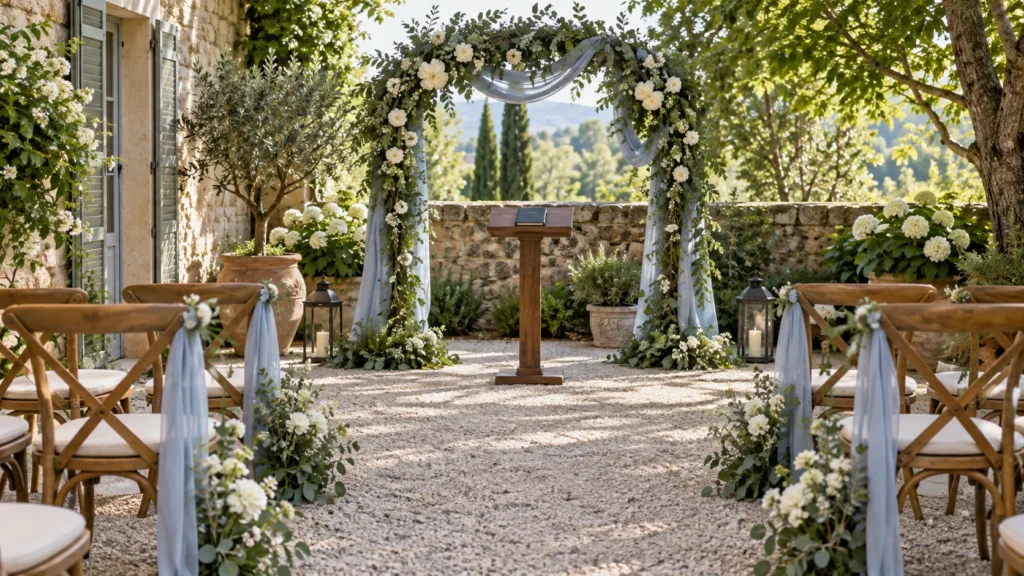
A wedding ceremony script should sound like two people making a clear promise, not a template performing importance. This guide gives you a complete modular ceremony, a genuinely short version, and a run sheet that tells every speaker what happens next. It is for a symbolic or personal ceremony. Confirm any official requirements and the officiant's authority with your celebrant and the rules where the wedding takes place.
Keep the Ceremony Plan in One Place
A VISU Link page can hold the schedule, venue link and external RSVP or contact form for guests.
Choose the Shape Before the Words
Begin with five decisions: who welcomes the room, whether the couple's story belongs in the ceremony, how vows will work, who carries the rings, and who closes the gathering. Those decisions create the spine. Everything else is optional.
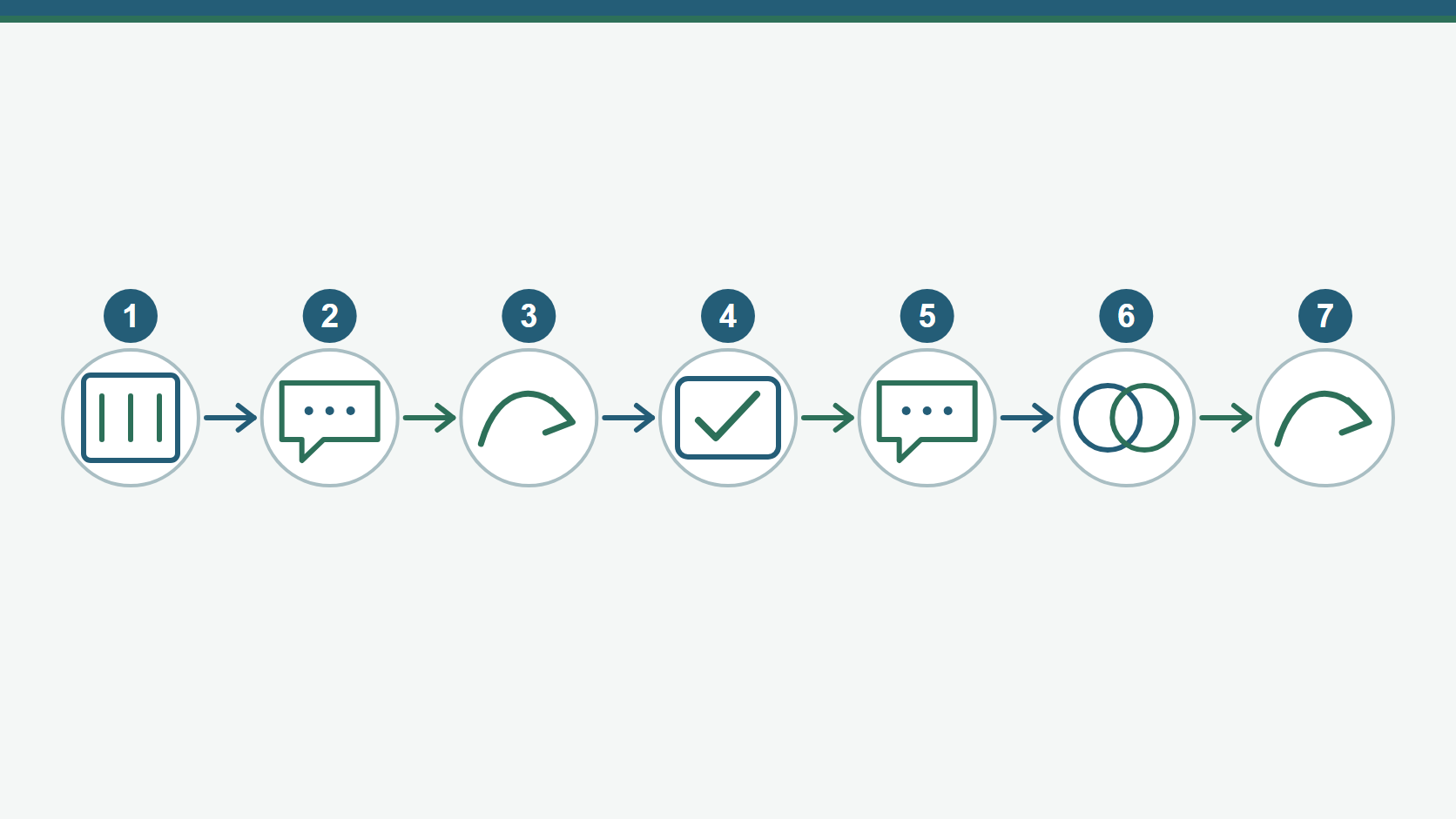
A balanced personal ceremony usually moves through welcome, meaning, story, intention, vows, rings and closing. The story explains why this pair is here. The intention is the direct yes. The vows say what each person promises. The rings give that promise a physical action. The closing releases the room from listening into celebrating.
Choose one voice for the transitions. Even when relatives read or the couple speaks at length, the celebrant should tell the room what is changing. A sentence such as “We will now hear the promises they wrote for each other” prevents uncertainty without sounding procedural.
Remove any section that does not belong to the couple. A reading is useful when its words carry meaning that nobody else can say better. A ritual is useful when the participants understand it and can perform it without a long explanation. Tradition is an option, not a debt.
Build the Ceremony Run Sheet
| Order | Voice | Purpose | Transition |
|---|---|---|---|
| Arrival | Celebrant | Settle the room | Ask guests to be present |
| Welcome | Celebrant | Name why everyone gathered | Move from room to couple |
| Story | Celebrant or reader | Make the ceremony specific | Turn history toward choice |
| Intention | Celebrant and couple | Ask for a clear yes | Introduce personal promises |
| Vows | Couple | State commitments | Invite the rings |
| Rings | Celebrant and couple | Give the promises an action | Return attention to both |
| Closing | Celebrant | Mark completion | Lead into the recessional |
Print this as a single page with the speakers' names and the first words of each transition. The full script can sit behind it. The run sheet is for movement; the script is for language. Keeping them separate lets the person leading the ceremony find the next cue without searching through paragraphs.
A Complete Personal Ceremony Script
The following text is original and ready to adapt. Read it aloud before changing individual sentences. The rhythm matters more than formal vocabulary.
Welcome
Celebrant: “Welcome. We are here because two people have chosen to make their life together visible in front of the people who know and love them. Thank you for bringing your attention, your memory and your hope into this room. Today is not a performance the couple gives to us. It is a promise they make to each other, and we are here to hear it and to support the life that follows.”
The Story and Meaning
Celebrant: “Their relationship was not built in one grand moment. It grew through ordinary choices: making time, telling the truth, repairing what was difficult and returning to what matters. They learned that love can be both shelter and invitation. It gives each person somewhere to belong and asks each person to keep growing.”
Celebrant: “The people gathered here are part of that story. You have known them in different seasons. You have offered meals, calls, advice, laughter and practical help. Their marriage will belong first to them, but it will not have to stand alone.”
Statement of Intention
Celebrant: “You have come here freely and with care. Do you choose one another as partners, promising to meet change with honesty, disagreement with respect, joy with gratitude and difficulty as a team?”
Both: “We do.”
Share the Details Without Repeating Them
Put the ceremony time, map and guest updates on VISU Link, then connect any external form you already use.
Personal Vows
First partner: “I choose you as my partner and my home. I promise to listen before I assume, to speak honestly without using honesty as a weapon, and to make room for the person you are becoming. I will celebrate what brings you alive. I will share the ordinary work of our life. When we lose our way, I will return to the conversation. I cannot promise that every day will be easy. I can promise that you will not face our life alone.”
Second partner: “I choose you with affection, trust and a clear heart. I promise to protect time for us, to be generous with laughter, and to tell you what I need instead of asking you to guess. I will respect your independence and build our shared decisions with you. I will be present in celebration and steady in uncertainty. I cannot know every version of the future. I can promise to keep choosing our partnership inside it.”
Exchange of Rings
Celebrant: “May we have the rings. These circles do not make the promises true. They make the promises easy to remember. Each time you notice the ring, let it call you back to the words you have spoken here.”
First partner: “I give you this ring as a sign of the life I choose with you. I will carry our promises into the days that follow.”
Second partner: “I give you this ring as a sign of the life I choose with you. I will carry our promises into the days that follow.”
Closing
Celebrant: “You have spoken your intentions, made your promises and exchanged rings before the people who care for you. Let this day be remembered not only for how it looked, but for what you chose. May your home hold honesty, rest, curiosity and welcome. May you ask for help before silence becomes distance. May you keep finding reasons to be delighted by one another.”
Celebrant: “With joy, I invite you to seal these promises with a kiss. Everyone, please welcome the newly married couple.”
A Short Ceremony Script
This version is complete, not an outline. It works when the couple wants a simple ceremony with spoken vows and rings.
Celebrant: “Welcome. We are here to witness a choice: two people promising to meet the life ahead as partners. Thank you for being the community that surrounds them.”
Celebrant: “Do you choose one another freely, promising honesty, respect, care and the courage to keep talking when life changes?”
Both: “We do.”
First partner: “I choose you. I promise to be honest, to listen, to share the work and the joy of our life, and to return to you when the way forward is difficult.”
Second partner: “I choose you. I promise to be honest, to listen, to share the work and the joy of our life, and to return to you when the way forward is difficult.”
Celebrant: “As you exchange rings, repeat after me: I give you this ring as a sign of my love and of the life I choose with you.”
Each partner: “I give you this ring as a sign of my love and of the life I choose with you.”
Celebrant: “You have made your promises before the people who love you. May you carry them with tenderness and courage. Seal them with a kiss. It is my joy to present the newly married couple.”
Rehearse Transitions, Not Emotion
At rehearsal, practice the walk, where everyone stands, where the rings wait, how the microphone moves and what starts the exit. Read only the first and last line of each section. The goal is to remove logistical surprises while leaving the actual promises alive.
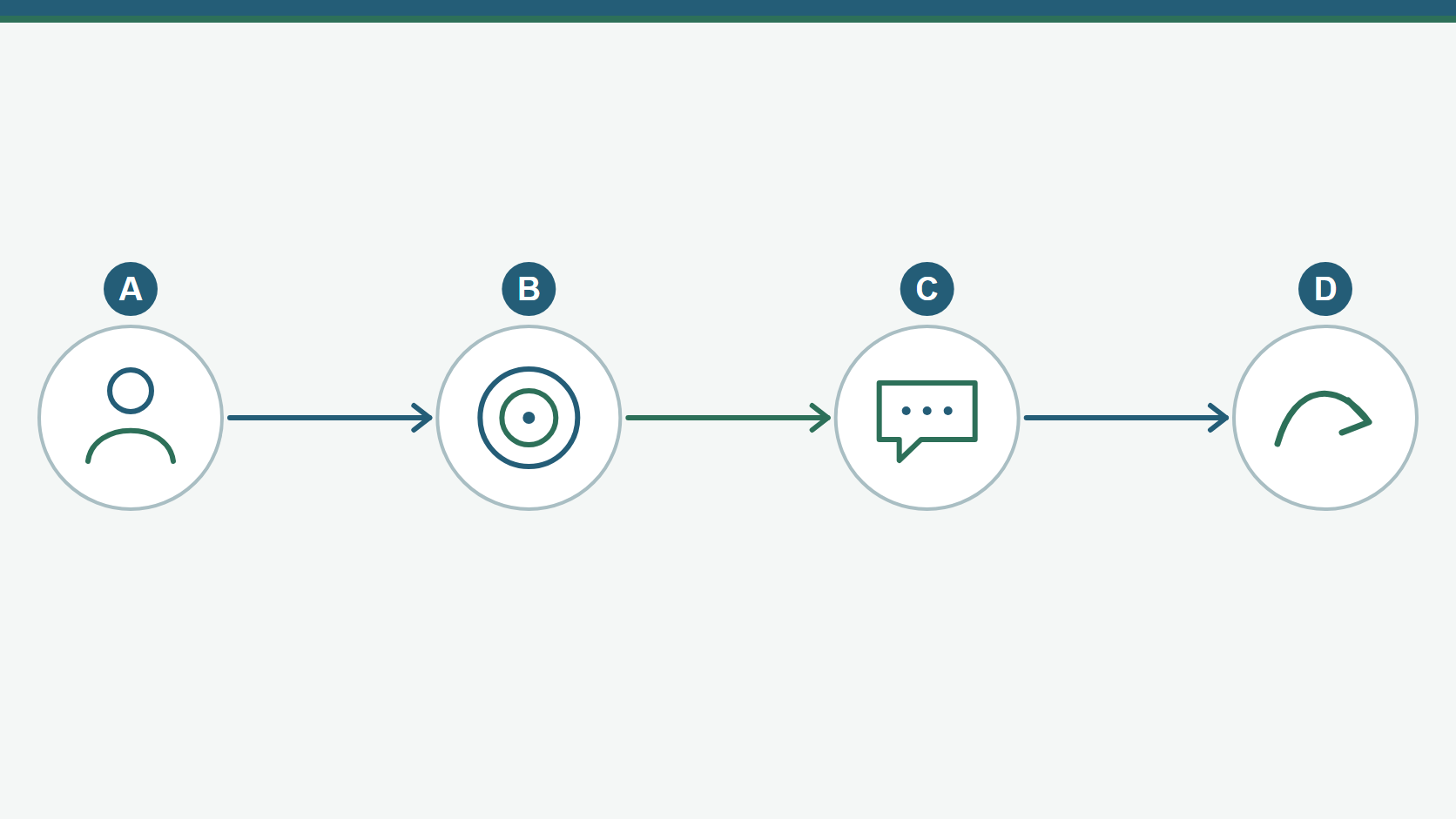
Mark every handoff in the run sheet: music fades, celebrant welcomes, reader approaches, reader returns, vows begin, rings arrive, kiss, music starts. If somebody must cross the space, say when. If a child carries the rings, assign an adult backup without turning that possibility into a joke during the ceremony.
Give the celebrant a clean final version and keep one printed copy nearby. Large type, page numbers and no last-minute handwritten paragraphs make recovery easier. Ask the celebrant how they prefer to handle the formal or official portion, if one applies. This article does not determine who may officiate, what wording a jurisdiction requires or whether a symbolic ceremony creates a legal marriage.
If guests also need the wider plan, the guide to planning a wedding on a budget can help separate priorities.
A VISU Link page can hold guest directions and route to an external RSVP form.
Give Guests One Reliable Link
Use VISU Link for the public schedule, directions and external RSVP destination, with a QR that can also go on printed material.
Frequently Asked Questions
What sections belong in a wedding ceremony script?
A clear personal ceremony can use welcome, meaning or story, intention, vows, rings and closing. Readings and rituals are optional.
How long should a personal wedding ceremony be?
Choose the length from the material that matters to the couple. The complete and short scripts here can both be adjusted by reading aloud and removing repetition.
Can we use this script for a legal wedding?
This is a symbolic and personal script, not an official document. Confirm required wording, registration and officiant authority with your celebrant and local rules.
Do both partners need to use the same vows?
No. Parallel length and scope help the ceremony feel balanced, but each person can use distinct language and promises.
How should we include a reading or family member?
Place one reading after the story and before the intention. Give the reader the final text, their cue, microphone plan and a clear return transition.
What should go on the ceremony run sheet?
List the order, speaker, purpose, opening words and next cue for every section, plus movement, music, microphone and ring handoffs.