

For street vendors, followers who live far away do not fill the grill. Ten thousand followers in another country do not pay for gas, rent, or bread. The classic mistake is thinking the goal is to go viral on Instagram when the real game is different: become famous within a two mile radius.
Instagram is the cheapest storefront a food truck, trailer, hot dog cart, or acai stand can have. You do not need a professional camera, an agency, or ad budget. You just need to use the phone that is already in your pocket with two simple priorities: local discovery and appetizing visuals.
The promise here is direct. You will see zero cost strategies to turn your profile into a machine that brings people from the neighborhood to your line without spending a cent on ads and without relying only on sidewalk word of mouth.
Get Paid to Scan QR Codes
While food trucks build their Instagram following, you can earn rewards by engaging with local businesses. Scan, interact, get paid.
Quick video. Earn your first reward.
The Neighborhood Rule for Your Instagram Bio
Instagram works like a tiny local search engine. When someone types a neighborhood name or opens the location tab, the app tries to surface nearby businesses. If your bio is generic like "the best burger in town", the algorithm has no idea where you actually are. You disappear in the crowd.
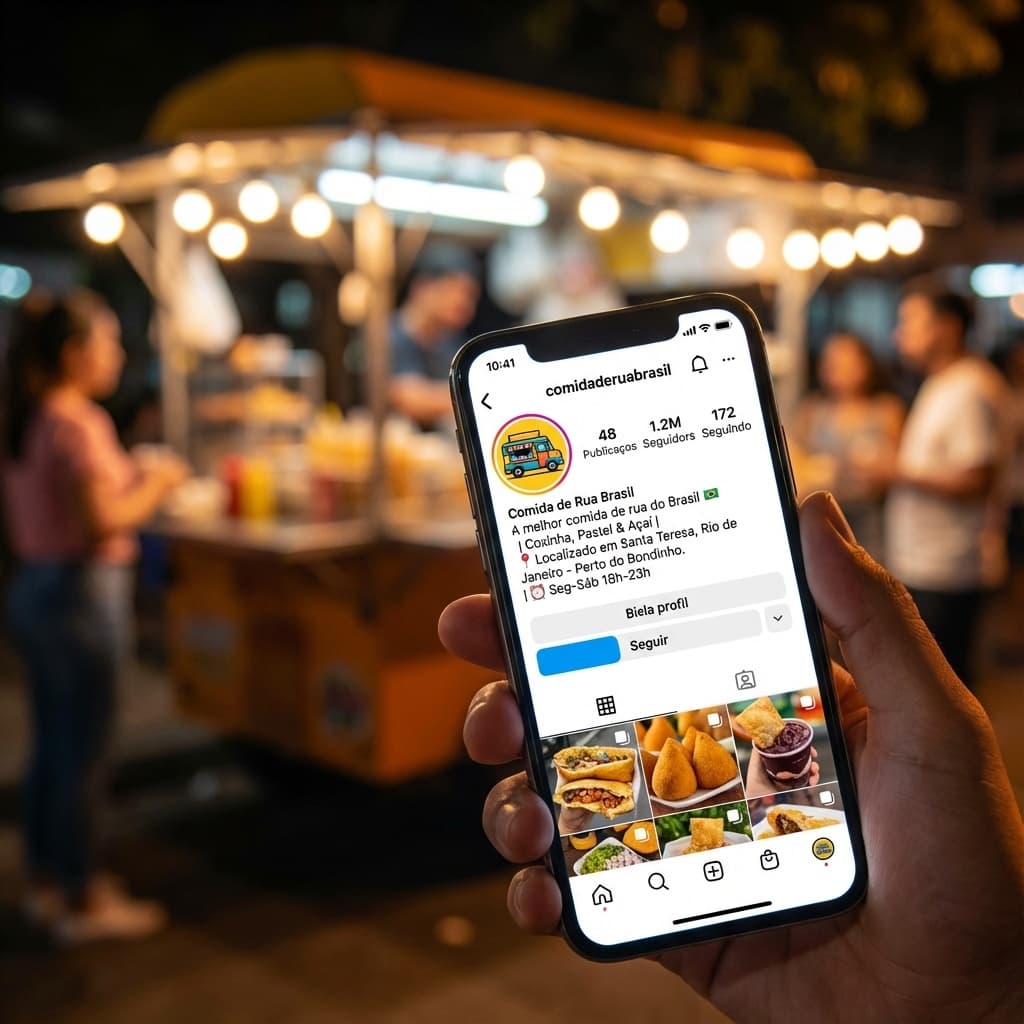
Understanding the real economics of street food profit means seeing that visibility is not vanity. It is survival. Every follower who cannot find you is a sale that never happens.
The Common Bio Mistake
Loose phrases like "the best hot dog in town" or "premium acai just for you" may sound cute but do nothing for people trying to find you in real life. They like the food but still do not know the main thing: where is this truck?
The Fix: Surgical Location
The ideal bio speaks to taste and to the map at the same time. For example: "Smash burgers at Oakwood, in front of Green Market" or "Acai and churros in River Park, next to IronFit Gym." The formula is simple: neighborhood plus landmark. People who live nearby recognize it instantly. Instagram also starts connecting your profile with searches tied to that region.
Simple rule: if a local resident cannot picture your truck just by reading your bio, your bio is still weak.
The Link in Bio That Speeds Up Orders
Another classic mistake is using the bio link only to send people to WhatsApp or DMs. It looks practical but during rush hours turns into a digital line with messages like "hi", "send the menu", "how much is combo X". You stop making food to reply to chats.
When you send that click to a clean digital menu, the game changes. People tap the link, see the combos, understand prices and options. If you want to dive deeper into menu strategy, check the comparison between digital menus and PDFs for food trucks.
Ugly Food Does Not Sell: The Phone Camera Secret
You do not need a fancy camera to make your food look good on Instagram. The two main ingredients for street food photos are light and care. Most profiles that "do not perform" are failing on basics: photos taken at night inside the truck, with harsh yellow light and a greasy phone lens.
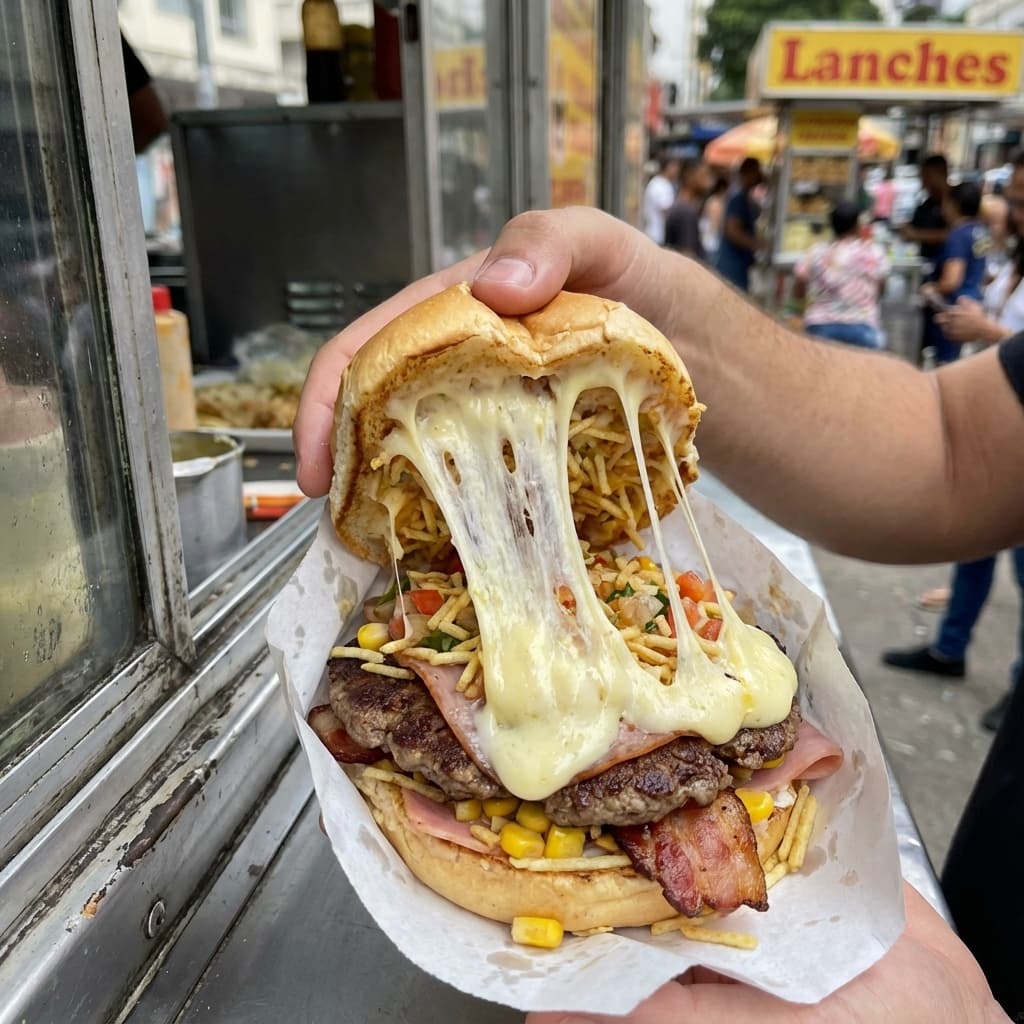
You Do Not Need Pro Equipment
Daylight already puts you ahead of half your competitors. Build the sandwich, take it to the truck door, to a small table outside, or to the sidewalk. Avoid shooting deep inside the truck with weak light. The more natural the lighting, the more real and tasty the food looks.
A Tiny Trick That Changes Everything
Before any photo, wipe your phone lens with your shirt or a clean cloth. It sounds silly, but finger grease and steam from the grill destroy most of the sharpness. The difference is visible on the next shot.
The Desire Angle
Top down photos look like traditional menu shots. They show the plate but do not trigger strong cravings. For the feed, use a lower angle and get close. Show cheese stretching, sauce dripping, crispy churro texture, acai with toppings. A simple sequence works well: one wider frame to show the product, then a tight close up of the mouth watering detail.
How to Use Instagram Location Tags Like a Pro
For street food, geotagging is non negotiable. If you are not using location tags in posts and Stories, you are throwing away Instagram's strongest free feature for local businesses. Many people near you open the location tab every day and never see your truck.
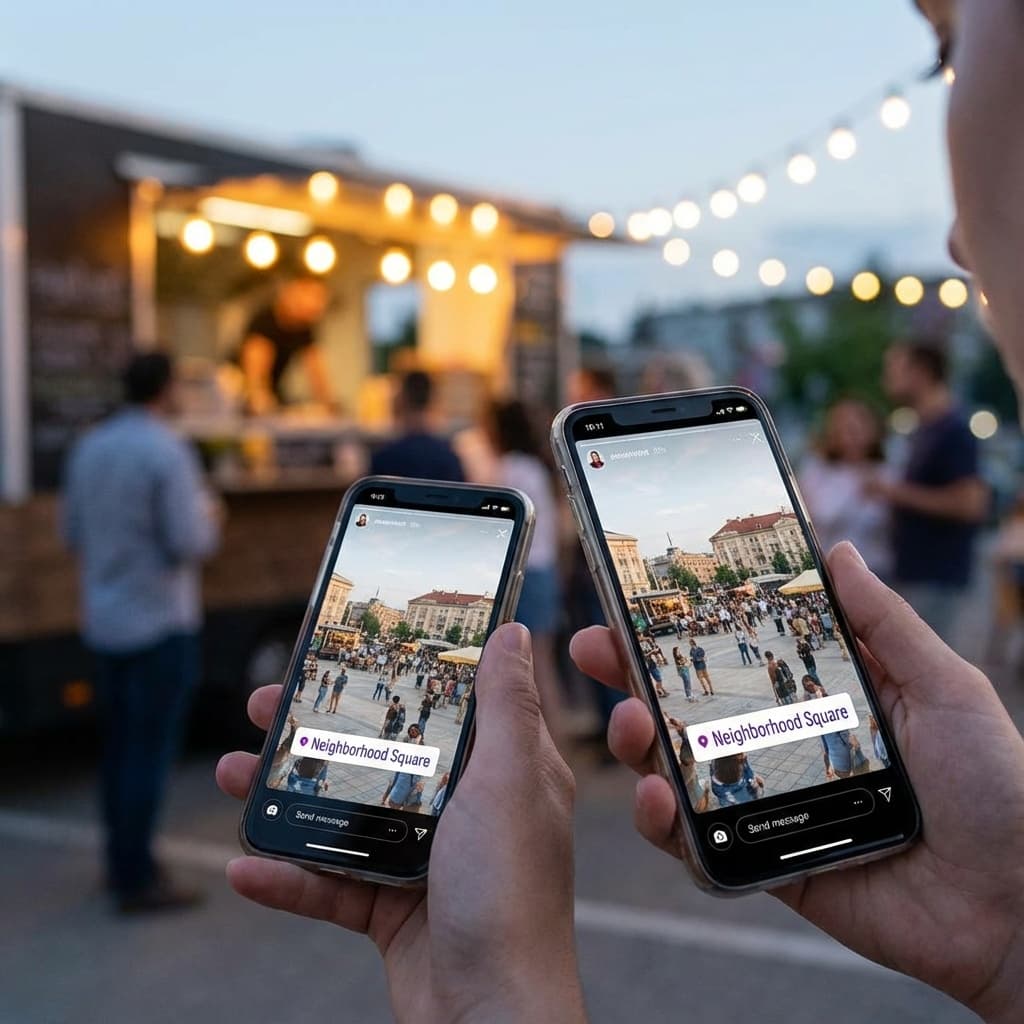
How to Use Location Tags in Posts and Stories
Every time you post, select the neighborhood or park where you are parked. In Stories, use the location sticker. In feed posts, pick the place locals recognize, like the square, park, or main avenue name. That way even people who do not follow you can discover your profile when they open that location to see what is happening nearby.
Interacting With Neighbors Pulls the Algorithm Your Way
There is another lever almost nobody uses: other local businesses. Repost the gym next door, tag the barbershop across the street, show the local market. Instagram loves local connections. When you interact with these profiles, your chances increase of appearing for their followers who also live in the area. This ties into how you attract customers to street food in general.
Turn Every Customer Into a Regular
Food trucks using VISU capture contacts, build loyalty, and increase sales with smart QR campaigns.
See How It WorksTurn Your Packaging Into Real Followers
The happiest moment for your customer is when the food hits their hands. That is when they open the box, smell the burger, see the steam, and think "this was worth it." If your brand shows up right there with a clear invite to post, you turn that emotional peak into free promotion.
The Instagrammable Meal
If the food looks good, people post it. When they post and tag you, their friends who live nearby see your name. You do not need to overdecorate the food. You just need a neat assembly, packaging that is not crushed, and colors or textures that look good on camera. For more on this, see how delivery packaging can generate followers.
How to Encourage Posting Without Pushing Too Hard
Small touches are enough. A sticker on the cup or box with something like "Post and tag us to get a treat on your next visit" or "Show your combo in Stories and tag @yourhandle to unlock extra topping." If you connect this incentive to a QR Code loyalty program, you can track who participated and build a small club of your strongest promoters.
Behind the Scenes Stories That Trigger Hunger
Only posting menu photos and promotions does not hold attention. What makes people remember you at five in the afternoon is behind the scenes content: hot grill, cheese melting, churros frying, acai overflowing the cup.
Use Stories to show what happens before and during service. Show the truck setup, the team joking, the first order of the night, the line growing. That creates a hunger trigger for people leaving work or the gym who live nearby.
A simple routine works well. At the start of the evening, post three Stories in a row: first the truck ready, then the grill and prep, last a close up of your best selling item. Repeat this pattern for a few days and watch for messages like "saw you here and came to try it." Building this routine connects to building real customer loyalty over time.
Use Digital Channels to Shout Where Your Truck Is
Promoting a food truck on Instagram is not about being famous nationwide. It is about being unmissable for people who live or work nearby. A bio with neighborhood and landmark, solid photos, location tags, and packaging that invites posting form a guerrilla kit any truck can implement.
When you combine that with smart links in bio, digital menus, and QR Code loyalty, you stop relying only on random foot traffic. You become the first name people remember when they get hungry, you show up in local search, and you build a follower base that can actually turn into a line.
Do not wait for customers to guess where you are tonight. Use Instagram as a megaphone for your spot and speak directly to everyone who is just a short walk away from your grill. And if you want to understand how attention works as currency from both sides, check out how to get paid for your attention.
Turn Every Customer Into a Regular
Join food trucks using VISU to build loyalty, capture leads, and increase sales with smart QR campaigns.