

QR codes aren't just links to websites anymore. They've become tools for engagement, rewards, and revenue. A single scan can turn into a loyal customer, a viral campaign, or actionable data. If you're still using QR codes just to redirect URLs, you're leaving money on the table. Discover how businesses are using QR code marketing to transform physical touchpoints into measurable experiences.
Why QR Codes Are More Than Links
Most businesses still treat QR codes as shortcuts to URLs. Generate the code, print it, hope someone scans. That's wasting the tool's potential.
Modern QR codes are activation points. Each scan can trigger a personalized experience, capture real-time data, deliver instant rewards, or start a loyalty journey. The difference between basic and strategic QR codes lies in what happens after the scan.
The Problem with Traditional Marketing
Traditional advertising faces three simultaneous crises. First, costs have skyrocketed. Global digital ad spending exceeded $600 billion and keeps growing, making competition impossible for small businesses. Second, consumers ignore ads. Ad blockers cost billions in lost revenue annually. Third, attention has become scarce. Customers are on their phones, multitasking, offering only seconds of attention.
QR codes flip this dynamic. Instead of interrupting and competing for attention, they reward it. Customers choose to scan because they know they'll get something. This is the foundation of the attention economy applied to the physical world.
Dynamic vs Static QR Codes
Static QR codes are fixed. Once created, the destination can't change. Dynamic QR codes allow you to change the destination, track scans, and personalize experiences in real time. For innovative uses, dynamic is mandatory. Learn more in our guide on dynamic vs static QR codes.
Retail and E-commerce
Physical and online stores are using QR codes to create experiences that go far beyond showing products.
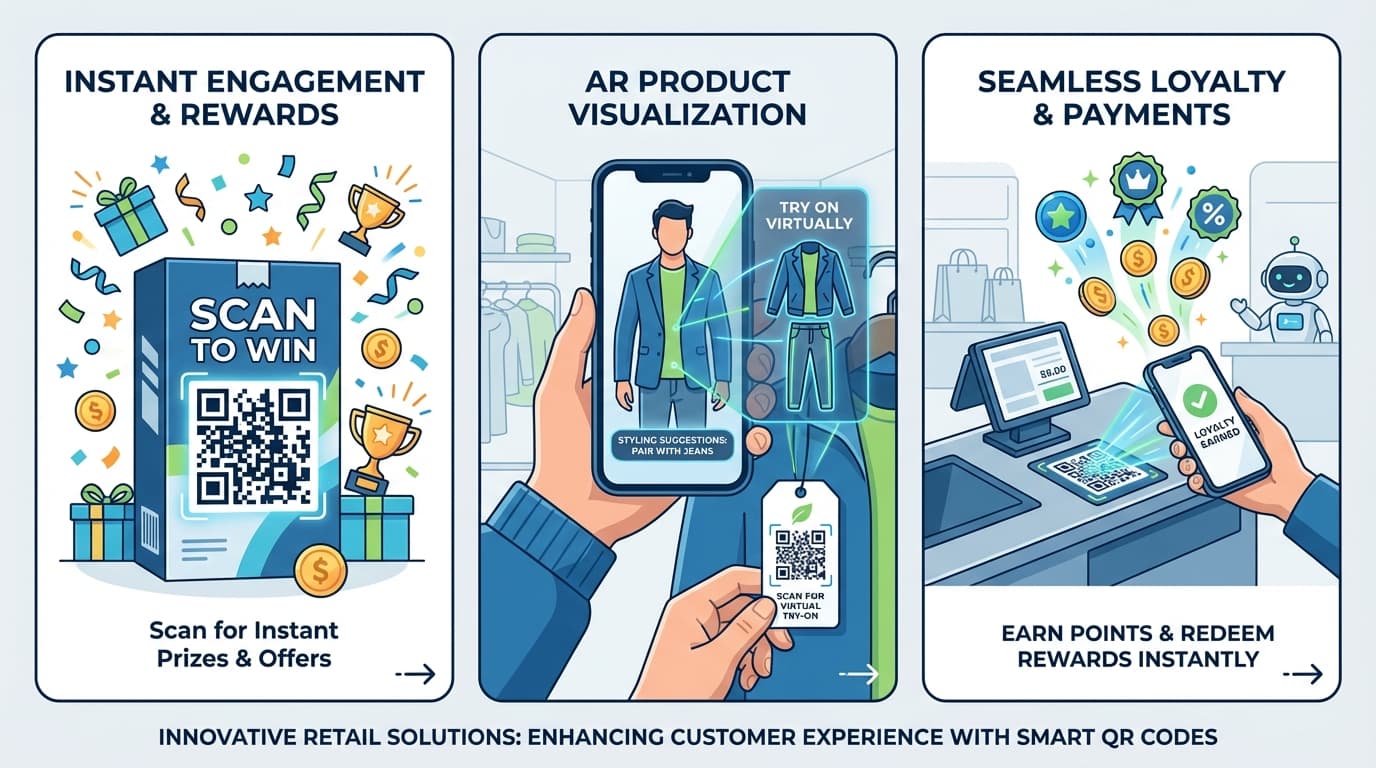
1. Scan-to-Win on Packaging
A QR code on product packaging unlocks instant promotions. It could be a discount on the next purchase, a sweepstakes entry, or access to exclusive content. Every product becomes a lottery ticket. Customers buy more to increase their chances.
2. Virtual Try-On with AR
Scanning a QR code on a product opens an augmented reality experience. Customers see how clothes look without trying them on. Works for glasses, makeup, furniture. Reduces returns and increases conversion.
3. Cardless Loyalty Programs
A QR code at checkout or on the bag automatically registers the purchase in the loyalty program. No required app, no physical card. Customers accumulate points just by scanning. Simplicity increases adoption.
4. Expanded Product Information
Small label, limited information. A QR code on the tag opens a page with product origin, usage instructions, demo videos, and customer reviews. Works especially well for technical or premium products.
Healthcare and Wellness
The healthcare sector discovered that QR codes solve operational problems and improve patient experience.
5. Automated Check-in
Patients receive a QR code via SMS before their appointment. Upon arrival, they scan at reception and the system pulls up their registration, history, and insurance authorization. Lines disappear. Wait times drop.
6. Medication Tracking
A QR code on the medication package opens usage instructions, drug interaction alerts, and reminders for the next dose. Patients scan when they take their medication and the system records treatment adherence.
7. Access to Test Results
Instead of printing reports, labs send a QR code that provides secure access to results. Patients can share with their doctor without carrying paper. Security and convenience.
8. Post-Appointment Feedback
A QR code at the end of the appointment or on the receipt opens a quick satisfaction survey. Response rates increase because it's immediate and easy. Clinics collect data to improve service.
Get Paid to Scan QR Codes
Turn your attention into real rewards. Scan, engage, earn.
Quick video. Earn your first reward.
Events and Entertainment
Events are perfect environments for QR codes because audiences are already engaged and receptive.
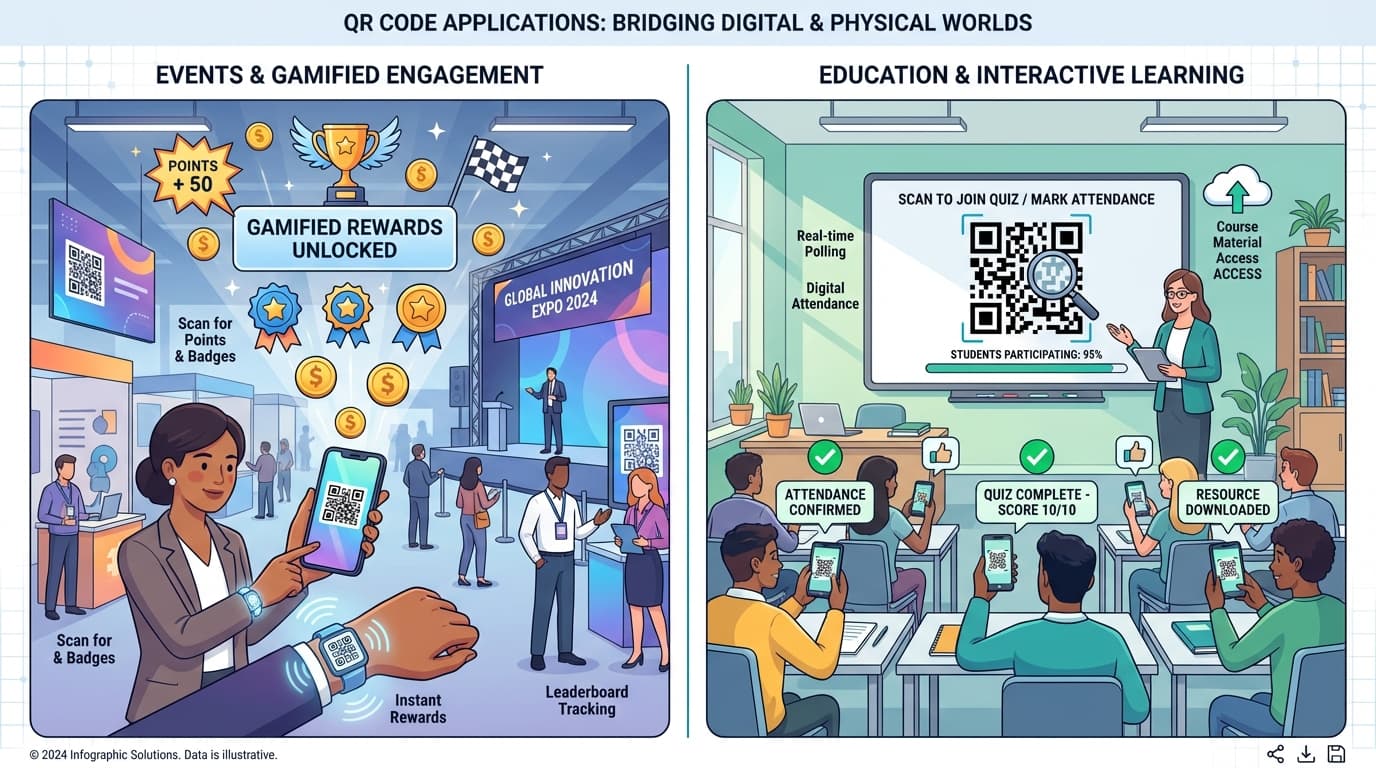
9. Gamified Check-in
Attendees scan a QR code at the entrance and immediately earn their first points. Throughout the event, more QR codes at booths, talks, and networking areas. Whoever accumulates the most points wins a prize. Engagement rises, foot traffic data becomes precise.
10. Sponsor Activations
Sponsors place QR codes at their booth that unlock freebies, discounts, or exclusive content. Unlike flyers that end up in the trash, QR codes generate trackable interactions. Sponsors see real ROI. Learn more about event gamification.
11. Instant Networking
A QR code on the attendee's badge opens their professional profile or LinkedIn. Exchanging contacts becomes a matter of one scan. No typing emails, no business cards that get lost.
12. Real-Time Voting and Feedback
During a presentation, a QR code on screen allows the audience to vote, ask questions, or rate the content. Speakers adjust their presentation in real time based on feedback.
Education and Training
Educational institutions and HR departments are using QR codes to make learning more interactive.
13. Expanded Content in Learning Materials
A QR code in the book or workbook opens an explanatory video, interactive exercise, or supplementary material. Students scan and dive deeper into the topic without leaving context. Works for in-person and online learning.
14. Automated Attendance
The teacher projects a QR code at the beginning of class. Students scan to register attendance. The system validates location to prevent fraud. Roll call that took 5 minutes becomes 10 seconds.
15. Gamified Learning Trails
QR codes scattered around campus or in corporate training materials form a trail. Employees or students scan each point, answer quizzes, and accumulate points. Gamification increases content retention. Understand the psychology behind gamification.
Ready to Innovate Your Customer Experience?
See how businesses use VISU to turn scans into measurable engagement.
Food and Hospitality
Restaurants, cafes, and hotels were pioneers in QR code use during the pandemic. Now they're evolving to much more sophisticated applications.
Beyond the Digital Menu
Digital menus were just the beginning. A QR code on the table can deliver personalized offers based on time of day, automatically register loyalty points, run mini-games while customers wait for their food, or collect feedback before they even ask for the check.
Frictionless Loyalty Programs
Customers scan a QR code on each visit and accumulate points. No need to download an app, create an account, or remember a card. Simplicity increases adoption. Frequent micro-rewards create return habits.
Premium Experiences
Upscale restaurants use QR codes to show dishes in 3D before ordering, tell the chef's story, display ingredient origins, or suggest wine pairings. The experience becomes a competitive differentiator.
Actionable Data
Unlike paper coupons, QR codes capture data in real time. Which dishes generate the most scans, what time customers interact most, which campaigns convert best. Information that transforms operations.
What's Coming Next
QR code trends point to even more immersive experiences. Augmented reality integrated with scans will allow visualizing products in 3D in real environments. QR codes with AI will personalize content in real time based on user profiles. Multiplayer games activated by QR codes will create social experiences in stores and events.
The technology already exists. The question is who will adopt it first and build competitive advantage.
Transform Every Scan Into Opportunity
Join businesses already using VISU for gamified and measurable QR code experiences.
FAQ — Innovative QR Code Uses
Are QR codes only for redirecting to websites?
No. Modern QR codes can trigger augmented reality experiences, capture real-time data, deliver instant rewards, launch games, collect feedback, and much more. Redirecting to a URL is just the most basic use.
What's the difference between static and dynamic QR codes?
Static QR codes have a fixed destination and can't be changed after creation. Dynamic QR codes allow you to change the destination, track scans, personalize experiences by time or location, and collect detailed data. For innovative uses, dynamic is essential.
Do I need an app to create advanced QR codes?
Not necessarily an app, but a QR code management platform. Tools like VISU let you create dynamic QR codes, configure gamified experiences, track analytics, and manage campaigns without technical knowledge.
Do customers need to download an app to scan?
No. Since 2017, the native camera on Android and iPhone smartphones reads QR codes automatically. Just point the camera. This removed the biggest adoption barrier.
How do I measure QR code ROI?
With dynamic QR codes, you track number of scans, peak times, location, post-scan conversion rate, and completed actions. Cross-referencing with sales data, you can calculate precise ROI for each campaign or touchpoint.
Are QR codes safe?
QR codes themselves are safe. The risk lies in the destination. Use trusted platforms, avoid QR codes from unknown sources, and verify the URL before entering sensitive data. For businesses, dynamic QR codes allow monitoring and blocking unauthorized uses.