

You provide great service, deliver quality products, and the customer leaves happy. But when it comes to choosing between you and your competitor, the customer opens Google, sees they have 4.8 stars while you have 3.9, and walks away without even stepping inside. You lost the sale before you had a chance to show your work.
Google reviews are not just about owner vanity. They are the filter that separates who gets customers from who watches traffic pass by. And the worst part: you can have the best service in the neighborhood and still lose to someone who simply knew how to use their rating strategically.
This post is not about how to ask for reviews. It is about how to transform the reviews you already have (or will have) into a machine for attraction and conversion. Strategy, positioning, and smart use of what is already there, waiting to work for you.
Why reviews sell more than any advertisement
Advertising says you are good. Reviews show that other people think you are good. The difference is brutal.

When someone searches for "X store near me," Google shows a list. The first filter is visual: name, rating, number of reviews. If you have 3.5 stars and 12 reviews while the competitor has 4.7 and 89, the click goes to them. You are not even in the competition.
This is social proof. The human brain seeks shortcuts for decisions. Seeing that dozens of people approved a place works as automatic validation. You do not need to convince anyone from scratch, the work has already been done.
The rating is not everything: what customers actually read
A high rating helps, but it does not close the sale alone. The curious customer clicks, reads the comments, and looks for patterns. If everyone praises the service, they know what to expect. If everyone complains about delays, they enter already suspicious.
What appears repeatedly in comments becomes your real reputation. It does not help to have 4.5 if the last five comments mention problems. Customers look at the recent ones.
The rating opens the door: the comments close the sale.
That is why knowing how to respond to Google reviews is part of the strategy. The response shows personality, care, and professionalism. A well-answered negative comment can convince more than ten scattered compliments.
How reviews influence price perception
Customers pay more for a place that seems trustworthy. This is not theory, it is real behavior.

Two stores sell the same product. One has 4.8 stars with detailed comments. The other has 3.6 and few reviews. The customer accepts paying more at the first one because they feel less risk. The review works as an implicit guarantee.
This means that investing in reputation can have a higher return than lowering prices. You maintain your margin and still attract customers who value quality.
Reviews as a customer filter
Not every customer is a good customer. Reviews help attract those who match you and push away those who will cause problems.
If your comments highlight personalized service and a calm environment, you attract those who seek that. Those who want low prices and speed go elsewhere. And that is fine, because they were not your ideal customer anyway.
This works as automatic positioning. The content of reviews communicates what you are without you needing to advertise.
The virtuous cycle: satisfied customer who attracts more customers
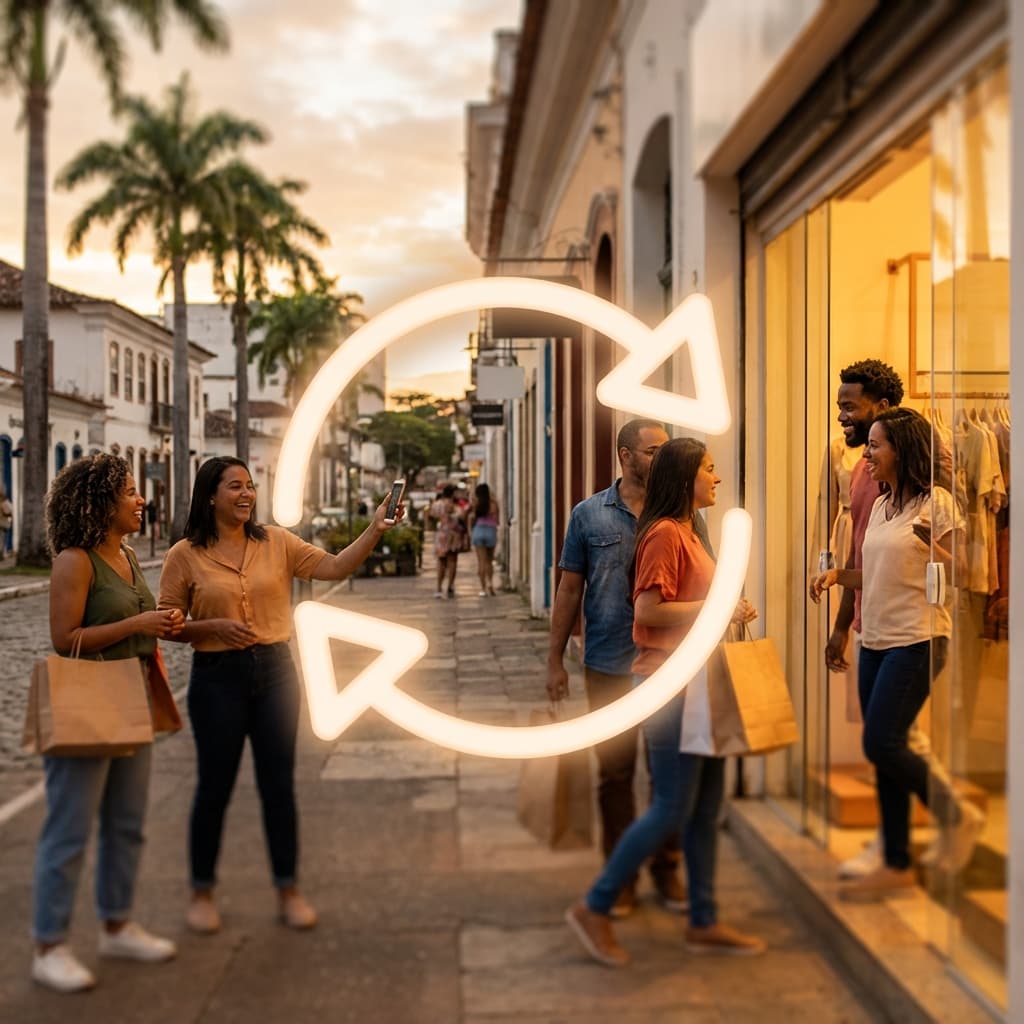
The reviews game is cumulative. The more good reviews, the more visibility. More visibility brings more customers. More customers generate more reviews. The cycle feeds itself.
The problem is that this cycle also works in reverse. Few reviews generate little visibility, which generates few customers, which generates few reviews. You get stuck.
To break free, the path is to make reviewing as easy as possible at the right moment. That is where the Google review QR code strategy comes in. Reducing friction is what transforms a satisfied customer into a published review.
Using reviews outside of Google
Your reviews do not need to stay only on Google. They are content that can be repurposed.
Capture screenshots of positive comments and use them on Instagram, WhatsApp Business, menus, storefront displays. This reinforces social proof at all touchpoints.
New customers who arrive through referrals or social media see that other people approve. This accelerates the buying decision even before looking at Google.
A review is an asset: do not leave it sitting only on your Google profile.
What to do when your rating is low
If your current rating is bad, the first step is understanding why. Read the negative comments and identify patterns. A real problem needs a real fix.
Then, the path is dilution. New positive reviews will gradually pull the average up. There is no magic shortcut, but there is consistency.
For a complete recovery plan, see the guide low Google rating: how to recover your reputation.
Turn reviews into customers
You can keep leaving your reputation on autopilot or use strategy to grow.
Frequently Asked Questions About Reviews and Sales
How many reviews do I need to start attracting customers?
There is no magic number, but from 20 reviews with a rating above 4.0 you start to stand out in local searches. What matters is consistency, not volume all at once.
Do old reviews still count?
They count for the average, but customers look at recent ones first. A profile with the last review from 6 months ago looks abandoned. Keep a constant flow.
Can I use Google reviews in other places?
Yes. Capture screenshots and use them on social media, WhatsApp, printed materials. This expands the reach of the social proof you have already earned.
Do negative reviews scare customers away?
It depends on how you respond. A professional and empathetic response can convince more than a profile with only compliments. Transparency builds trust.
Does a high rating allow me to charge more?
Yes. Customers associate high ratings with quality and accept paying more due to perceived lower risk. A strong reputation protects your margin.