

A customer stands in your store, holding your product, smartphone in hand. She wants to know if it contains allergens her daughter cannot have. She could ask a store employee, if she could find one. Instead, she puts the product down and walks away.
This moment, where physical context meets digital expectations and friction kills the sale, is why phygital experiences matter. Not as a trend on a slide deck, but as an operating model for how people really shop, eat, travel, and attend events in 2026.
Today almost every customer journey is already phygital from their perspective. They check reviews on their phone while standing in an aisle. They compare prices online while sitting at a restaurant table. They scan tickets at stadiums that they bought on their laptop. The question is not whether phygital behavior exists. The question is whether your brand has a strategy and infrastructure to design, measure, and monetize that behavior.
What Phygital Actually Means
The word “phygital” gets used for everything from QR codes on napkins to complex augmented reality installations. Without a clear definition, it becomes impossible to prioritize investments or measure impact.
- What it is NOT: Slapping a QR code on every surface with no journey behind it. Launching an app that nobody uses. Adding technology that makes the customer work harder.
- What it IS: A deliberate design where physical and digital moments work together as one journey. Moving from one to the other feels natural, clear, and obviously valuable for the customer and for the business.
In other words, phygital is not about channels. It is about continuity of experience. A user who scans a code at your shelf, then receives a follow up offer on their phone, then walks back into your store two weeks later should feel like the same conversation continued, not three random touchpoints that your analytics team tries to stitch together after the fact.
Strategic definition A phygital experience is any customer journey where offline touchpoints are intentionally designed to trigger, extend, or personalize digital interactions that create measurable value on both sides.
Brands that get this right see a structural lift in customer lifetime value, marketing efficiency, and first party data collection. In practice, that often translates into more frequent visits, higher average tickets, and a data asset that compounds over time.
Table of Contents
Mapping Phygital Opportunities in the Customer Journey
Every phygital strategy begins with one discipline that is often skipped because it feels “conceptual”: journey mapping. Without a clear understanding of where attention, friction, and intent actually live, brands end up placing technology in the wrong places and then blaming the channel when results disappoint.
Instead of starting with tools, start with moments. Ask simple, precise questions about your real world experience:
- Where do customers reach for their phone inside your store or venue?
- Where do they get confused or hesitate before buying?
- Where do staff members repeat the same information all day long?
- Where do customers leave without you knowing who they are?
Each one of these moments is a potential phygital gateway. Below is a simple four phase framework you can use to map them.
Phase 1: Pre visit
Objective: Turn digital discovery into physical foot traffic.
Customers search, scroll, and compare constantly before visiting your location. Here you connect your digital media to your offline space.
Phygital moves:
- Ads and social posts that show “available near you” with a QR code to directions or in store rewards.
- VISU smart links that tag which creative drove the visit, then reward the user when they scan an in store code later.
- Reservation flows that already connect the visit to a profile, not just an anonymous walk in.
Phase 2: In store discovery
Objective: Turn shelf browsing into informed, confident decisions.
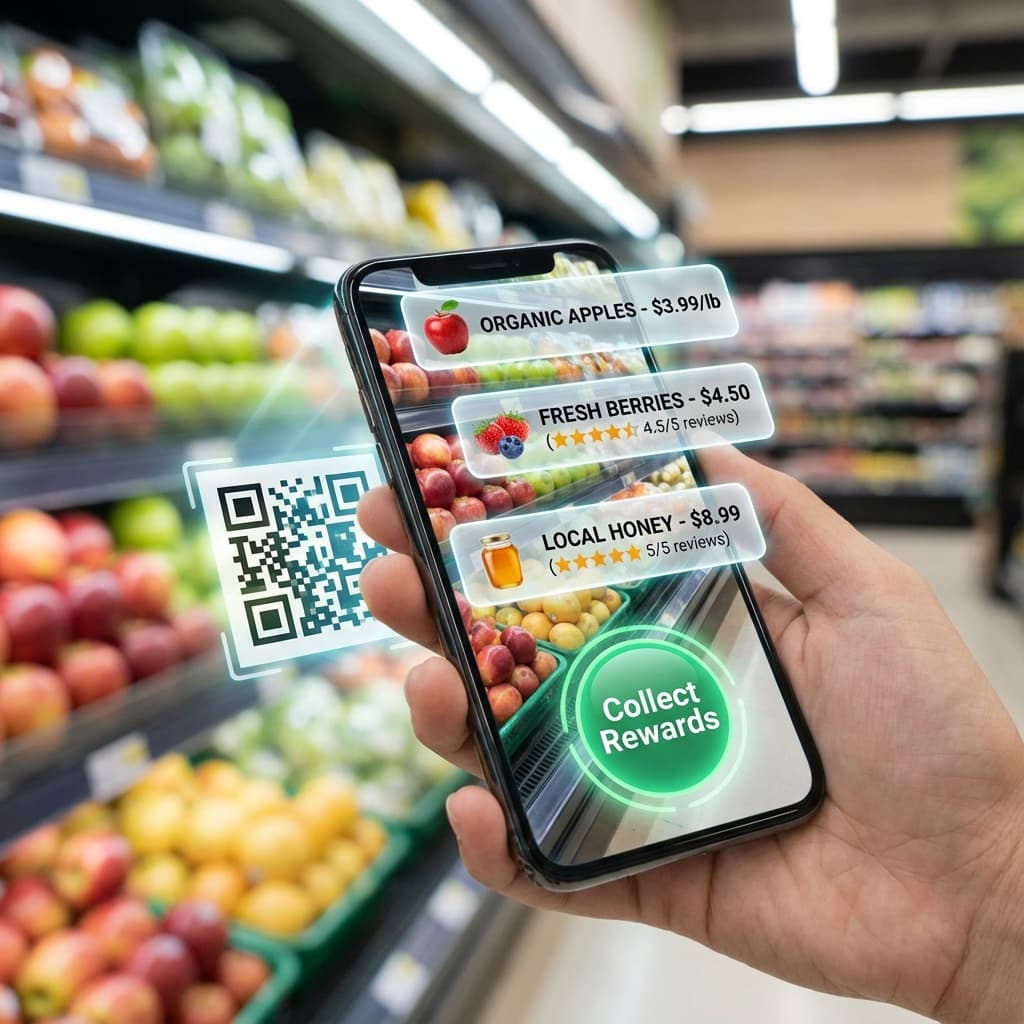
This is where phygital usually fails in traditional deployments. Customers see QR codes that lead to generic homepages or boring static PDFs. The result is predictable. Nobody scans.
Phygital moves with VISU:
- Smart QR codes on shelves that open mobile friendly product stories, reviews, allergen information, or “compare with similar products”.
- Instant rewards for scanning, so the customer receives value even if they do not buy on the spot.
- Missions that guide exploration, such as “scan two plant based products and earn extra points”.
Phase 3: Transaction and checkout
Objective: Reduce friction and capture consent at the moment of highest intent.
Checkout is still treated as a purely operational step in many businesses. Phygital design treats it as a strategic data and loyalty moment.
- QR codes that enable scan and go flows or quick tip options for staff.
- Rewards for using lower friction channels such as self checkout or mobile pay.
- Consent based data capture along the way, like “add email to secure this receipt and receive rewards for your next visit”.
Phase 4: Post visit and loyalty
Objective: Turn single visits into ongoing relationships.
Once the customer leaves the physical space, most brands lose visibility. With a phygital layer powered by VISU, that visit becomes the beginning of a measurable relationship.
- Receipt or exit QR codes that open one tap surveys in exchange for points.
- Personalized missions that invite customers back within a specific time window.
- Segmentation that distinguishes locals from tourists, heavy buyers from testers, and loyalists from price seekers.
The Phygital Technology Stack
Once journey opportunities are clear, you can decide which technologies are truly required. The mistake many organizations make is trying to jump directly into apps, sensors, or AR without building the basic connective tissue first.
A practical phygital stack for 2026 usually looks like this:
| Technology | Barrier to Entry | Primary Role |
|---|---|---|
| VISU Smart QR Codes | Low | Entry point for missions, rewards, product data, feedback. |
| NFC or RFID | Medium | Tap to pay, tap to access, controlled environments. |
| Branded Mobile App | High | Deep loyalty, advanced functionality, heavy users. |
| Customer Data Platform | Medium | Unifying first party data across touchpoints. |
| Analytics and BI | Medium | Analyzing cohorts, campaigns, and performance over time. |
Why start with VISU and QR: no hardware upgrades, no app download friction, and an immediate reward layer that gives customers a concrete reason to participate. You can add NFC, app features, or AR on top later, once you are already collecting and learning from attention data on day one.
Design Principles for Seamless Integration
Tools without principles lead to gimmicks. To build phygital experiences that feel premium and inevitable instead of awkward, anchor your design on a small set of non negotiable rules.
Principle 1: Reduce friction, never just add steps
Every digital layer must remove some pain the customer feels in the physical world. If your QR flow takes longer than asking a human, customers will learn to ignore it. If your mobile ordering system leads to shorter wait times, they will adopt it quickly.
Principle 2: Make the value obvious in one sentence
Customers do not read explanations at the shelf. The call to action near a QR code has to pass the one breath test. “Scan to see the menu” is clearer than “Scan to access our digital experience”. “Scan to get 10 percent off now” is even better. VISU campaigns are designed around this clarity, since every mission has a direct payoff at the end.
Principle 3: Match content to context
The same code cannot do everything. The physical location of each activation should narrow the purpose dramatically.
- On product packaging: ingredients, origin, usage tips, social proof.
- At the entrance: welcome missions, store maps, offers.
- At exit or receipt: feedback and reward loops.
Principle 4: Design for repeat, not one off campaigns
The most valuable phygital programs are not one time stunts. They are systems where every visit and every scan feed a growing data asset. That is why VISU focuses on building missions and QR layers that can run for months or years, with content that can be refreshed without reprinting everything.
Principle 5: Treat attention as an asset, not a byproduct
If you think of a scan as “one more engagement” you will under invest in the experience. If you think of a scan as “one more verified attention event that will feed segmentation and lifetime value” you design differently. You add optional questions, missions, and opt in checkpoints that enrich the profile behind each user.
Industry Playbooks and Use Cases
Phygital is not exclusive to one vertical. The same underlying mechanics apply whether you run a supermarket, a quick service restaurant, a gym, or a conference. The tactics below show how to adapt the model to different realities while keeping the same core logic: capture attention, deliver value, collect data, and feed it back into future decisions.
Retail: from silent shelves to guided journeys
Retail shelves are still mostly passive. Products sit there hoping to be noticed. Staff attention is limited and uneven. Meanwhile customers stand in front of racks, searching reviews on their phones from external sources.
Phygital moves with VISU:
- Shelf edge VISU QR codes that unlock comparison guides, size recommendations, try at home policies, or loyalty missions.
- Category level missions such as “scan three sustainable products and earn a bonus” that move customers through specific areas of the store.
- Digital receipts linked to scans that allow you to see which codes drive which future purchases.
Hospitality and restaurants: table first party data engine
Restaurants are inherently phygital environments now. Guests sit at the table and browse social feeds, maps, and review apps while they wait. You can either be absent from that digital layer or design it.
- Table QR codes that open menus, allergen filters, and pairing suggestions.
- Missions that turn feedback into a game, for example “rate three aspects of your visit and earn rewards for next time”.
- Check in missions that tie each visit to a persistent wallet instead of a one time transaction.
Events and venues: measurable engagement instead of guesses
Events generate huge volumes of attention that often go unmeasured. Sponsors want proof. Organizers want insights. Attendees want value beyond swag bags.
- Personal QR codes on badges that attendees use to join missions, enter raffles, and collect content as they move through the venue.
- Stage or booth QR codes that unlock slides, offers, or exclusive content in exchange for a quick question about interests or budget.
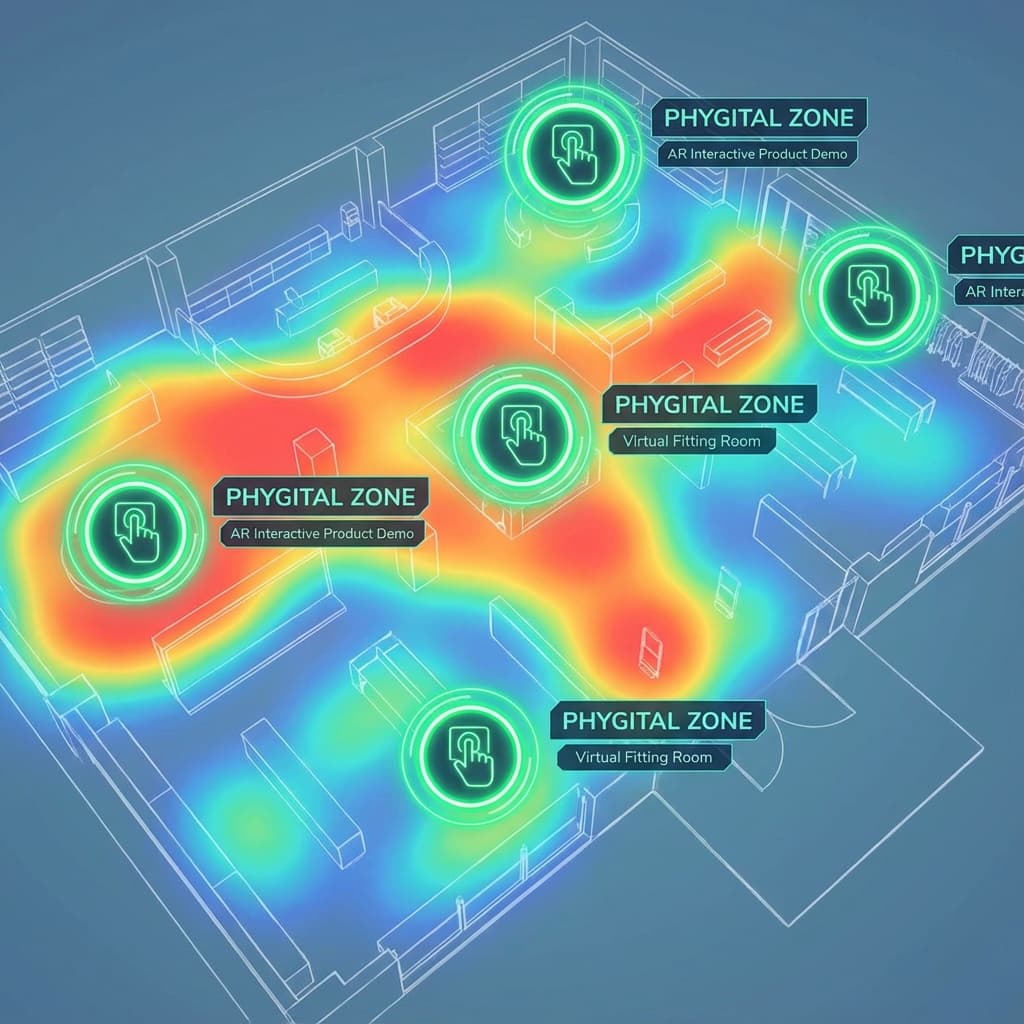
- Heatmaps based on scans that show which areas, sessions, or booths truly captured attention.
Retail Hack: Scan and go with rewards
Use VISU to reward behavior that makes your operations leaner. Offer points for scanning items with a phone and paying digitally, then use that data to redesign shelf layout based on what people scan together.
Travel, Tourism, and Attractions: Turning Footfall Into Data
Travel and tourism are inherently physical experiences, but customer discovery, planning, and reviews are overwhelmingly digital. This mismatch creates one of the richest phygital opportunities of any sector.
Challenges: Attractions rarely know who visited, what paths guests took, and which exhibits or features created the most engagement. Feedback collection is poor, and repeat visitation is unpredictable.
Phygital opportunities powered by VISU:
- Smart entry points: QR missions at ticket gates that reward guests for checking in, allowing operators to track visit patterns across times and demographics.
- Exploration trails: “Scan to unlock hidden facts” missions inside museums, zoos, theme parks, or walking tours. Each scan builds user profiles tied to interests.
- Food and merchandise uplift: Personalized coupons triggered by scanning an exhibit or attraction (e.g., “You scanned the dinosaur zone, get 10 percent off the themed store”).
- Exit engagement: QR at the parking or exit doors offering a 45 second survey with rewards.
The result is a high resolution behavioral map without installing cameras or sensors. Operators gain insights like:
- Which zones drive the longest dwell time.
- Which attractions convert into store purchases.
- Which guest profiles are most likely to become annual pass holders.
Tourism is a perfect phygital vertical because visitors are already in discovery mode. The key is adding digital layers that enhance exploration instead of interrupting it.
Services, clinics, and professional offices
Phygital strategy also applies to less obvious settings like clinics, salons, banks, or professional offices.
- Waiting room missions that explain procedures, set expectations, and reduce anxiety while collecting consented preferences.
- Post appointment surveys tied to QR codes on discharge papers or business cards.
- Educational content triggered by scanning printed materials, turning brochures into dynamic journeys instead of static leaflets.
Common Phygital Pitfalls (and How to Avoid Them)
Even well intentioned brands often sabotage their own phygital rollout by making avoidable mistakes. Identifying these early can save months of rework and prevent poor adoption.
Pitfall 1: Treating QR Codes as Decoration
The worst performing phygital programs place QR codes everywhere with no value behind them. Customers quickly learn that scanning leads nowhere interesting, and adoption collapses.
Fix: Every code must have a single purpose and a clear reward or utility. If you cannot articulate why someone would scan it in five words, it is not ready.
Pitfall 2: One Size Fits All Journeys
Many teams copy paste the same landing page across the store. This ignores context, intent, and value per location.
Fix: Micro segment your physical space. Entrance missions are different from shelf missions, which are different from checkout missions.
Pitfall 3: Launching Without Measurement
Launching QR experiences without a measurement system is like installing new shelves without inventory tracking. You see movement but not value.
Fix: VISU automatically tracks scan rate, mission completion, customer identity, and repeat engagement. Make these dashboards your truth.
Pitfall 4: Over reliance on Apps
In 2026, forcing users into an app download too early kills conversion. The friction is too high.
Fix: Use app experiences as “Phase 3” of your phygital roadmap. Start with VISU’s mobile web missions and move only high value users into the app later.
Pitfall 5: No Ownership Across Teams
If operations, marketing, digital, and retail do not know who owns phygital, nothing moves.
Fix: Create a cross functional “Experience Squad” responsible for pilots, measurement, iteration, and scaling.
Monetization and ROI Measurement
No executive will green light phygital investments based only on cool factor. You need a practical way to model and track financial outcomes. Phygital programs usually create value in three stacked layers: direct revenue, efficiency gains, and data asset growth.
Layer 1: Direct commercial impact
Well designed phygital experiences increase conversion at the moment of decision. When customers feel informed, rewarded, and guided, they buy more often and with higher tickets.
- Uplift in conversion for products with informative QR journeys versus control products.
- Increase in average order value when missions encourage add ons or bundles.
- Frequency lift when post visit missions successfully bring customers back within a set window.
Layer 2: Operational efficiency
Digital flows can offload repetitive tasks from staff. That does not mean replacing humans. It means using them where human attention matters most.
- Fewer minutes spent answering basic questions that a QR journey can answer once.
- Higher throughput at peak times when mobile ordering or self service lines are supported by phygital onboarding.
- Reduced need for printed materials that go out of date quickly.
Layer 3: Data asset value
This is the layer most leaders underestimate. Every scan, mission, and interaction captured through VISU generates structured first party and zero party data. Over time this becomes a strategic asset that fuels segmentation, lookalike building, demand forecasting, and personalized offers.
Building a simple ROI model
You do not need complex simulations to start. A basic phygital ROI model can look like this:
ROI = (Incremental Revenue + Efficiency Savings + Modeled Data Value - Program Costs) / Program Costs
| Inputs | Examples |
|---|---|
| Program Costs | Printing QR materials, VISU rewards budget, internal rollout time. |
| Incremental Revenue | Extra conversions, higher basket size, return visits attributable to missions. |
| Efficiency Savings | Fewer staff hours on repetitive tasks, better queue management. |
| Data Asset Value | Modeled lifetime value uplift from identifiable, engaged customers. |
Success Metrics and Governance
Phygital projects fail quietly when they are launched with no clear scorecard. To manage this like a serious program, define a small set of metrics before the first QR code goes live.
Adoption and behavior metrics
- Scan rate: percentage of visitors who scan at least one code in a visit.
- Mission completion rate: share of users who finish the full digital journey once they start.
- Repeat participation: how many unique users engage again within 30, 60, or 90 days.
Experience and satisfaction metrics
- Net promoter or satisfaction scores captured via VISU missions.
- Qualitative feedback left in open text answers that reveals friction points.
- Drop off points inside digital flows that suggest confusing steps.
Financial and strategic metrics
- Conversion uplift in phygital activated zones versus control zones.
- Lifetime value difference between customers who never scan and those who actively participate.
- Share of revenue attached to identifiable, contactable customers versus anonymous tickets.
Governance and iteration
Phygital programs should run with the same discipline as any other core channel.
- Quarterly reviews where you retire underperforming activations and scale the best performing ones.
- Clear ownership between digital, retail, and operations teams instead of scattered responsibility.
- Privacy and compliance checks that ensure all data collection has explicit justification and consent.
Future Evolution in 2026 and Beyond
The phygital experiences you design now need to be flexible enough to absorb new interfaces that are reaching the mainstream. QR codes are a practical gateway into this future because they work on any smartphone, but they are not the end state.
AI powered orchestration
As your VISU dataset grows, AI models can start recommending which mission to show, which reward level to offer, or which product story to highlight in real time. Instead of one static flow for everyone, you move toward adaptive journeys where the next step is chosen based on what similar users did before.
Spatial computing and AR layers
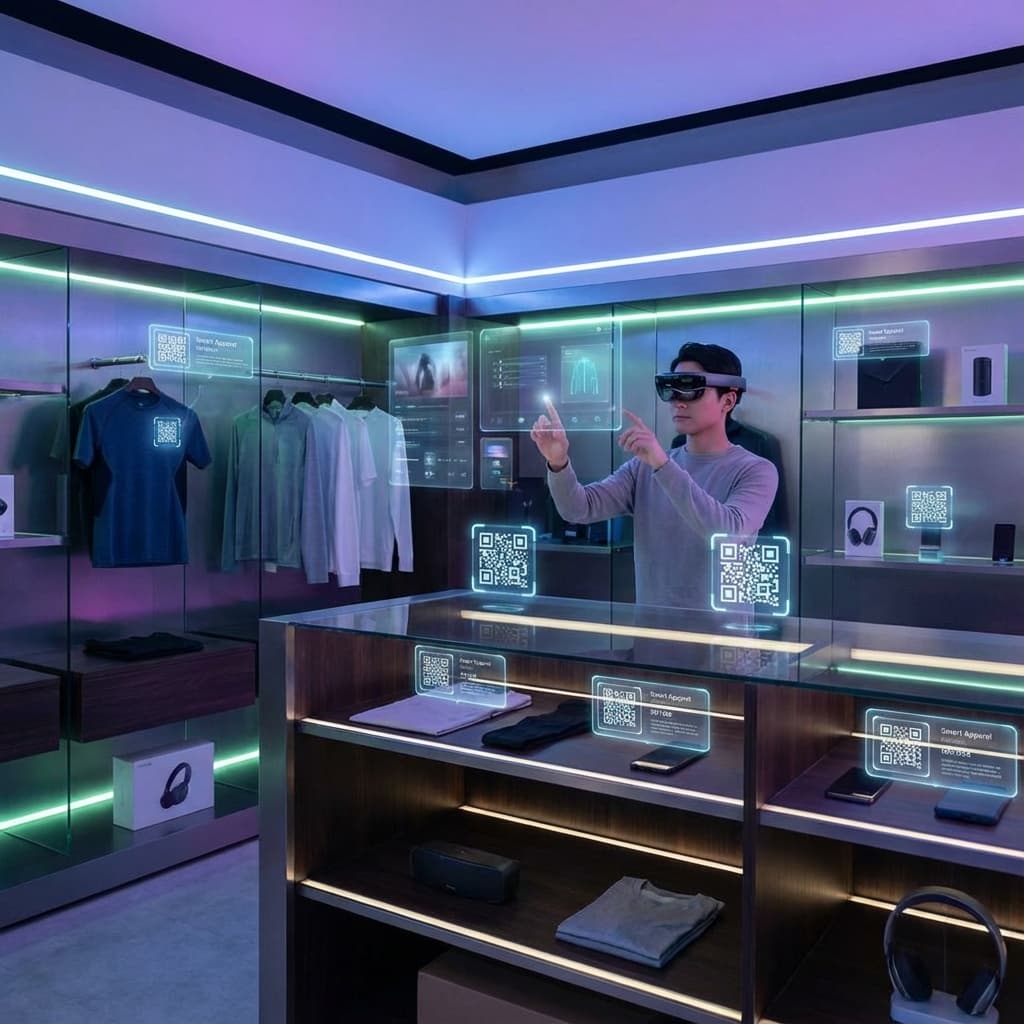
Devices that blend digital content into the physical world will turn phygital from something you do on a screen in your hand into something you see around you. When that happens, brands that already have structured product data, attention data, and mission systems in place will move faster than those starting from zero.
IoT and contextual triggers
Sensors and connected devices will add more ways to trigger digital experiences automatically. However, without a clear value exchange and attention measurement layer, these technologies risk becoming noise. VISU gives you a way to treat every triggered interaction as an event with measurable value.
Conclusion: Your 2026 Phygital Playbook
Phygital customer experiences are not a side project. They are rapidly becoming the backbone of how modern brands collect data, build loyalty, and defend margin in a world where pure online and pure offline strategies both hit limits.
The brands that will win the next cycle are not the ones that spend the most on hardware or apps. They are the ones that treat attention inside physical spaces as measurable, rewardable, and worth building infrastructure around.
Your immediate action plan
- Map one high intent journey. Choose a single experience such as “browsing at the shelf” or “waiting at the table” and document what really happens.
- Launch one VISU powered pilot. Design a clear QR mission with a reward, a simple message, and a defined data outcome.
- Measure and iterate fast. After four to eight weeks, evaluate scan rates, conversion, and data quality. Keep what works, fix what does not, and then extend to the next journey.
Your customers are already behaving in a phygital way. The question is whether you will be the one capturing and compounding the value of that behavior, or whether that value will keep leaking to search engines, review apps, and competitors that understand attention better than you do.
Start Your Phygital Transformation
Do not spend years and millions building custom infrastructure. Use VISU to deploy phygital journeys with smart QR codes, missions, and rewards in a matter of days.Frequently Asked Questions
What is the difference between omnichannel and phygital?
Omnichannel usually means being present in multiple channels such as web, store, app, and social. Phygital focuses on the moment where physical and digital are used together, like scanning a code inside the store to unlock a mission or offer.
Is phygital expensive to implement?
Not if you start with the right layer. VISU powered QR missions are low cost and do not require new hardware or app installs. Large investments like AR or custom apps should come later, once you are already seeing clear ROI from simpler activations.
Do customers really scan QR codes in 2026?
Yes, but they scan for value, not novelty. When codes are connected to clear benefits such as faster service, better information, or monetary rewards through VISU, adoption rates can reach double digit percentages of foot traffic.
How do I know if my phygital program is working?
Look at three levels: scan and mission completion rates, conversion or ticket lift in activated areas, and the growth of your first party data asset. VISU dashboards make these signals visible so you can adjust strategy quickly.