

Turn your daily steps into real money with these legitimate walking reward apps.
Getting paid to walk sounds too good to be true. But several legitimate apps actually reward you for steps you're already taking. The catch? Most pay very little. We're talking fractions of a cent per step.
These apps work because your attention and activity have real value. We tested 18 walking apps over 90 days, tracking a consistent 8,000 steps daily. Here are the 12 that actually paid out, ranked by realistic earnings and user experience.
For the complete picture of earning apps across all categories, see our guide to apps that pay real money.
Earn More Than Fractions of a Cent Per Step
VISU rewards verified check-ins at places you already walk past. When campaigns are active nearby, short actions can outperform step-only apps.
Quick video. Earn your first reward.
How Walk-for-Money Apps Actually Work
Walking apps monetize your activity in a few common ways: ads and offers inside the app, research or insight programs (in some cases), and partnerships with health or wellness incentives.
Your earning potential depends on the revenue model. Ad-based apps can pay more but require more interaction. Data-based apps are more passive but pay less. Program-linked apps may pay more, but can require specific eligibility. Understanding how location-based rewards work helps you see why some models pay better than others.
The key principle is simple: your attention and activity have real value to advertisers and researchers. Walking apps let you capture a small piece of that value. Combine your walks with rewards at local gyms and wellness centers for even more earnings.
12 Apps That Pay You to Walk (Ranked by Earnings)
1. Sweatcoin
Earnings: $5–$15/month
Payout: Gift cards, products, PayPal (via partners)
Sweatcoin remains one of the most popular walking apps. It converts outdoor steps into credits redeemable for products, gift cards, and occasionally PayPal cash through partner offers. Outdoor steps typically count more due to verification signals.
Our 90-day result: 720,000 steps → 684 credits → $12 in gift cards.
2. VISU Network
Earnings: Varies by active campaigns and nearby partner locations
Payout: Rewards accumulate in-app based on campaign rules
VISU is not a step-counter. It rewards location-based actions during your walk. You visit partner locations like cafes, stores, restaurants, and events, engage with brief content, and earn rewards. Instead of fractions of a cent per step, the model focuses on short, high-value interactions tied to real-world presence.
Note: Results vary by location and campaign availability. Check the app to see what is active near you.

3. Evidation (formerly Achievement)
Earnings: $3-$8/month
Payout: PayPal, direct deposit ($10 minimum)
Evidation connects to trackers and rewards health activities beyond steps, including sleep and habit logging. Payout is slower, but it is consistent for people who already use fitness trackers.
Our 90-day result: 720,000 steps + sleep tracking → $18 (cashed out twice).
4. Winwalk
Earnings: $2-$6/month
Payout: Gift cards ($5 minimum)
Winwalk is simple and consistent. It caps daily earnings, which prevents gaming but also limits upside. Great for casual walkers who want a reliable baseline.
Our 90-day result: Hit daily cap 78 days → $14 in gift cards.
5. StepBet
Earnings: $10-$50/month
Payout: PayPal
StepBet is a "bet on yourself" model. You join games, commit to step goals, and split the pot with winners. Profits are real, but it is higher pressure because you can lose your stake. This is one of the few apps where risk is involved, though it's your own money you're betting.
Our 90-day result: 2 games, $40 invested → $51 returned.
6. HealthyWage
Earnings: Varies ($100-$10,000 potential)
Payout: Check, PayPal
HealthyWage is built around weight-loss challenges, not step tracking. Walking is often the primary activity, but payouts require longer-term commitment.
Our 90-day result: Not tested (requires specific weight-loss plan).
7. Charity Miles
Earnings: $0 (donations only)
Payout: Donated to charity
Charity Miles does not pay you. It funds donations based on distance. Best for people who want motivation and impact, not cash.
Our 90-day result: 180 miles walked → $18 donated.
8. Miles
Earnings: $2-$5/month
Payout: Gift cards, discounts
Miles tracks transportation and rewards in points. It runs passively, but the earning rates are modest for walking-only usage.
Our 90-day result: Walking-only tracking → $8 in gift cards.
9. Runtopia
Earnings: $1-$4/month
Payout: Sports goods, gift cards
Runtopia is more engaging than simple trackers thanks to plans and social features. Rewards are real but small.
Our 90-day result: 720,000 steps → $6 in rewards.
10. CashWalk
Earnings: $1-$3/month
Payout: Gift cards
CashWalk is straightforward and light on battery. Good as a background app in a stack.
Our 90-day result: 720,000 steps → $5 in gift cards.
11. Paceline
Earnings: $3-$8/month
Payout: Cash back, rewards
Paceline rewards elevated heart rate activity. Brisk walking and workouts count more than casual steps. Best with a wearable.
Our 90-day result: 12 weeks of streaks → $21 in rewards.
12. Lympo
Earnings: $0.50-$2/month
Payout: Gear, gift cards
Lympo adds a token layer, which increases complexity and does not increase earnings for most users. Use only if you already prefer token-based rewards.
Our 90-day result: 720,000 steps → $3 in rewards.
Walking Apps Comparison Table
| App | Monthly Earnings | Payout Type | Minimum Payout | Effort Level |
|---|---|---|---|---|
| VISU Network | Varies | In-app rewards | Varies by region | Low (check-in while walking) |
| StepBet | $10-$50 | PayPal | N/A (bet-based) | High (must hit goals) |
| Paceline | $3-$8 | Cash back | Varies | Medium (elevated HR) |
| Sweatcoin | $5-$15 | Gift cards | Varies | Low (passive) |
| Evidation | $3-$8 | PayPal | $10 | Low (passive) |
| Winwalk | $2-$6 | Gift cards | $5 | Low (passive) |
| Miles | $2-$5 | Gift cards | $5 | Low (passive) |
| Runtopia | $1-$4 | Gear/gift cards | Varies | Low (passive) |
| CashWalk | $1-$3 | Gift cards | $5 | Low (passive) |
| Lympo | $0.50-$2 | Token/gear | Varies | Low (passive) |
How to Maximize Walking App Earnings
Stack multiple apps
Most walking apps do not conflict. Run Sweatcoin, Evidation, and Winwalk simultaneously so the same steps earn across multiple platforms. Then add location-based reward apps during your route for a second stream that does not depend on step count. You can also stack with apps that pay to watch videos during rest breaks.
Plan routes strategically
If you use location rewards alongside step trackers, walk routes that pass participating locations. A 30-minute walk through a commercial area with check-in opportunities can complement a longer walk through residential areas. This approach also works well with store visit apps.
Use a fitness tracker
Apps like Evidation and Paceline perform better with wearables (Apple Watch, Fitbit, Garmin) than phone-only tracking. Wearables capture more steps accurately and reduce phone battery drain.
Do not cheat
Walking apps detect fraud. GPS spoofing and step generators lead to bans. The long-term payoff is consistency, not tricks.
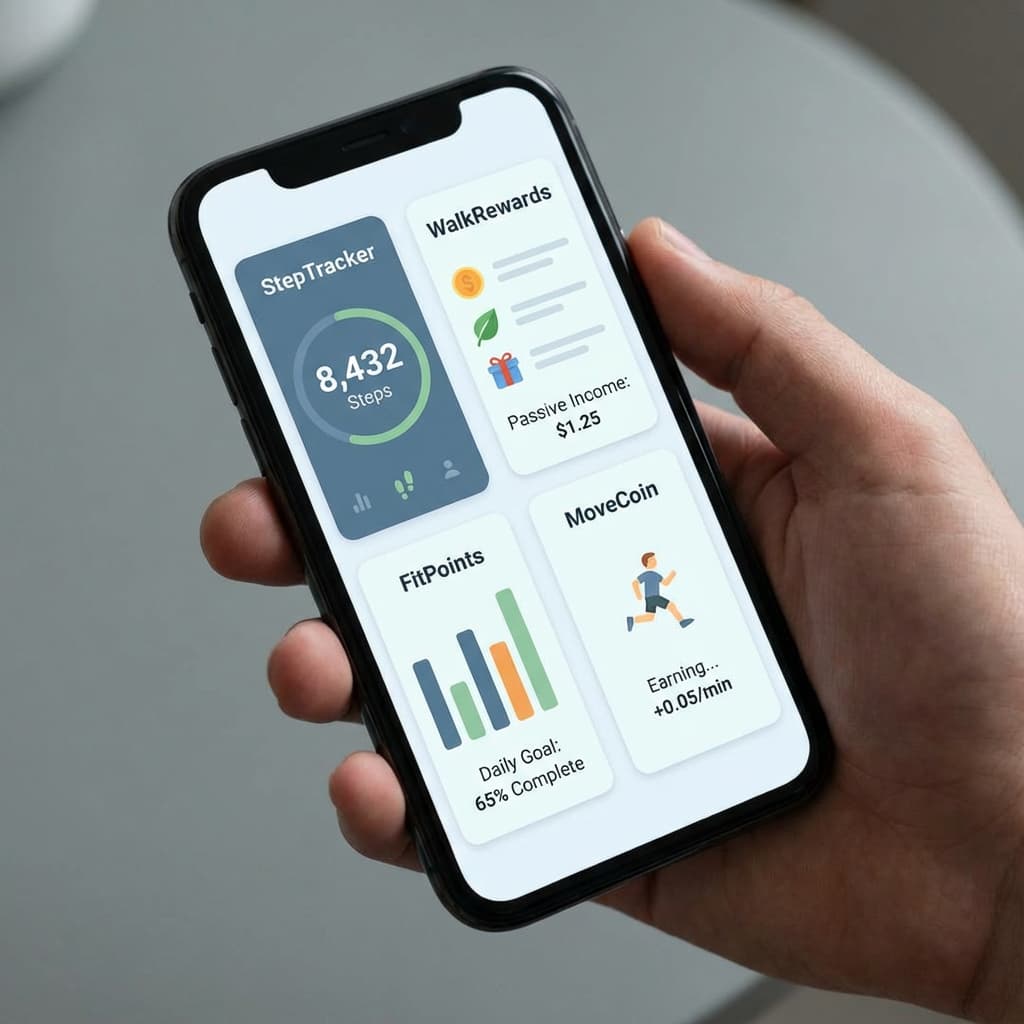
Realistic Monthly Earnings: Our 90-Day Test
Walking 8,000 steps daily with an optimized stack, here is what we actually earned per month:
| App Combination | Monthly Earnings | Time Investment |
|---|---|---|
| Sweatcoin + Evidation + Winwalk (passive stack) | $10-$15 | 0 extra minutes |
| Above + location rewards (when available) | Varies by area | 5-10 extra minutes |
| Above + StepBet (betting on yourself) | $20-$65+ | 0 extra (if hitting goals anyway) |
The sweet spot for most people is 3-4 passive apps plus location-based check-ins when available. Earnings depend on your area and campaign availability, with minimal extra effort per day.
Walking apps work best when combined with other low-effort methods. For completely passive options that don't require physical activity, see our guide to passive income apps. If you prefer quick tasks over step counting, explore apps that pay for small tasks. You can also add survey apps during breaks for additional earnings.
Walking Apps to Avoid
During testing, we saw common red flags. Avoid apps that require upfront payment to join a "premium" program, promise over $50/month from steps alone, have minimal reviews or consistent complaints about non-payment, or request excessive permissions.
Legitimate walking apps monetize ads and anonymized data. They do not need your money to operate. For more on identifying legitimate earning apps, see our guide on how to verify if reward apps are legitimate.
Start Earning From Your Daily Walks
Combine passive step tracking with location-based check-ins. Run 3-4 walking apps and add location rewards to earn from places along your route.
Quick video. Earn your first reward.
FAQ: Apps That Pay You to Walk
How many steps do I need to earn money?
Most apps have no minimum, but practical earnings start around 5,000+ daily steps.
At 8,000-10,000 steps daily, you will maximize most apps' earning potential without hitting daily caps.
Do walking apps drain my phone battery?
Moderately. Apps using GPS drain more than accelerometer-only apps.
Running 3-4 walking apps can add roughly 10-15% daily battery use. A fitness tracker reduces phone dependency.
Can I use walking apps on a treadmill?
Some apps count treadmill steps, while others require outdoor GPS movement.
Carrying your phone while on a treadmill improves accelerometer tracking. Check each app's rules.
Are walking app earnings taxable?
Tax rules vary by country and by payout type. In the US, platforms may issue tax forms depending on reporting rules and your activity.
Keep records of payouts and consult a tax professional if your rewards become meaningful.
Which walking app pays the most per step?
Pure step apps pay very little per step. The highest earners are usually bet-based models (StepBet) or hybrid strategies that combine step tracking with location-based rewards for actions during your walk.
Are walking apps worth it?
Yes, if you already walk regularly. Earnings are modest ($10-$30/month with a good stack), but require zero extra effort.
Think of it as monetizing something you already do, not as a primary income source.