

Interactive marketing has become one of the most effective ways to capture attention in 2026. Customers no longer respond to passive content. They expect brands to give them something to do, not something to watch. Whether they are scanning QR codes, completing micro missions, tapping through dynamic content or triggering personalized offers, people engage more deeply when they participate instead of observe.
The shift toward interactive marketing is driven by two forces. First, customer behavior has changed. Attention spans are shorter, and people switch contexts constantly between physical and digital environments. Second, brands now have access to tools that make it easy to design interactive experiences with real time tracking and measurable outcomes. Passive ads cannot compete with experiences that adapt as customers move and respond.
This guide explains what interactive marketing is, how it works and why it drives better results than traditional campaigns. You will also see real examples that brands can launch in stores, events, packaging, creator funnels and omnichannel journeys. Throughout the article, we highlight how platforms like VISU Solutions turn interactive marketing into a repeatable and measurable strategy.
What Interactive Marketing Really Means in 2026
Interactive marketing is any experience where customers actively participate rather than passively consume. Instead of watching a video, they scan a QR code to unlock a reward. Instead of reading static information, they tap on dynamic elements to reveal personalized content. Instead of browsing a product page, they join a mission that guides them step by step through exploration and purchase.
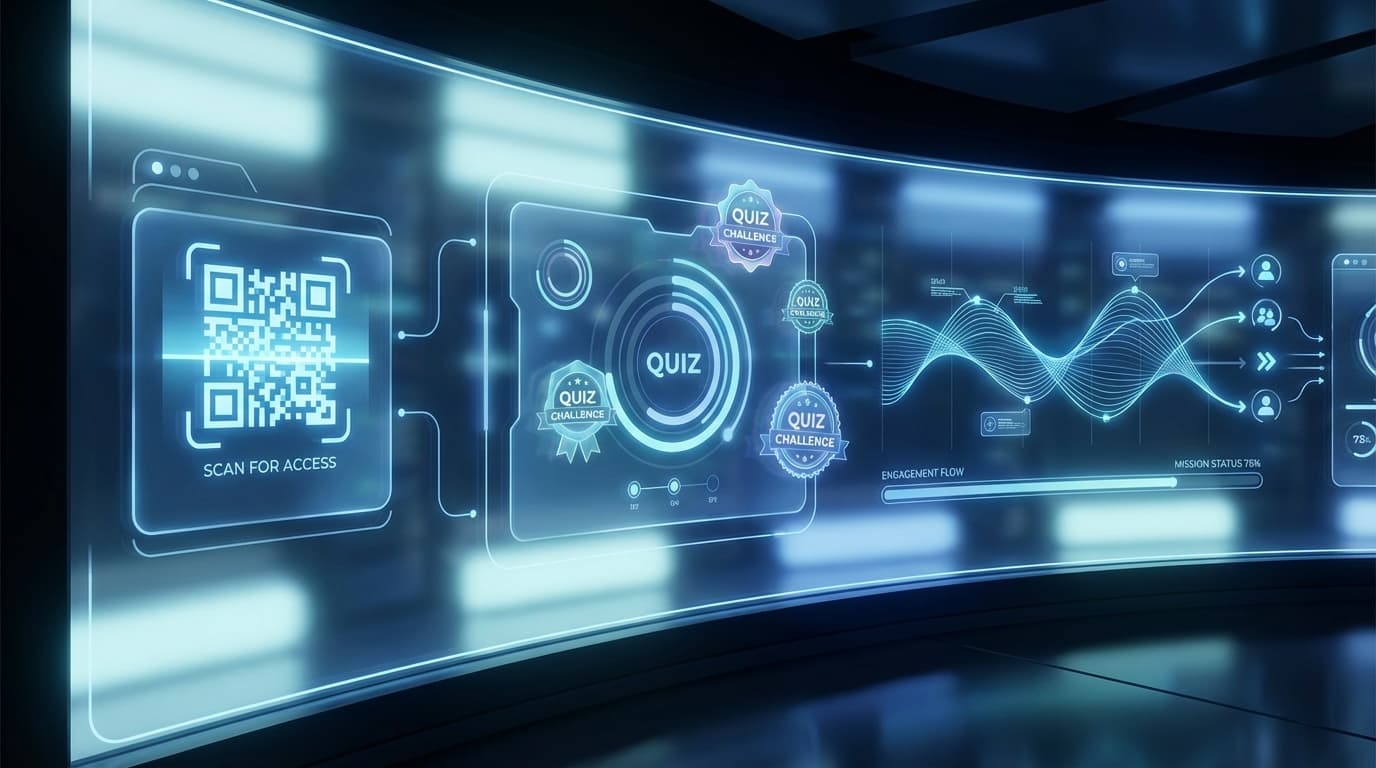
The core idea is simple. When customers act, they reveal intent. Every scan, tap, choice or mission step is a micro signal that shows what they care about. These signals are far more accurate than passive metrics like impressions or views. Better yet, interactive marketing creates a feedback loop. Each action triggers the next piece of the experience, keeping the customer engaged longer and moving toward a specific outcome.
Interactive experiences can happen anywhere. A shopper can scan a QR code on a shelf and enter a mission that leads to product discovery. An event attendee can explore sponsor zones and collect points. A creator can send followers into interactive funnels that reward engagement. Brands can personalize offers instantly based on actions taken inside a physical space or on a mobile page.
Interactive marketing is not only more fun. It is more effective because it multiplies engagement, increases dwell time, improves data quality and drives higher conversion rates.
In 2026, the most successful brands design interactive experiences that adapt in real time and connect offline and online journeys through smart links and QR based triggers.
Key characteristics of interactive marketing
- Customers take actions rather than passively consume content.
- Each action triggers the next step in a real time journey.
- Experiences adapt based on behavior and preferences.
- Offline and online interactions blend seamlessly.
- Data captured is high intent and tied to real engagement.
These characteristics make interactive marketing ideal for brands that want deeper relationships instead of surface level engagement.
Why Interactive Marketing Outperforms Traditional Campaigns
Traditional marketing shows messages. Interactive marketing creates experiences. The difference is massive. In passive campaigns, brands hope customers pay attention. In interactive campaigns, customers choose to engage, which means the brand captures richer signals and influences behavior more directly.
Interactive experiences also generate far higher dwell time. A static ad might get two or three seconds of attention at best. A mission, quiz, QR journey or micro reward flow can hold attention for thirty seconds, one minute or even several minutes. That extra time is what makes conversions more likely.
The second advantage is emotional impact. When customers participate, they feel involved. They get small wins, build progress and receive personalized responses. This sense of agency drives stronger brand recall and satisfaction.
Finally, interactive marketing creates better data. When customers take action, the brand receives intent based signals like scan rate, mission completion, repeat interactions, reward claims, zone visits and path patterns. These indicators are far more predictive of purchase behavior than passive views.
Platforms like VISU QR Ads turn these interactions into measurable events, making it easier to connect engagement with revenue outcomes.
Benefits of interactive marketing in 2026
- Higher engagement and longer dwell times.
- Stronger customer memory and emotional connection.
- More accurate segmentation using intent based actions.
- Higher conversion rates at key journey steps.
- Better attribution across offline and online touchpoints.
In short, interactive marketing replaces guesswork with real behavior and creates deeper relationships that last longer.
Examples of Interactive Marketing That Work in 2026
There are many types of interactive experiences, but certain formats consistently outperform the rest. These formats work across retail, events, creators, ecommerce and physical spaces because they turn ordinary moments into opportunities for discovery and engagement. Each example below includes the core mechanic, why it works and where it fits best.
The most effective experiences combine instant interaction with progression. A quick scan triggers a micro reward. A simple step unlocks the next mission action. An on site behavior leads to a personalized offer. These interactions feel natural, not forced, and they adapt based on what customers do.
To design these journeys, brands use QR codes, smart links, gamified missions, dynamic content and real time triggers. All of these components are tracked and automated through a central layer that connects offline and online environments.
Below are some of the strongest interactive marketing examples shaping customer behavior in 2026.
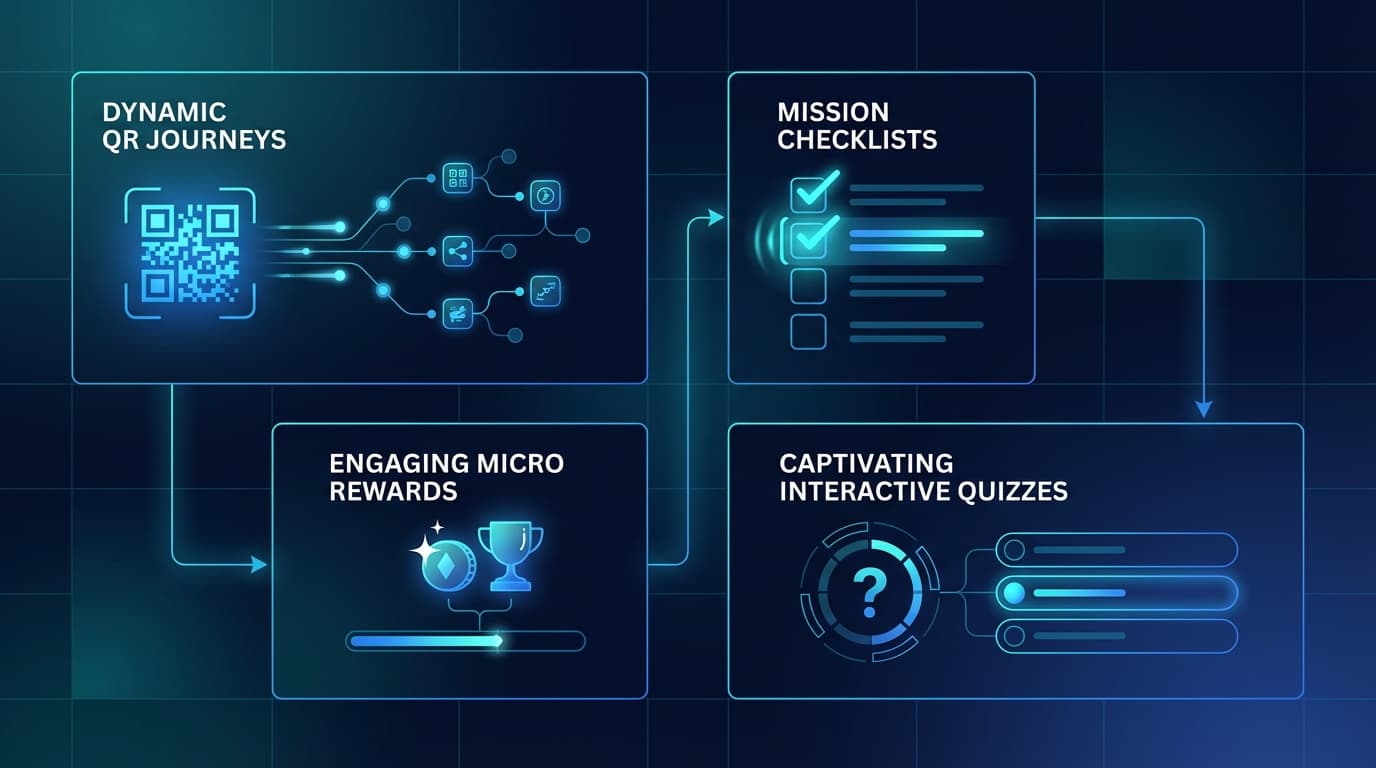
1. QR Code Missions in Physical Spaces
Customers scan QR codes placed on shelves, packaging or event signage and progress through a mission. Each step may unlock a tip, a point reward or an exclusive offer. This works because it creates a guided path through the environment and turns exploration into a game.
Best for retail, events, malls, creator pop ups and hospitality experiences.
2. Interactive Product Discovery Flows
Instead of showing a static list of products, brands present a dynamic quiz or decision tree. Each tap leads to personalized recommendations. Customers feel like they are choosing, not being sold.
Best for ecommerce, fashion, beauty and electronics.
3. Micro Reward Triggers
These are instant incentives delivered in response to real time behavior, such as scanning a code, visiting a zone or repeating an action. Micro rewards keep customers engaged with frequent small wins that cost very little.
Best for loyalty programs, retail and subscription ecosystems.
4. Creator Led Interactive Funnels
Creators send followers into interactive link journeys where each step unlocks content, missions or rewards. This builds deeper fan engagement and tracks intent more accurately than likes or comments.
Best for creators, influencers and community based brands.
5. Phygital Storytelling Experiences
Brands combine physical elements with digital layers. Customers interact with objects, locations or props and reveal digital content through QR scans or NFC interactions. This blends immersion with real time engagement.
Best for tourism, entertainment, retail and brand activations.
Conclusion: Interactive Marketing Is Now the Standard
Interactive marketing is not a trend. It is the new default for brands that want strong engagement and measurable results. Customers in 2026 expect participation, not passivity. They want experiences that respond to their choices, reward their curiosity and adapt in real time as they move across environments.
By using interactive formats like missions, QR journeys, micro rewards, quizzes and dynamic content, brands turn attention into meaningful engagement. They also collect better data, improve personalization and gain clearer attribution across offline and online touchpoints.
The key to success is thinking in terms of journeys, not isolated campaigns. With platforms like VISU, you can create interactive journeys that run across stores, packaging, events, creator channels and ecommerce flows. That is how brands win in 2026.
Turn Attention Into Growth
Capture every interaction with VISU.