

Gamification marketing isn't about turning your brand into a video game. It's about borrowing what makes games addictive (progress, rewards, challenges) and weaving that into your customer journey.
In 2026, attention is the scarcest resource. People scroll past ads without a second glance. But give them a mission to complete, a streak to maintain, or a reward to unlock? Suddenly they're engaged.
This guide breaks down how gamification actually works, which mechanics matter most, and how to implement it without overcomplicating things. Whether you're running a retail store, planning an event, or building a loyalty program, you'll find actionable frameworks here.
Ready to Gamify Your Marketing?
VISU helps brands create QR-based missions and rewards that drive real engagement.
Quick video. Earn your first reward.
What Is Gamification Marketing?
Simple definition: using game mechanics in non-game contexts to influence behavior.
Instead of just showing an ad and hoping someone clicks, you create an experience. Missions to complete. Points to earn. Levels to unlock. Progress bars that fill up. The user isn't passive anymore. They're playing.
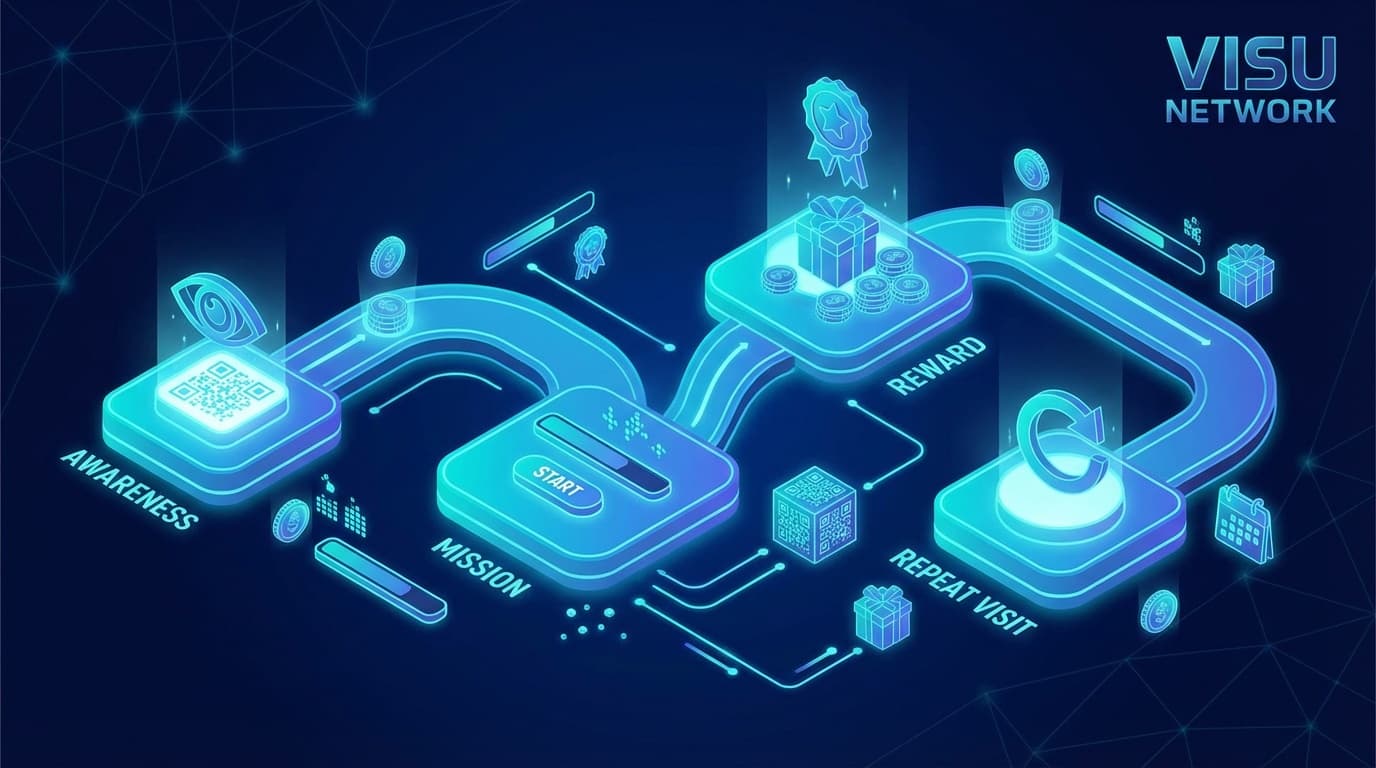
Think about traditional marketing. You run an ad. Someone sees it, maybe clicks, probably doesn't. End of story.
Gamification adds loops. Someone interacts, earns something, wants to come back. Scan a QR code at a store, get points toward a reward. Complete three visits this month, unlock a bonus. The interaction doesn't end. It compounds.
The key insight? You're not building a game. You're adding a thin layer of game mechanics on top of what you already do. Your landing pages, emails, QR codes, and events stay the same. But now each touchpoint feeds into a larger system where progress matters.
For context on why this approach fits modern marketing, see how brands are paying users for their attention across channels.
Why Gamification Works
It's not magic. It's psychology.
Humans are wired to seek progress. When you see a progress bar at 70%, you want to hit 100%. When you're on a 5-day streak, breaking it feels like losing something. These aren't tricks. They're how our brains work. The psychology behind gamification goes deeper on this.
Progress visibility is the biggest lever. Show people where they stand and where they're going. A simple "2 of 5 missions complete" creates momentum that invisible tracking never could.
Reduced friction is the second. A 10-question form feels like work. The same questions framed as a "quick quest" with feedback after each step? Feels lighter. Same content, different wrapper.
Social layers add fuel. Leaderboards, team challenges, shareable badges tap into competition and belonging. Not every campaign needs them, but when they fit, they amplify everything.
The data backs this up. Recent gamification statistics show 89% of employees feel more productive with game elements at work. Engagement lifts of 100-150% are common in well-designed programs.
Core Game Mechanics
You don't need twenty features. Most successful campaigns use three or four mechanics, combined well.
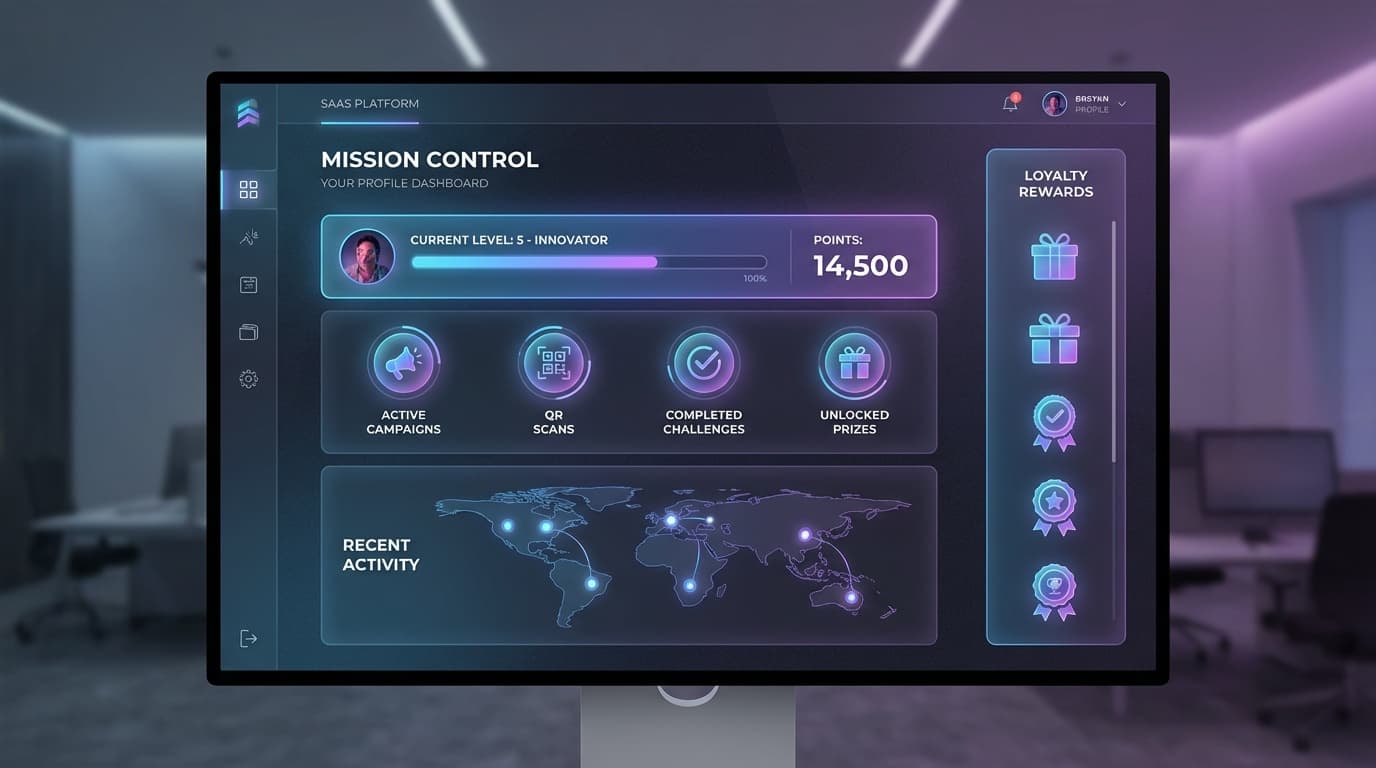
Missions
Structured tasks with clear completion criteria. "Visit 3 stores this month" or "Scan QR codes at 5 sponsor booths." Missions give direction. People know exactly what to do and what they'll get.
Points
A flexible currency. Points can represent status, unlock rewards, or enter users into raffles. The key is consistency. Users need to understand how points work in one sentence.
Levels and Tiers
Long-term progression. Bronze, Silver, Gold. Each tier unlocks new perks. This creates a ladder effect where one-time visitors become repeat engagers climbing toward the next level.
Streaks
Daily engagement hooks. Duolingo built a billion-dollar company largely on streaks. The "don't break the chain" psychology is powerful. People will go out of their way to maintain a streak.
Rewards
Micro rewards work better than you'd think. Small, frequent wins beat rare big prizes for sustained engagement. A free coffee after 5 visits beats a chance at a $500 prize after 50.
For real-world applications, check our gamification examples from major brands.
See Gamification in Action
Learn how brands use VISU to create gamified customer experiences.
Designing the Gamified Journey
Start with the journey, not the mechanics.
Where does attention already happen around your brand? Store entrances. Product packaging. Event booths. Email opens. Social posts. These are your entry points.
Pick one. Design a mission around it. Make the entry point impossible to miss.
Example: A retailer wants more in-store engagement. They put a sign at the entrance: "Scan to start your mission." The QR leads to a mobile page explaining the challenge. Visit 3 departments, scan the code in each, unlock a surprise at checkout. Progress bar shows completion status.
That's it. No complex app. No account creation. Just scan, play, reward.
The next question is what happens after. Does completing the mission feed into a loyalty program? Trigger a referral prompt? Unlock tier progression? This is where gamification connects to your broader CRM strategy. Our guide on gamified customer journeys covers the full framework.
One more thing: think in seasons, not one-offs. A single prize wheel creates a spike then nothing. Quarterly themed missions create sustained engagement with room to optimize.
QR Codes and Smart Links
Physical touchpoints are underrated.
Posters, packaging, receipts, menus, event signage. People already look at these. Adding a smart QR turns passive glances into tracked, gamified interactions.
The magic is in dynamic QR codes. With tools like VISU QR Ads, you print the code once but change the destination anytime. Launch a new mission? Update the QR. Seasonal campaign? Same code, new experience.
Product packaging: Instead of a static support link, the QR launches a mission. Scan to log usage, unlock tips, earn points toward a refill discount.
Events: Each booth gets a dynamic code. Attendees scan to log visits, see progress on a mobile page, unlock rewards when they complete the route. Sponsors get real metrics. Organizers see engagement in real time.
Digital channels: Smart links let you assign missions to specific campaigns. Track which email, ad, or influencer drives not just clicks, but completed missions.
For broader strategy, see our QR code marketing guide.
Measuring ROI
Gamification without measurement is just entertainment.
The good news: digital mechanics make tracking easy. Every scan, mission completion, and reward claim becomes a data point.
Top of funnel: Participation rate. Opt-in rate. First mission completion.
Mid funnel: Mission completion rate. Product education engagement. Trial task completion.
Bottom of funnel: Repeat purchases. Average order value. Conversion from free missions to paid products.
When possible, run control groups. Same audience profile, different approach. One gets the gamified version, one gets standard marketing. Compare engagement, revenue, and retention.
Don't forget indirect benefits. Brand perception, social sharing, word of mouth. Harder to measure, but still real. Surveys and social listening can capture these.
Mistakes to Avoid
Most gamification fails not from bad ideas but from bad execution.
Too complex. Twenty mission types, five point currencies, unclear rules. If users can't understand the game in 10 seconds, they won't play. Keep it stupid simple.
Brand-only value. Missions that just push purchases without giving real value feel manipulative. Both sides need to win. You get data and engagement. They get fun and rewards.
One-and-done gimmicks. A single prize wheel with no follow-up creates a spike then crickets. Design systems that can run for months. Tiered loyalty, rotating missions, seasonal themes.
Broken tracking. Nothing kills trust faster than a QR code that doesn't work or a progress bar that doesn't update. Test everything. Then test again.
For implementation guidelines, see our gamification best practices guide.
Ready to Gamify Your Customer Experience?
Join businesses using VISU to turn everyday interactions into engaging, rewarding experiences.
FAQ: Gamification Marketing
What is gamification marketing?
Gamification marketing uses game mechanics like points, missions, levels and rewards in non-game contexts to drive customer engagement and behavior. You're not building a game. You're adding game-like elements to your existing marketing touchpoints.
Does gamification only work for young audiences?
No. Gamification works across age groups when the mechanics match audience motivations. The key is simplicity and relevance. A 55-year-old will engage with a clear loyalty tier system just as readily as a 25-year-old. Maybe more, since they often have higher spending power.
How much does gamification cost to implement?
It ranges widely. A simple QR-based mission campaign can launch for a few hundred dollars using platforms like VISU. Enterprise loyalty programs with custom apps can cost six figures. Start small, prove ROI, then scale.
What's the ROI of gamification?
Documented results vary, but case studies show 30-700% improvements in target metrics. HP saw 30-42% revenue lift from sales gamification. Extraco Bank achieved 700% increase in customer acquisition. The key is measuring before and after with clear KPIs.
How do I start with gamification?
Pick one journey. In-store visits, event engagement, product onboarding. Add one simple mission with visible progress and a clear reward. Test with a limited audience. Learn from the data. Then expand.
What are the most effective game mechanics?
Points, missions, and progress tracking are the workhorses. Streaks drive daily engagement. Tiers create long-term progression. Leaderboards add competition when appropriate. Most successful campaigns use 3-4 mechanics, not 20.