

Every major platform in the world relies on attention. Social networks scale because users scroll. Streaming apps scale because viewers watch. Marketplaces scale because shoppers browse. Yet almost none of these platforms can answer a simple question with precision: How much focused attention did we actually generate?
This gap between what the digital world needs and what platforms measure is massive. Brands continue spending over $700 billion per year trying to buy attention, but the numbers they receive are weak proxies: impressions, estimated views, shaky attribution, questionable engagement.
These metrics tell you nothing about the true asset created during the interaction: the quality, duration, intent, and value of human focus. That is the missing link VISU was built to fix. Instead of treating attention as a disposable moment, VISU treats it as a measurable, durable asset that compounds over time. The truth is simple: your attention has real value.
The Invisible Value in Every Second of Attention
When someone chooses to scan a QR code, complete a mission, watch a short video, or answer a survey, something incredibly valuable happens. Their focus shifts. Their intent becomes observable. Their behavior becomes measurable. But most platforms treat this moment as a temporary blip that disappears the instant it happens.
To VISU, this moment is the beginning of something much bigger. Every second of attention creates raw material that can be quantified, structured, stored, enriched, and converted into lasting value. This is the core premise of the VISU Attention Asset Framework, and it represents a fundamental shift from traditional digital marketing metrics.
Instead of measuring vanity numbers, VISU measures the value creation cycle behind attention itself: what users do, why they do it, how long they remain engaged, and what assets emerge from that engagement.

Why Measuring Attention Properly Matters
Brands operate under the assumption that attention equals impact, but this logic breaks under scrutiny. Traditional platforms count impressions when an ad loads on a screen, even if the user never saw it. They count video views when someone watched for three seconds with no audio. They count clicks that may have been accidental.
The truth is that the attention economy has been built on a fragile foundation. Without accurate measurement, brands cannot optimize campaigns, creators cannot value their audience, and users cannot be rewarded fairly. Everyone loses.
The Core Problem The digital world has infinite impressions but almost no verified attention. VISU flips the model by capturing proof of real engagement and converting it into usable, high-value data.
This shift is not cosmetic. It is structural. Once attention becomes measurable, it becomes possible to turn engagement into assets. These assets can fuel segmentation, personalization, predictive analytics, commercial decisions, and revenue models that were previously impossible.
The rest of this guide walks through exactly how VISU performs that transformation, what technologies support the measurement, and how brands use these new assets to create measurable business growth.
The VISU Measurement Architecture
Before we talk about asset classes or applications, we need to understand the industrial-grade pipeline powering VISU's analytics. Attention cannot become an asset unless it is captured, structured, verified, stored, and enriched with precision.
VISU does this through a five-layer architecture designed specifically for high-volume, high-integrity attention data. Each layer plays a critical role in converting ephemeral behavior into durable value.
Layer 1: Event Capture
Everything begins here. Whenever a user interacts with a VISU QR code, mission, video, or action, the platform collects a structured set of event fields:
- Timestamp: Standardized in ISO 8601 for global consistency.
- Session Context: Device, OS, location approximation.
- Engagement Type: Scan, mission, tap, view, completion.
- Attention Time: Measured through active monitoring.
- Outcome: Conversion, reward claim, click-through.
This layer creates raw material. Nothing has value yet, but the ingredients are there.
Layer 2: Processing and Verification
To turn noisy behavior into usable signals, VISU runs event data through a verification pipeline. The platform checks for fraud, bot behavior, repeated actions, idle time, and anomalies. Only quality events are allowed into the asset layer.
Processing happens in two modes:
- Real-time: Engagement updates and reward calculations.
- Batch: Pattern recognition, enrichment, scoring.
The output is clean, structured, validated attention data.
Layer 3: Storage and Asset Creation
This is where the magic happens. Once verified, each interaction is classified into three primary databases:
| Database | Description | Value Output |
|---|---|---|
| User Profile DB | Preferences, behavior patterns, segmentation traits. | Personalization & campaign accuracy. |
| Interaction Stream DB | Time-series events, mission logs, attention duration. | Engagement forecasting & trend modeling. |
| Asset Valuation DB | Monetized fields (emails, intent, behavior clusters). | Financial reporting & ROI visibility. |
This multi-database architecture means attention no longer disappears. It is captured, contextualized, and connected to downstream intelligence models.

Layer 4: Enrichment and Modeling
Now we move from descriptive to predictive. VISU applies several enrichment models:
- Intent Scoring based on interaction patterns.
- Engagement Reliability based on mission completion and behavior consistency.
- Churn Probability based on decreasing session frequency.
- Conversion Propensity based on affinity clusters.
These models help brands understand not only what users did, but what they are likely to do next.
Layer 5: Action and Deployment
Finally, enriched data powers automated actions. Examples include:
- Smart missions triggered by behavior changes.
- Predictive audience segmentation for campaigns.
- Reward optimization based on price sensitivity.
- Retention nudges for high-value users.
The end result: attention becomes a strategic engine, not just a metric.
The Attention-to-Asset Transformation Cycle
With the architecture in place, we can now examine how a simple interaction evolves into a measurable business asset. This cycle is the core of the VISU framework and the foundation that allows brands to think beyond impressions and toward long-term value creation.
Stage 1: Raw Attention Moment
Everything begins with a user action. A scan. A tap. A watch. A decision to participate. Even if the moment lasts five seconds, it contains high-intent behavior. Traditional platforms ignore it. VISU captures it.
A raw event includes: timestamp, location context, action type, attention time, and reward flow. This is the "gold dust" that fuels the entire system.
Stage 2: Structured Data Creation
Once the event is captured, VISU breaks it down into fields that can be analyzed, priced, and enriched. For example:
- Engagement Depth: How long the user stayed focused.
- Interaction Path: What actions followed the initial scan.
- Intent Level: Derived from completion and pacing.
- Response Signals: Survey answers, choices, selections.
This transforms an ephemeral moment into a structured data object that can be compared, aggregated, and measured.
Stage 3: Profile Enrichment and Cohort Assignment
Individual interactions become powerful when connected to user history. VISU aggregates repeated behaviors to map each user into a dynamic profile. Over time, patterns emerge:
- Purchase sensitivity.
- Cause or interest affinity.
- Attention stamina.
- Completion likelihood.
- Category reliability.
These signals allow VISU to classify users into predictive cohorts that brands can activate instantly. This is where real commercial value begins to grow.
Stage 4: Predictive Modeling
Once enough signals accumulate, VISU applies predictive models to uncover strategic opportunities:
- Churn Risk: Identifies users likely to drop off.
- Conversion Propensity: Determines who will buy next.
- Reward Optimization: Finds the ideal incentive for each action.
- Campaign Fit: Maps affinity clusters to brand categories.
The goal is clear: turn attention into predictive intelligence.
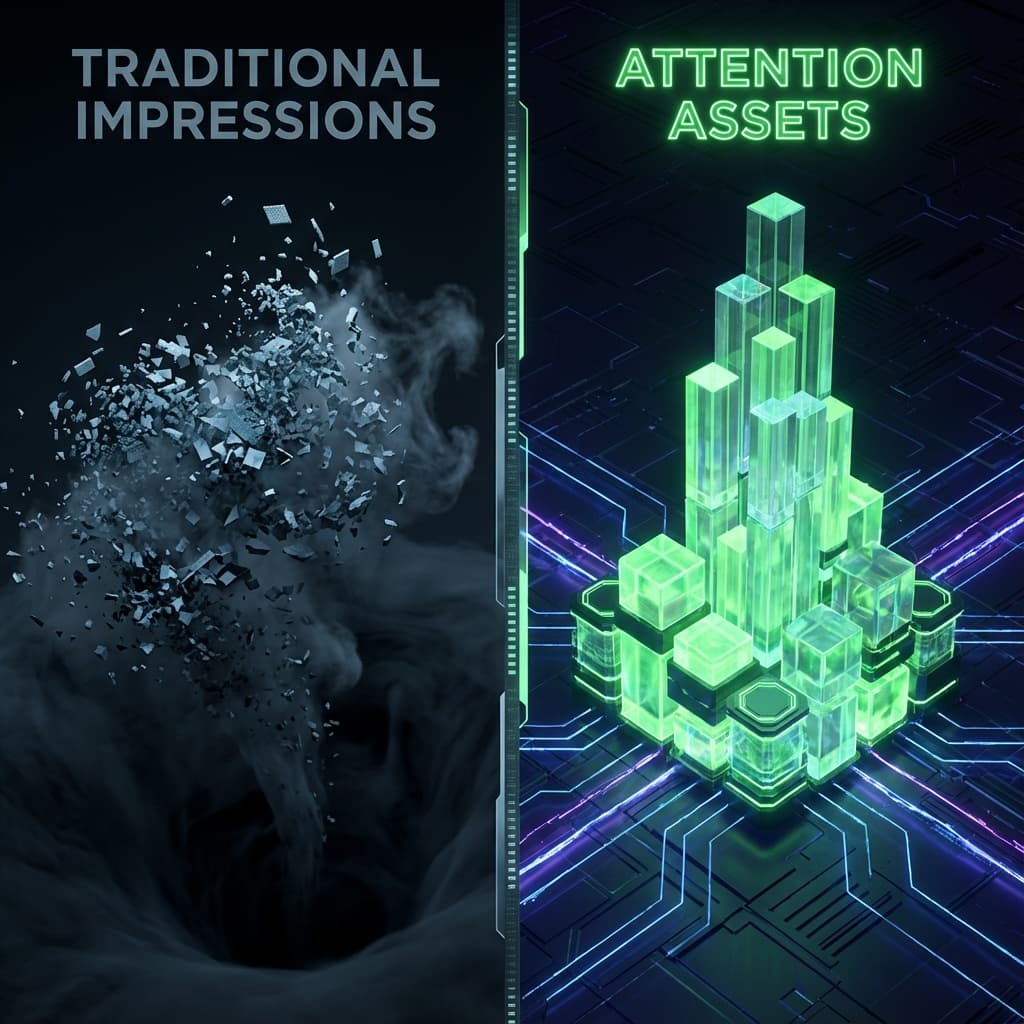
The Three Classes of Attention Assets
The cornerstone of the VISU framework is the definition of three distinct asset classes. Most companies only measure the first. VISU unlocks all three.
Asset Class 1: Transactional Assets
These emerge during the interaction itself. Examples:
- Leads: Emails, phones, preferences.
- Conversions: Coupon use, link taps, purchases.
- Clicks: Direct behavior tied to revenue.
These assets are measurable and immediate. They show ROI fast, making them essential for campaign analysis.
Asset Class 2: Relational Assets
These deepen over time as the user engages repeatedly.
| Asset Type | Durability | Commercial Value |
|---|---|---|
| User Profiles | Months to Years | $5 to $50 per profile |
| Engagement Reliability | Long Term | Retention & LTV lift |
| Permission | Until revoked | $2 per subscriber per month |
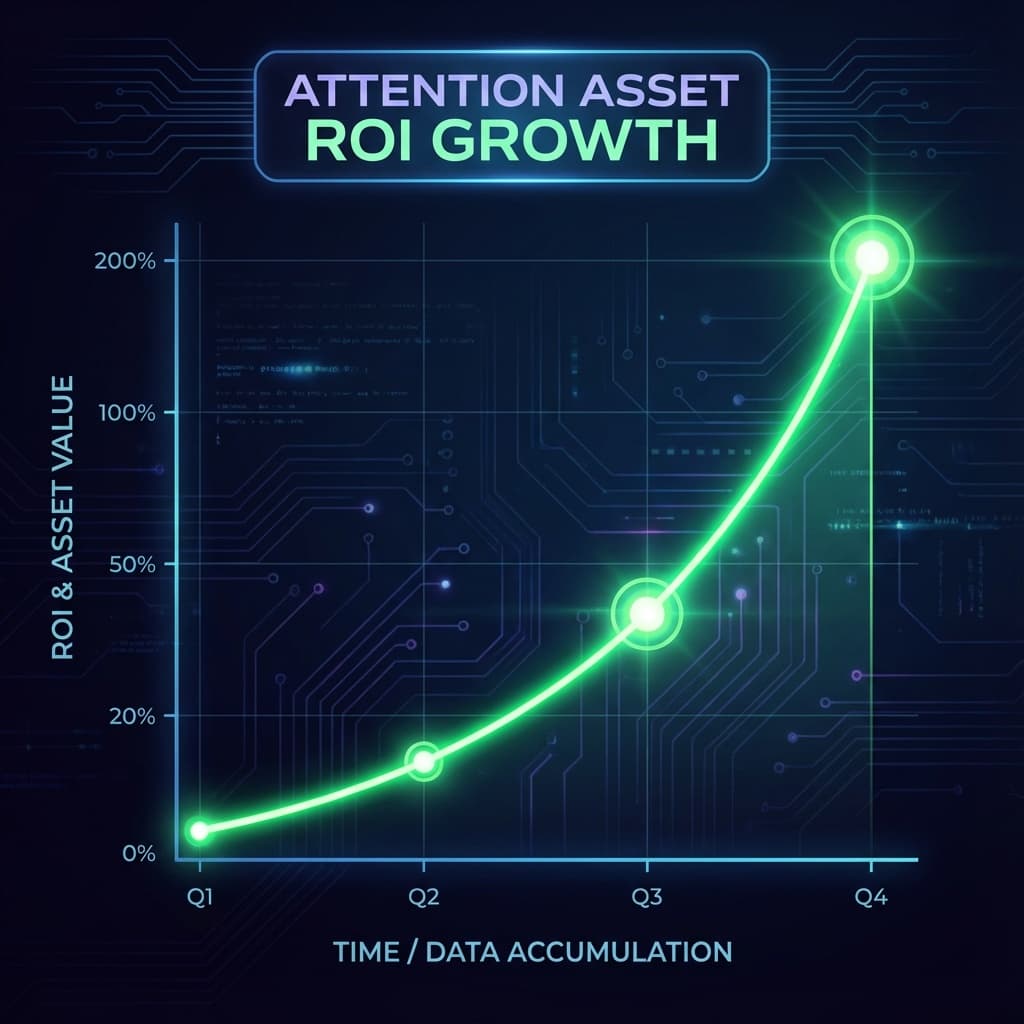
These assets compound. The longer the user participates, the more valuable they become.
Asset Class 3: Strategic Assets
These are the deepest and most powerful assets that attention can create.
- Predictive Models: Determine high-value cohorts.
- Market Intelligence: Detect rising trends early.
- Cross-Vertical Insights: Reveal behavior patterns across industries.
- Brand Equity: Gained from transparent, fair exchanges of value.
Strategic Insight
Strategic assets often represent 80 percent of long-term value but are invisible to traditional analytics. VISU is designed to reveal them.
How VISU Measures Attention
Accurate measurement requires more than capturing behavior. VISU applies several methodologies to validate and value each moment of attention.
Method 1: Verified Attention Time
This is not estimated time or assumed view duration. VISU captures active engagement using scroll, touch, focus, and completion signals. If the user walks away, the timer stops.
Formula: Cost per Minute of Attention = Total Campaign Spend / Total Verified Minutes
Method 2: Engagement Quality
VISU evaluates the depth of engagement, not just the length.
- Completion Quality: Did they finish missions?
- Response Integrity: Was the data real or rushed?
- Stability: Did they return multiple times?
Method 3: Asset Valuation
VISU assigns market-based values to collected data fields. Internal benchmarks guide valuation across categories such as:
- $0.50 to $2.00 for verified contact data.
- $2 to $10 for purchase intent.
- $5 to $20 for behavioral clusters.
The aggregated value becomes part of a brand's attention asset balance sheet.
How Brands Use Attention Assets
Once attention is captured and transformed, brands unlock a new set of capabilities that outperform traditional digital campaigns.
Application 1: High-Speed Experimentation
Brands can test QR designs, mission formats, reward levels, and messaging variations across thousands of interactions. VISU identifies winners within hours.
Application 2: Predictive Product Innovation
Before investing millions in new products, brands can validate demand by measuring attention and intent across target cohorts.
Application 3: Retention Automation
When VISU detects churn risk, it automatically triggers reward missions or incentives. This reduces drop-off and increases lifetime value.
Should You Build or Partner?
With attention analytics becoming essential, brands face a strategic choice: build their own infrastructure or use VISU's proven platform.
| Factor | Build In-House | Use VISU |
|---|---|---|
| Time to Market | 3 to 5 Years | 1 Week |
| Cost | $5M to $10M | Subscription |
| Data Volume | Start from Zero | Five Years of History |
| Accuracy | Unproven | Verified Model |
Conclusion: Attention as a Measurable Asset
For decades, attention has been treated as something ephemeral. A flash on a screen. A moment in a feed. A number in a report. But attention is far more powerful when measured correctly. It becomes an asset. It becomes intelligence. It becomes competitive advantage.
VISU transforms attention from a disposable moment into a structured pipeline of value creation. Brands gain measurable intelligence. Users receive compensation. Creators unlock new revenue channels. The system becomes fair, transparent, and mutually beneficial.
The companies that win the next decade will not be those who buy the most impressions. They will be the ones who measure attention precisely and convert it into strategic assets that compound for years.
Start Turning Attention Into Assets
Build a durable library of first-party data, intent signals, and predictive intelligence using VISU's enterprise platform.
Frequently Asked Questions
What makes VISU's attention measurement different?
VISU uses active monitoring and real-time validation to track actual engagement, not estimated views or impressions. Idle time, bot activity, and low-quality signals are filtered out.
How is user privacy handled?
VISU follows a consent-first model where users opt-in and receive rewards in exchange for participation. This exceeds GDPR and CCPA requirements.
Can attention data integrate with my CRM?
Yes. VISU supports API integrations and real-time webhooks to send first-party data to platforms like Salesforce, HubSpot, and custom data warehouses.
Is attention really measurable?
Yes. When captured through VISU, attention becomes a verified data point with duration, quality, and intent signals.