

Anyone selling acai bowls, churros, cotton candy, or any kind of sweet on the street knows this pattern well. A customer walks by, smells the sugar and cinnamon, hesitates for two seconds, and orders a loaded acai cup or a warm churro filled to the top. These are impulse purchases, made right there on the sidewalk.
The real question comes after the sale. Will that customer return the next week, or will they disappear forever? If your entire business depends on who happens to walk past your cart, you are at the mercy of weather, location, events, and foot traffic. The right question for 2026 is simple: how do you turn impulse buyers into loyal customers who cross the neighborhood just for your acai or churros?
Get Paid to Scan QR Codes
Turn your attention into real rewards. Scan, engage, earn.
Quick video. Earn your first reward.
In this article
Why Paper Punch Cards No Longer Work
The classic loyalty punch card feels simple. You stamp it, promise a free churro or acai on the fifth visit, and hope the customer returns. But in 2026 that model just does not match customer behavior. People carry their phone at all times, but barely use a physical wallet anymore. There is no space for paper loyalty cards, only digital receipts and mobile payments.
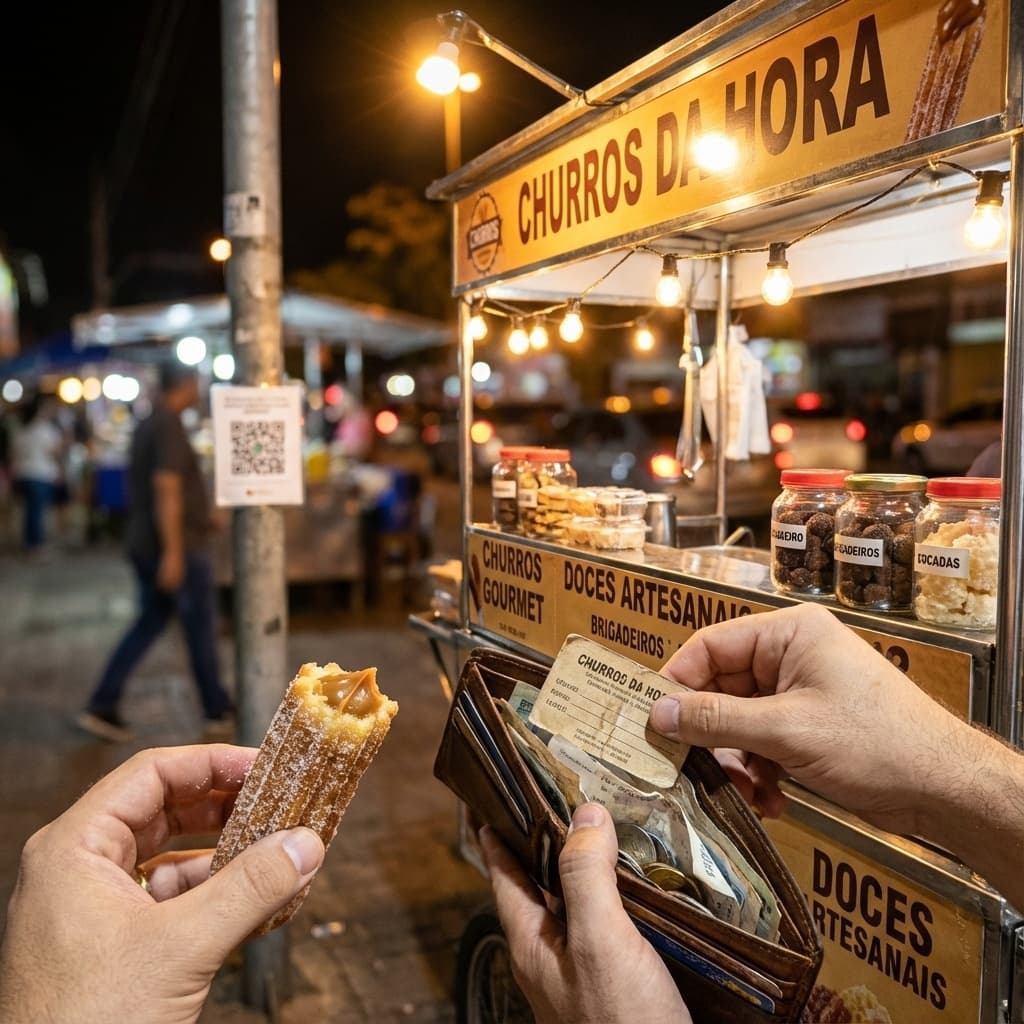
Now imagine a real moment. The customer is holding a sugary churro in one hand and a cold acai cup in the other. Maybe they are carrying a backpack or holding a child. Asking them to dig inside their wallet, hand over the card, and store it again is too much. The predictable result: the customer skips the card, loses it, or brings it back damaged. Paper loyalty breaks fast because it adds friction. Loyalty needs to be effortless for both sides. If it creates work, it dies.
Even when customers try to use paper cards, the outcome is always the same: the card gets lost, wet, torn, or forgotten in a pocket. Every card lost means no history of how often that customer buys from you and no way to reach out and bring them back. Worse: with paper cards, you often do not even know the customer's name. Loyalty becomes a blind guess. In a world where understanding the real economics of street food profit matters more than ever, tying your entire loyalty strategy to paper is leaving money on the table.
Hard truth: if you are not capturing customer contacts, you are not building loyalty. You are hoping they remember you.
The Psychology of Sweets and Simple Gamification
Acai bowls and churros are not grocery items. They are treats. They are rewards after a long day. Customers buy them to feel good. That is gold for loyalty strategy, because a sweet treat can become part of a fun reward system that makes people want to come back. When you understand how street food customer loyalty actually works, you realize that sweets respond better to upgrades than discounts.
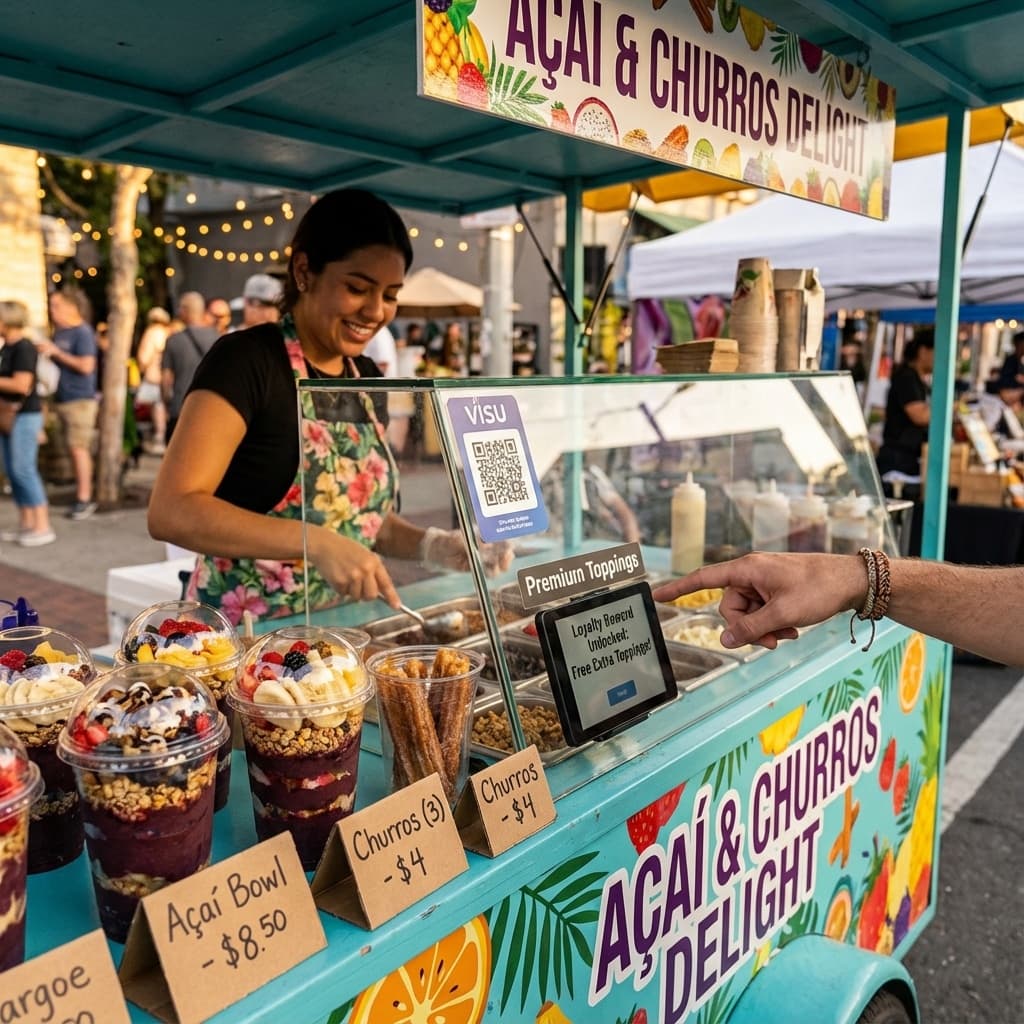
Compare two approaches. Offering 10 percent off on the fifth purchase feels weak. Offering a free extra topping on that fifth acai or churro feels like a real reward. For sweets, the second option wins almost every time. Customers want to look at their cup and feel spoiled. A fuller cup or extra filling generates photos, stories, recommendations, and a feeling of being treated differently.
When you combine this reward logic with a simple digital loyalty program for food carts, everything clicks. The customer knows exactly what they need to unlock that bonus. Clear rules create repeat behavior. This is where micro rewards and small incentives become powerful: a single free topping costs you almost nothing but changes how the customer feels about your cart.
Turn Every Customer Into a Regular
Join food trucks using VISU to build loyalty, capture leads, and increase sales with smart QR campaigns.
Digital Loyalty Without an App, Powered by QR Codes
Many street vendors freeze when they hear the word "app." It sounds expensive, complicated, and out of reach. But today you do not need an app to run a loyalty program. A simple QR Code based system works directly in the customer's browser. If you have been weighing paper vs digital loyalty cards, the answer is clear: digital wins on every metric that matters.
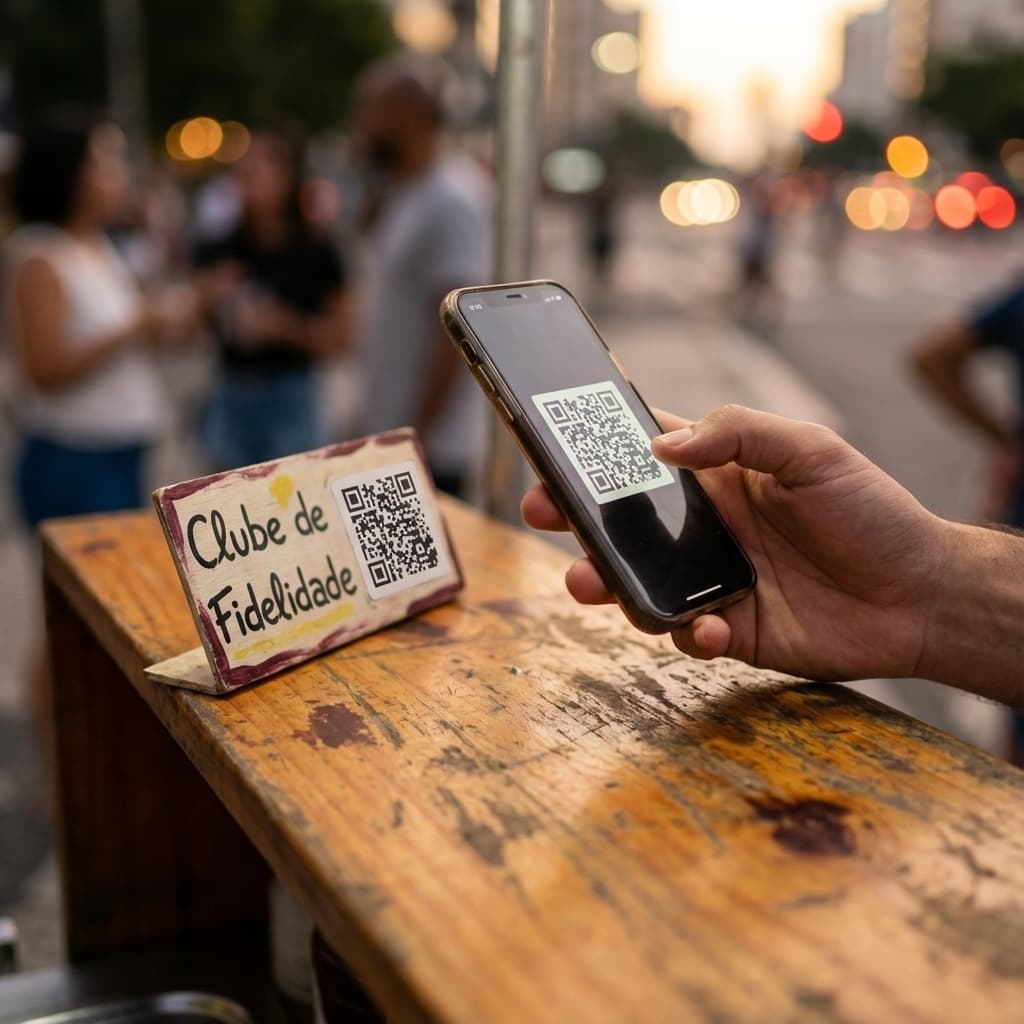
In practice, you place a QR Code on your cart. Every purchase, the customer scans, confirms, and gets a digital point. No paper. No stamps. No lost cards. And the real advantage: this scan gives you contact info and behavioral insights. If it rains tomorrow and foot traffic drops, you can send a segmented message only to your loyal base.
Simple formula: QR Code in front, loyalty engine behind. Outside it looks like a sticker. Inside it runs your customer relationship.
This works whether you operate in one fixed spot or rotate between parks, fairs, and events. The QR Code travels with you. Wherever your cart shows up, loyalty continues.
Three Practical Ideas You Can Apply Tomorrow
Here are three simple experiments any acai or churro cart can run in the next few days using digital loyalty as the base.
Topping Club for everyone who joins. Create a small VIP rewards club. Everyone who joins gets free topping on every visit: powdered milk, paçoca, granola, chocolate drizzle, whatever makes sense for your menu. The cost is minimal, but the perceived value is high.
Friend Day to bring new customers. Pick a weekly day as your "Friend Day." Customers who bring someone new get a special treat and the friend gets one too. Two sales at once, both entering your loyalty program. This is word of mouth with a system behind it.
Sweet Hour to fix slow hours. Every vendor has a dead hour. For sweet carts, it is often mid afternoon. Create a Sweet Hour exclusive to loyalty members: free extra topping from 2pm to 4pm, or double churros during that window for anyone in the program. The message goes only to your existing base. Anyone nearby returns to claim the reward. You fill slow hours without destroying your margins.
From Impulse Purchases to a Fan Base
Sweet carts will always live on impulse purchases. That is a strength. But if you want predictable growth, you need to convert some of these impulses into loyal buyers who return weekly.
Paper cards cannot keep up with customer habits. Phones can. One QR Code fixes the sticky hand problem, eliminates lost cards, and builds a growing list of real customers who already know and love your product. With a lightweight digital loyalty system, you break free from the randomness of foot traffic and start building the one thing that sustains street vendors in 2026: a community of fans. And when you realize that you can get paid for your attention and help your customers do the same, the entire model shifts.
Turn Every Customer Into a Regular
Join food trucks using VISU to build loyalty, capture leads, and increase sales with smart QR campaigns.