

Restaurant promotions are one of the most misunderstood tools in the industry. Many campaigns fill the house in the short term, but a good portion break even or lose money when you factor in discount depth, food cost, and customer behavior. With net margins typically between 3 and 7 percent and food cost around 28 to 35 percent, restaurants can't afford promotions that only attract deal hunters while destroying price perception.
The math is brutal. A 20 percent discount on an item with 65 percent gross margin doesn't reduce profit by 20 percent. It can require selling 40 to 50 percent more just to maintain the same gross margin dollars. When you combine this economic reality with behavioral psychology like scarcity, social proof, reward anticipation, and commitment, it becomes clear why some promotions consistently drive profitable traffic while others quietly destroy value.
Why most restaurant promotions fail
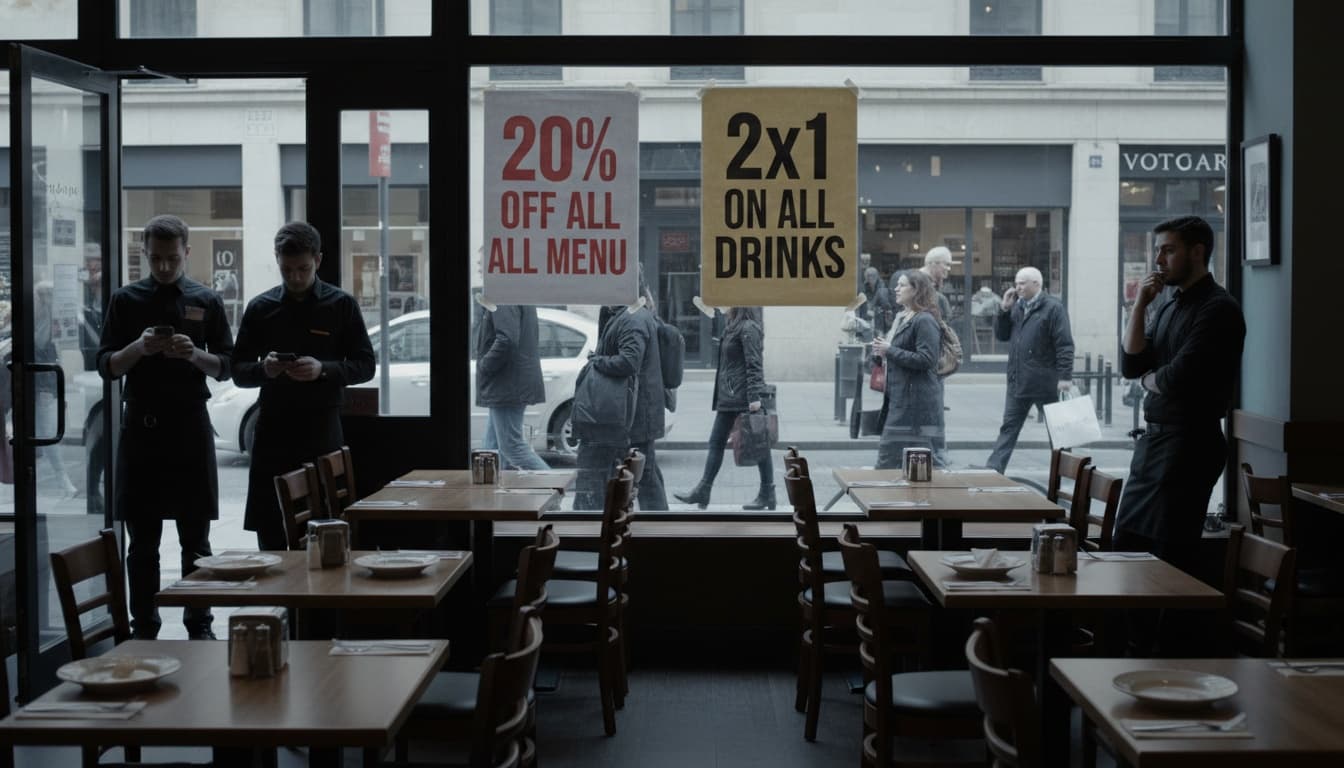
Most restaurant promotions fail for the same structural reasons: overuse of generic discounts, zero segmentation, and virtually no serious measurement. The result is more complexity, lower margins, and an audience that only shows up when there's a deal.
The discount dependency trap
Percentage discounts like "20 percent off everything" seem simple and powerful, but they train customers to wait for deals and anchor price perception at the discounted value. Over time, the restaurant increases discount depth and frequency to maintain results, until the entire year becomes a sale. These campaigns largely attract price-sensitive customers with low loyalty and low lifetime value.
Strategic segmentation errors
Families, executives, tourists, and date-night couples respond to completely different triggers. A family of four thinks about total bill value and convenience. A corporate customer prioritizes speed, reliability, and easy expense reporting. Experience seekers optimize for novelty and status. A generic promotion trying to please everyone usually speaks to no one. Segmented offers, on the other hand, tend to generate much higher response rates and healthier unit economics.
Lack of measurement and follow-up
Many restaurants call a promotion successful because traffic increased that day. Without a baseline and without tracking post-promotion behavior, this is an illusion. You need to know what portion of that traffic was incremental, what margin remained after the discount, how many customers were new versus returning, and how many came back within 30 to 60 days. Without these numbers, it's impossible to know if the promotion created growth or just concentrated demand on one date.
The psychology behind promotions that work
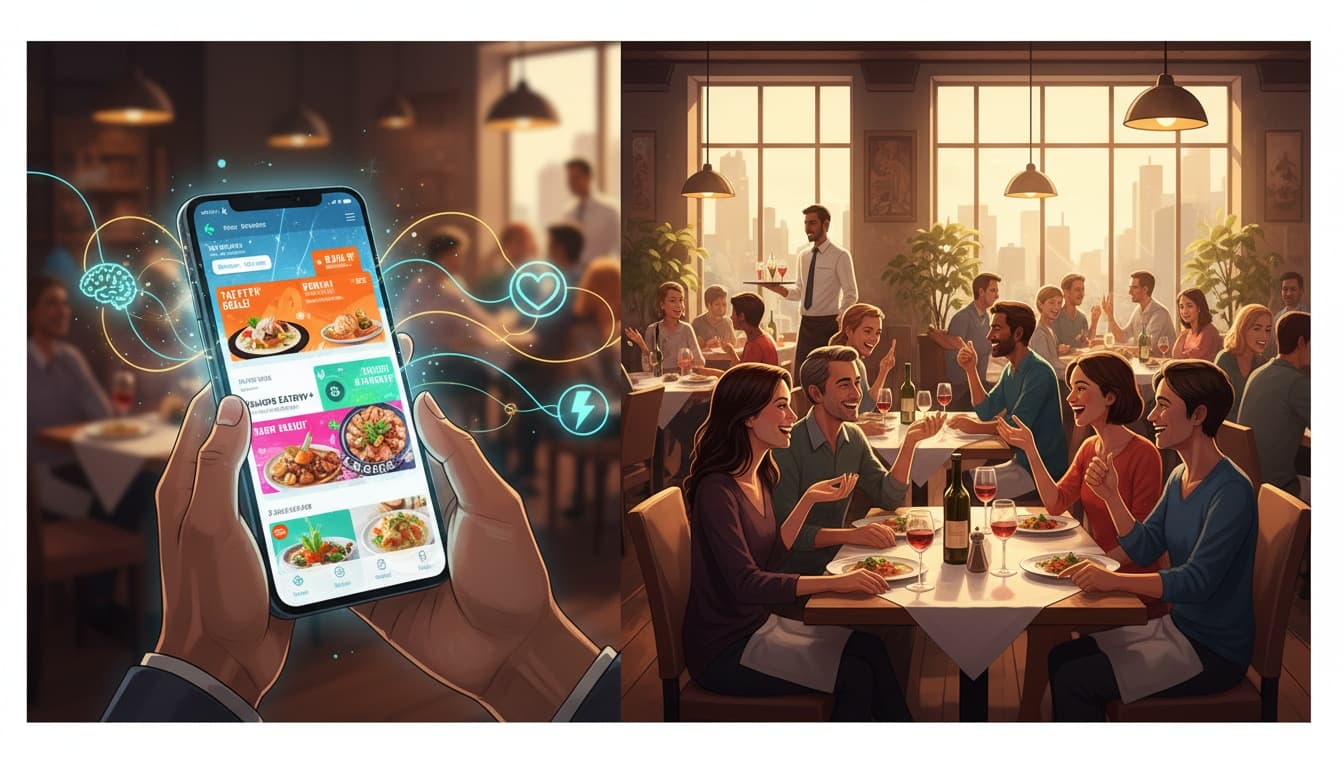
Promotions work when they fit how people make decisions in real life: fast, with mental shortcuts, and a strong emotional component. Instead of thinking only about coupons, think about triggers like scarcity, social proof, consistency, peak-end experience, and price anchoring.
Scarcity and urgency mechanisms
Scarcity activates loss aversion. If I don't go now, I'll miss something. It works best when it's real and credible: a one-week seasonal menu, limited ingredient, maximum number of seats at an event. Messages like "this weekend only" or "only 40 seats per night" accelerate decisions and reduce procrastination.
Social proof and community validation
When people see that others like them have already chosen that place, perceived risk drops. This shows up as a full dining room, tagged stories, positive reviews, or customer photos highlighting a specific promotion. Connecting promotions with user-generated content multiplies impact without increasing media spend.
Commitment and consistency
Once someone commits to a step like booking, signing up, or RSVPing to an event, the natural tendency is to stay consistent with that decision. Loyalty programs, reservations tied to special menus, and recurring series like monthly tasting night exploit exactly this principle. Each interaction reinforces the internal story of "I'm a customer of this place."
Peak-end rule and memory formation
People don't remember the average of an experience. They remember the emotional peak and the ending. Well-designed promotions create a clear peak like a surprise, upgrade, or special moment and a strong finish like a personalized thank you, invitation to the next event, or a small future benefit. This edited memory is what actually decides whether the person returns or not.
Anchoring and price perception
Placing a reference price before the offer completely changes value perception. Showing a tasting menu for $95 next to a chef's table for $165 anchors the second as premium and the first as a great deal, even if it's expensive. In promotions, always present the full price before the promotional price to maximize the sense of gain.
Promotions that actually bring customers
Effective promotions aren't magic. They're combinations. They join the right psychology, healthy offer mechanics, and good timing. Below are some formats that typically generate incremental traffic without compromising financial health.
SMS campaigns, push notifications, QR Codes, and social media promotions allow fine segmentation and near real-time triggers. A good SMS to an opt-in base usually has an open rate above 90 percent and excellent conversion when the benefit is clear and the deadline is short. Table QR codes leading to digital scratch cards, spin and win wheels, or sweepstakes allow data capture and gamify the return visit. For implementation details, see our complete QR code marketing guide for restaurants.
Low-cost, high-impact incentives
Free appetizer with minimum spend
"Get a free appetizer when you spend at least $X" is much healthier than "20 percent off the entire bill." You anchor value with the word free, but condition the benefit on a minimum ticket that pushes spending up. Choose appetizers with high perceived value and relatively low cost, like more elaborate preparations with a good food cost ratio.
Weekday traffic optimization
Monday through Thursday usually has spare capacity. That's where it makes sense to concentrate most promotions: Tuesday pasta night, Wednesday wine night, Thursday tasting, and variations. Even with slightly lower margins on those days, you cover fixed costs, turn inventory, and create habits. The point is to protect Friday and Saturday from aggressive discounts, preserving the highest-margin periods.
Family combos and shared menus
Family combos reduce decision friction. What is everyone going to order? They deliver a strong sense of value and create cost predictability for both the customer and the kitchen. Work with a single price for three or four people, with good contribution margin and portions designed to ease operations. The shared experience tends to generate high satisfaction and good recommendations.
Seasonal and limited-time offers
Seasonal offers leverage real scarcity like ingredient, season, or specific time window and give customers a concrete reason to return: come back before it's gone. They also work as a lab. What performs well can join the permanent menu. What doesn't fit can return from time to time as a limited special.
Experience-based promotions
Events like chef's table, pairing dinners, themed nights, or tasting menus create something customers can't replicate at home. The focus isn't discount. It's value: direct access to the chef, storytelling, behind-the-scenes, pairings, and small surprises throughout the night. These experiences typically have higher average tickets and better margins than standard service.
Digital-first promotions
SMS campaigns, push notifications, QR Codes, and social media promotions allow fine segmentation and near real-time triggers. A good SMS to an opt-in base usually has an open rate above 90 percent and excellent conversion when the benefit is clear and the deadline is short. Table QR codes leading to digital scratch cards, spin and win wheels, or sweepstakes allow data capture and gamify the return visit.
Events like chef's table, pairing dinners, themed nights, or tasting menus create something customers can't replicate at home. The focus isn't discount. It's value: direct access to the chef, storytelling, behind-the-scenes, pairings, and small surprises throughout the night. These experiences typically have higher average tickets and better margins than standard service. Scan-and-win campaigns add a gamification layer that increases engagement further.
How to use promotions without killing margin
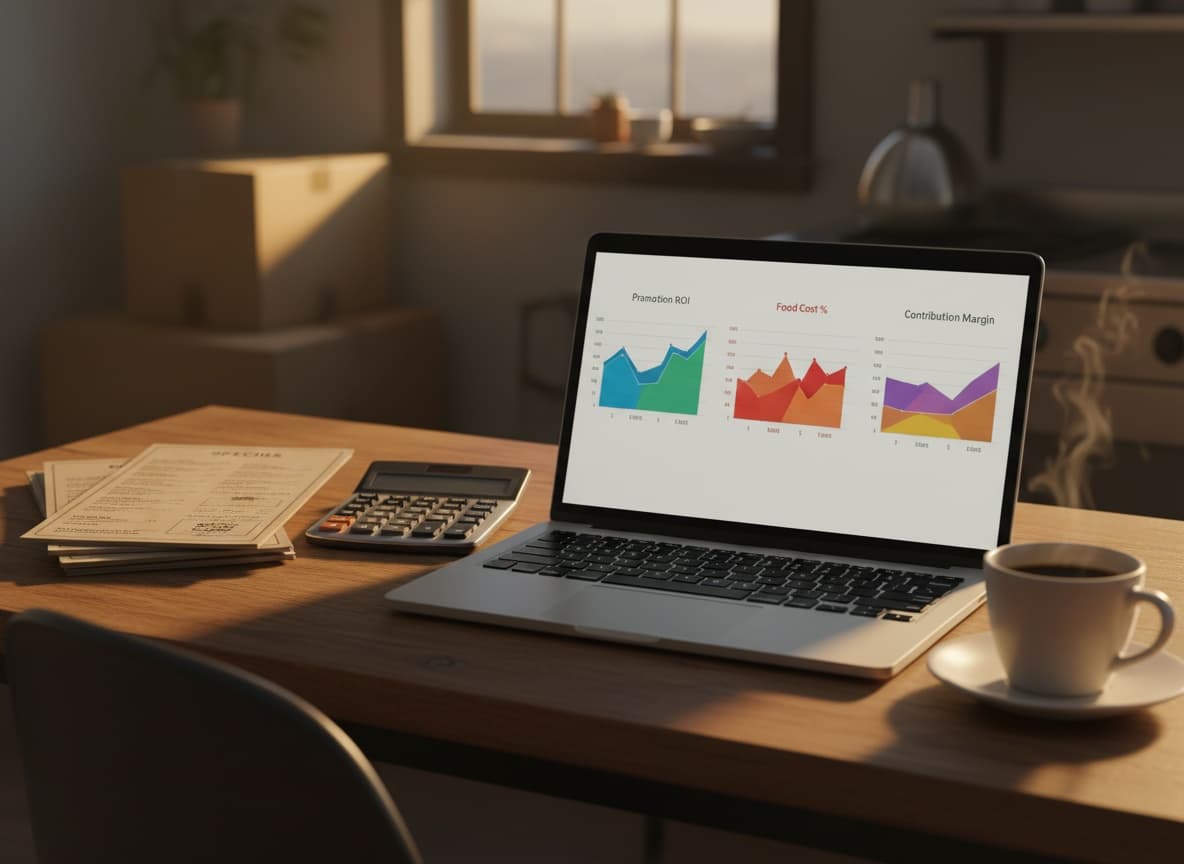
A good promotion increases contribution margin in the relevant period, not just gross revenue. This requires looking beyond food cost to include staff effort, media cost, and any cannibalization of full-price sales.
Understanding real promotion economics
A simple model considers food cost, extra labor cost, media cost per redemption, and opportunity cost if the promotion table is taking space from a customer who would pay full price. Only after adding all this does it make sense to compare with the incremental revenue generated.
Minimum spend offer optimization
"Get X when you spend at least Y" offers are much more predictable. Choosing the right Y depends on current ticket distribution. Generally, you want a value slightly above average ticket, pushing spending up, but still achievable for most. The logic is that part of the reward is paid by the higher ticket. The rest is an investment in loyalty.
"Get X when you spend at least Y" offers are much more predictable. Choosing the right Y depends on current ticket distribution. Generally, you want a value slightly above average ticket, pushing spending up, but still achievable for most. This strategy directly impacts average check size while protecting margins.
Strategic positioning by time and day
Positioning promotions at the right times and days allows using idle capacity as leverage. A strong happy hour with combos during the emptiest afternoon period can be excellent business as long as you don't destroy margin during hours when you'd already be full without doing anything special.
Positioning promotions at the right times and days allows using idle capacity as leverage. A strong happy hour with combos during the emptiest afternoon period can be excellent business as long as you don't destroy margin during hours when you'd already be full without doing anything special. For specific tactics on slow periods, see our guide on filling your restaurant during slow hours.
Creating recurrence loops with promotions
A promotion shouldn't be an isolated shot. It should be the start or reinforcement of a recurrence loop. Each campaign is a chance to capture data, improve segmentation, and guide the customer toward a planned next visit.
Systematic integration into the customer journey
The basic blueprint for a healthy loop is: promotion, visit, data capture, thank you and feedback, value content, new segmented offer. Instead of a loose discount flyer, you create a funnel where each step increases context and trust.
Data capture and personalization
Every time someone interacts with a promotion, you have a chance to learn something: email, phone, dish preferences, booking channel, occasion like birthday, family, or business. This data feeds future communications and enables more personalized experiences, like remembering special dates or suggesting something aligned with previous orders.
Smart customer segmentation
Not everyone should receive the same message. New customers need more social proof and a strong reason for the second visit. Occasional customers respond better to frequency incentives. Regulars value recognition and VIP treatment. High-value customers deserve exclusive experiences, not just discounts.
Common promotion mistakes and how to fix them
Some mistakes appear in virtually every restaurant that has tried everything and concluded that promotions don't work. In practice, the problem is in the mechanics and the absence of a system.
Measurement system failures
Without measurement, every promotion seems better than it is. Solving this means defining metrics before launch: redemption rate, average ticket with and without promotion, number of new versus returning customers, return behavior within 30 to 60 days, total cost as a percentage of attributed revenue. With this data, you move from guesswork to real optimization.
Excessive complexity and lack of clarity
A promotion nobody understands doesn't perform. Simple rule: if staff can't explain it in one sentence, it's too complex. Simple mechanics, clear reward, and easy redemption generate more usage, less frustration, and less operational friction.
Discount dependency and brand erosion
Discount dependency arises when the brand fails to communicate value beyond price. The way out is to rebalance the mix: less focus on percentage discounts and more on special experiences, exclusive member benefits, early access to menus, and behind-the-scenes content that reinforces quality.
Ignoring post-promotion behavior
The real test of a promotion isn't traffic on campaign day. It's behavior over the following 90 days. If the customer never returns or only shows up at the next aggressive offer, you're training deal hunters, not a loyal base. Segmenting and tracking this group is essential to decide what to repeat, adjust, or abandon.
Strategic implementation framework
For promotions to become a strategic lever, not just a tactical patch, you need a calendar, operational integration, and clear review cycles.
90-day promotion calendar
Work with a 90-day view that combines major campaigns like LTOs and events, supporting actions like loyalty pushes, combos, and return triggers, and tactical moves like flash offers, weather-based promotions, and actions tied to local events. This reduces desperate decisions and helps the team prepare.
Operational integration requirements
No promotion survives the collision with a disorganized kitchen. Before launching, ensure staff training, planned inventory, POS configurations done, aligned communication materials, and a clear plan to handle problems like out-of-stock items, system failures, or billing errors.
Performance optimization cycles
Scheduling analysis routines avoids repeating expensive mistakes. Weekly reviews help adjust execution. Monthly reviews focus on ROI and customer behavior. Quarterly reviews adjust the calendar. This is how you turn learning into competitive advantage.
Long-term strategic positioning
In the long run, your promotions should reinforce, not dilute, brand positioning. Restaurants that use psychology plus numbers to their advantage can transform campaigns into a predictable engine for traffic, frequency, and average ticket, while competitors keep burning margin on generic discounts without understanding why.
Turn every promotion into a measurable growth loop
VISU helps restaurants connect QR Codes, campaigns, and rewards into one smart system. You capture data from every promotion, reward the right customers, and see exactly which offers drive profitable traffic instead of random discount spikes.