

Most events lose attendees to their phones because there's nothing compelling to do in the moment. Real-time engagement fixes this by turning every scan, vote, and mission into participation that keeps people active and generates data you can use.
The reality? Static schedules and passive presentations don't compete with infinite scroll. But when you design experiences that react to what attendees do in the moment, everything changes. You see which sessions work, which sponsors get attention, and which activations drive real leads. Instead of hoping people participate, you give them clear reasons to interact again and again.
Turn Every Moment Into Engagement
VISU helps event organizers create real-time engagement through QR missions, live interactions, and trackable journeys.
Quick video. Earn your first reward.
What "Real-Time Engagement" Actually Means
Not all event engagement is created equal. Here's how different levels actually perform:
Dynamic response loops: Experiences that adapt to attendee actions as they happen. Live polls show instant results. Missions update progress in real time. Sponsors see engagement metrics during the event. This is where real ROI lives.
Interactive touchpoints: QR codes, check-ins, and voting systems that capture actions but may not show immediate feedback. Most well-designed events operate here.
Scheduled interactions: Planned Q&A sessions, networking breaks, or contest announcements at fixed times. Better than nothing, but misses spontaneous moments.
Static content: Presentations, signage, and materials with no interaction mechanism. Attendees consume but don't participate. Minimal data, minimal engagement.
This guide focuses on the first two categories, where engagement becomes a measurable system rather than background noise. For foundational QR strategy, see our QR codes for events hub.
Why Real-Time Engagement Matters for Modern Events
Real-time engagement is the ability to respond to attendee actions as they happen. Instead of one-way broadcast from stage, you create a loop. People interact with content, you see it in data, you adapt the experience. This matters because attention is fragmented. If you don't give people something meaningful to do in the moment, their phones will.
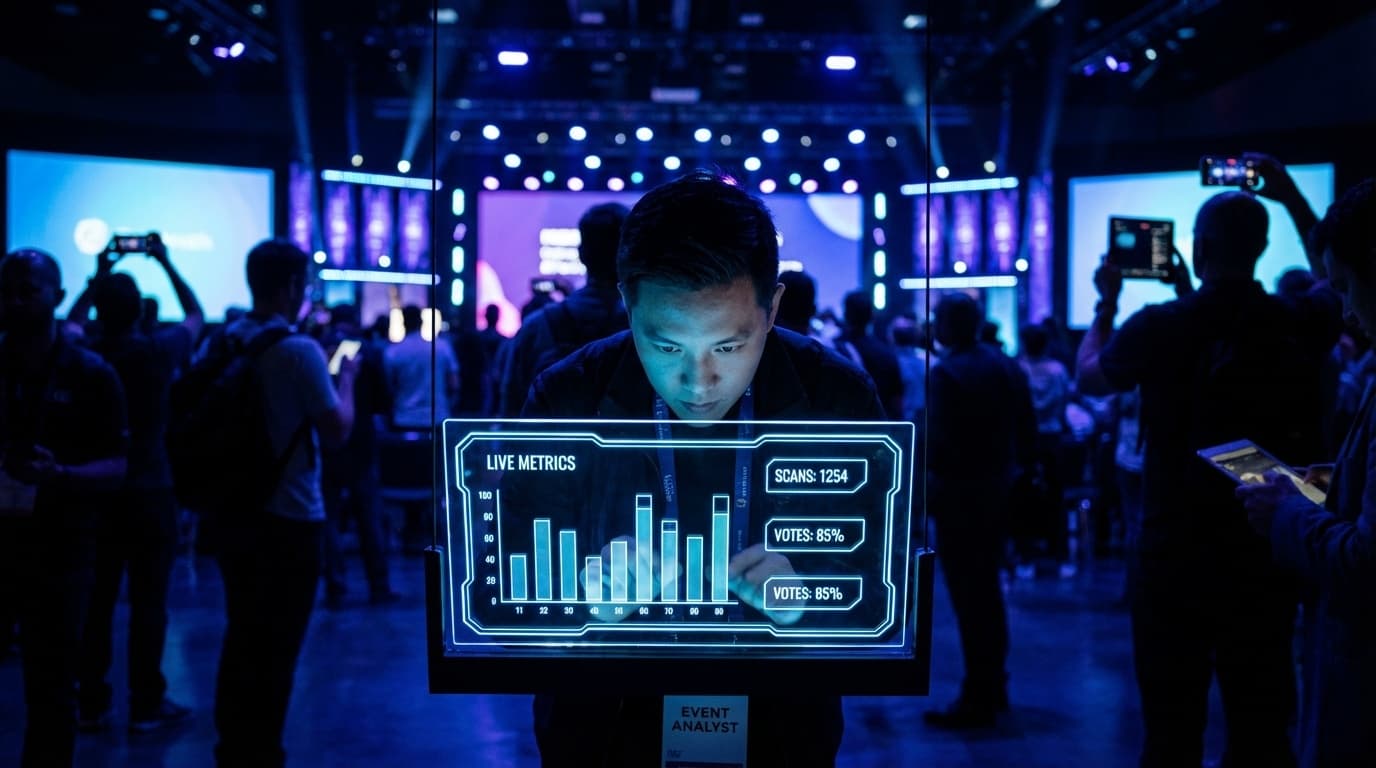
First-party data collection. Every scan, mission, or vote captures preferences, interests, or contact details. When connected to your event platform, you can retarget attendees based on what they actually did, not just whether they showed up. For ethical approaches, see collecting attendee data without being invasive.
Sponsor value amplification. When sponsors see how many people interacted with their booth code, joined a mission, or claimed a reward, they're more likely to renew. Hard numbers beat vague impressions. Learn more about increasing sponsorship value with interactive technology.
Improved attendee experience. People want to feel part of something, not just spectators. Live polls, missions, rewards, and instant feedback create a sense of movement. When attendees feel their actions matter, they stay longer, participate more, and share on social channels.
Design Real-Time Engagement Before the Event Starts
Real-time engagement doesn't begin when doors open. It starts the moment someone discovers your event. Design the pre-event journey with interaction in mind, and attendees arrive in an active mindset. This makes onsite engagement easier and creates more measurable touchpoints.
Turn registration into engagement. After someone buys a ticket, direct them to a welcome page where they choose interests, follow channels, or join a pre-event mission. Ask them to scan a QR code to unlock a small reward, like early session access or a surprise at check-in.
Interactive drip campaigns. Send prompts that invite participation instead of just reminding dates. "Vote on which topic gets extra Q&A time" or "choose your side mission for the venue" gives people reasons to click and interact before arriving.
Sponsor pre-registration. Sponsors can invite attendees to pre-register for challenges that continue at their booth. This moves traffic in the venue because people already know something's waiting. For activation strategies, see best event activation ideas.
Let attendees build simple profiles or choose interests that inform later personalization. The data captured pre-event makes onsite interactions more relevant and targeted.
On-Site Real-Time Engagement Ideas That Keep People Active
The venue is where real-time engagement becomes visible and contagious. Your goal: turn waiting time, transition moments, and quiet corners into live activity. Attendees should feel there's always something to do, scan, or unlock wherever they are.
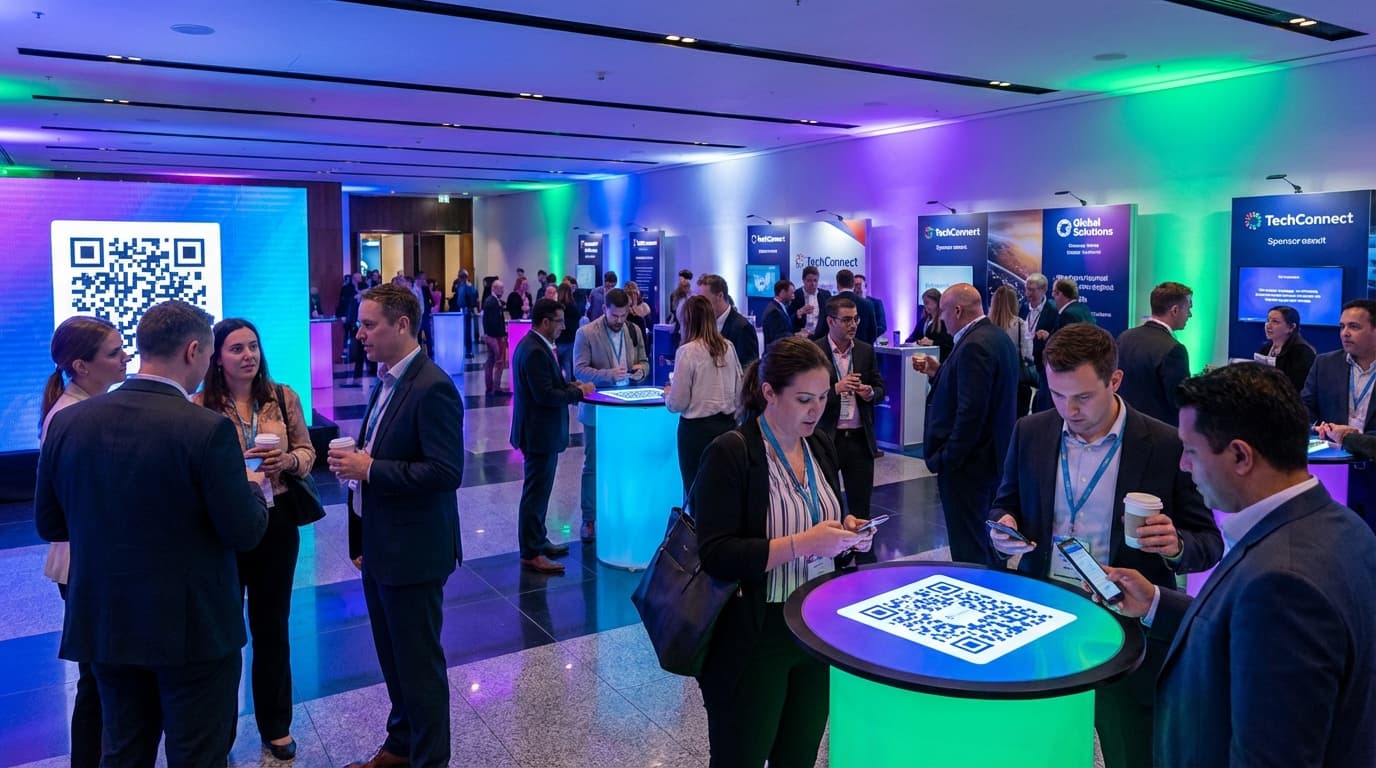
QR touchpoints everywhere. Place codes at check-in desks, session entrances, seating areas, and sponsor booths. Each code triggers a specific action: check in and earn points, answer a live poll, join a mission, or claim a digital perk. Dynamic codes let you change destinations to promote different missions throughout the day.
Live missions. Ask attendees to visit three different zones, scan codes, and answer simple questions. Completing the mission unlocks rewards at a central desk or digital prizes. Missions help with traffic flow, sponsor exposure, and serendipitous networking. For implementation, see how to build a scan-and-win event experience.
In-session gamification. Ask people to scan a code to submit questions, vote on topics, or participate in quick quizzes. Display results live on the main screen so they see immediate impact. This makes presentations collaborative and gives speakers insight into what the room cares about.
Reward completion with points, perks, or exclusive content drops. The key is making every action feel worthwhile, not like homework.
Turn Every Attendee Into an Engaged Participant
Join event organizers using VISU to boost engagement, capture leads, and increase sponsorship value with smart QR campaigns.
Amplify Activity with Live Screens and Notifications
Real-time engagement becomes more powerful when it's visible. If people see others scanning, earning, and sharing, they want to join. Live screens and social walls surface that energy. They also give sponsors high-impact exposure without interrupting the experience.
Activity displays. Show anonymized metrics like missions completed, scans per zone, or live poll results. Mix with curated social posts using your event hashtag. When attendees see their actions could appear on screen or move a progress bar, they're more likely to participate. Engagement becomes a shared game instead of hidden individual activity.
Timely notifications. During breaks, send messages inviting attendees to join a quick mission near the coffee area or scan a code at a sponsor lounge. If your event app has low adoption, lean on browser-based QR journeys and smart links that open directly without installation.
Sponsor visibility. A sponsor might see their logo next to a mission leaderboard, or a shared screen highlights scans at their booth. This exposure feels organic because it's connected to real behavior, not just static placement.
Use screens to show activity, not just logos. Combine social walls with mission stats to create momentum. For tracking approaches, see how to track real-time engagement in physical spaces.
Turn Engagement Data Into Long-Term Value
Real-time engagement isn't only about event day. The data you collect fuels follow-up campaigns, future ticket sales, and community building. Connect engagement actions with identifiers like email or phone in a consent-based way.
Capture at natural milestones. When someone completes a mission or participates in a poll, invite them to save progress or claim rewards by confirming email. Make the benefit clear: access to slide decks, priority access to next edition, or bonus points in an ongoing reward system.
Segment follow-up by behavior. People who engaged heavily with sponsor missions receive co-branded offers. Attendees who spent time at certain tracks get targeted content or early invitations. Because you know what they scanned and where they interacted, messages become precise rather than generic. For promotion strategies, see how to promote events and sell more tickets.
Improve future events. Look at which missions completed most, which zones underperformed, which notifications drove action. This makes your next event less experiment, more optimization. Over time, you build a playbook of engagement ideas that work for your specific audience.
Engagement Mistakes That Kill Participation
Even good ideas fail when organizers make these common mistakes:
Too many steps to participate. App downloads, account creation, long forms. Each barrier loses people. Browser-based QR journeys with one-tap actions convert far better than heavy installations.
No visible feedback. If attendees complete actions but see nothing happen, they stop trying. Show instant results, progress updates, or confirmation messages for every interaction.
Rewards that don't motivate. Generic swag nobody wants doesn't drive participation. Offer meaningful perks: upgrades, exclusive access, content they actually value.
Engagement disconnected from event narrative. Random polls and missions that don't relate to the event theme feel forced. Integrate engagement into the overall story and experience.
Ignoring data after the event. Collecting engagement data without using it for follow-up wastes the relationship you built. Plan post-event communication before the event starts.
Over-notification. Too many push messages become noise. Be strategic about timing and frequency. Quality over quantity.
Tips for Real-Time Engagement Success
Start before the event. Turn confirmation pages into engagement hubs. Use email and SMS to invite people into missions and early access content. Pre-event interaction primes attendees for onsite participation.
Make participation obvious. Clear signage, visible QR codes, explicit CTAs explaining what attendees get. If the next action isn't obvious in three seconds, most people won't bother.
Show progress publicly. Screens displaying leaderboards, completion stats, or live results create social proof and momentum. Engagement becomes contagious when it's visible.
Connect every touchpoint to data. Each scan, vote, and mission should capture something measurable. Tag by location, time, and purpose so analytics tell a clear story.
Design for mobile-first. Large buttons, readable text, fast loading. Test under crowded WiFi conditions. What works in your office may fail in a packed convention hall.
Brief sponsors on engagement mechanics. Share how missions and QR codes work before they design booth materials. Aligned expectations mean better results for everyone.
For organizer strategy, see our QR codes for events organizer guide. And for broader context on attention economics, explore how people get paid for their attention.
Build a Real-Time Engagement Engine
Real-time engagement is more than interactive gimmicks or last-minute polls. It's designing events where every moment invites participation and every action creates value. When you plan engagement before, during, and after, you move from guessing to running a repeatable system.
Start small. Add a few QR-driven missions, live polls, or check-in rewards at your next event. Watch which ideas your audience responds to and expand from there. As you connect experiences through unified analytics, you'll show clear results to sponsors and leadership.
The events that stand out in 2026 treat attention as a measurable asset. With the right tools and focus on live interaction, you turn that attention into loyalty, revenue, and a community excited to come back.
Ready to Create Real-Time Engagement?
VISU connects QR codes, missions, and live interactions into trackable engagement journeys that prove ROI.
FAQ: Real-Time Engagement Ideas for Events
What is real-time engagement at events?
Real-time engagement creates interactions that respond instantly to attendee actions. Scans, votes, and missions generate immediate feedback, live results, and adaptive experiences. Instead of static content, you run dynamic experiences that change based on what people do while the event is happening.
How do you get attendees to participate in real time?
Make participation simple, visible, and rewarding. Use clear signage, short QR journeys, and live screens showing progress. Offer meaningful rewards and recognition for participation. The easier and more obvious the next action is, the more people join.
How do you measure real-time engagement success?
Track scans per zone, missions started and completed, live poll responses, session participation, and opt-in data collected. Connect these metrics to outcomes like sponsor leads, follow-up conversions, and repeat ticket sales to understand true impact.
Do you need a dedicated app for real-time engagement?
Not always. Many organizers use browser-based QR journeys, smart links, and dynamic codes to keep experiences fast and accessible. A full app helps for very large or recurring events, but it's not required. Browser-based approaches often have higher participation because there's no installation barrier.
How does real-time engagement help sponsors?
Sponsors see exactly how many people interacted with their codes, joined missions, or claimed rewards. This attribution with real numbers beats vague exposure estimates and makes it easier to justify investment. Sponsors can also see engagement data during the event and adjust their approach.
What's the biggest mistake with event engagement?
Requiring too many steps to participate. App downloads, account creation, and long forms kill engagement. Use browser-based QR experiences with one-tap actions. If people can't understand the value and join in under five seconds, most will ignore it.