

QR codes in healthcare are revolutionizing how patients, doctors, and institutions interact across every stage of care. According to the World Health Organization, up to 50% of adverse events in hospitals are related to identification and communication failures, problems that simple technologies like QR codes can significantly mitigate. Whether in hospitals, clinics, laboratories, or public health campaigns, this technology delivers more speed, safety, and transparency across every process.
A simple printed or digital code can open doors to more human, connected, and efficient care at every stage of the patient journey. Research from McKinsey indicates that hospitals adopting digital technologies for electronic records and identification have reduced medication errors by up to 50%, demonstrating direct impact on care quality and patient outcomes.
Quick Access to Information: QR Codes as a Medical Bridge
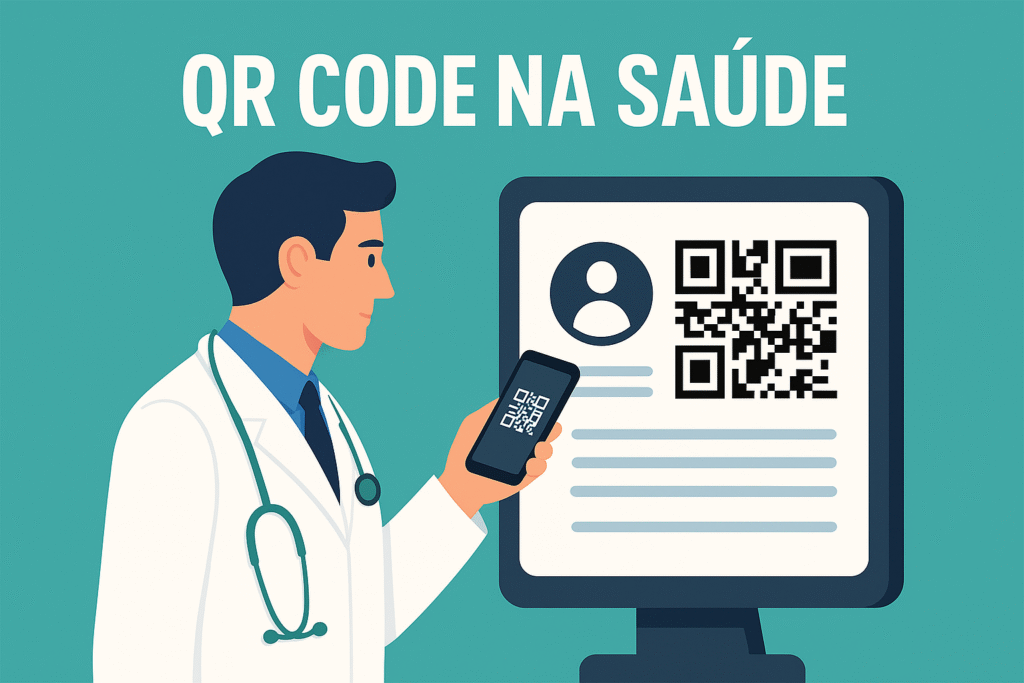
In healthcare, time is a precious resource that frequently determines clinical outcomes. QR codes in healthcare eliminate bureaucratic barriers, allowing instant access to critical and sensitive information at the exact moment it is needed.
Patient Cards with QR Codes
Identification cards containing QR codes allow any authorized professional to access complete medical history in seconds. This includes known allergies, current medications, chronic conditions, and previous exam results, information that can be decisive in emergency care situations.
Digital Laboratory Results
Results can be accessed by scanning the code printed on the exam paper or sample label. Patients no longer need to carry physical folders of exams, and physicians have certainty they are viewing current results rather than outdated or altered versions.
Intelligent Hospital Wristbands
Beyond basic identification, wristbands with QR codes contain information about allergies, current medications, dietary restrictions, and specific protocols. Before any procedure, staff can confirm identity and access critical alerts with a single scan.
These uses not only reduce critical errors but also create a direct bridge between patient and healthcare professional, optimizing diagnoses and clinical decisions in real time.
Practical Benefits: Why Implement QR Codes in Healthcare
Applying QR codes in healthcare brings measurable practical gains at every stage of the care journey, from scheduling through post-visit follow-up.
Faster Check-in and Service Delivery
Digital check-in via QR code eliminates redundant printed forms and significantly reduces waiting time at reception. Patients scan a code upon arrival, confirm pre-registered data, and are automatically directed to the correct room. Clinics that implemented this system report 40% reduction in average wait time.
Enhanced Patient Safety
QR codes in healthcare minimize risks of patient or medication mix-ups, a critical problem in hospitals with high patient volume. Each medication administration can be validated by scanning the patient's wristband code and automatically comparing it to the prescription, creating a physical barrier against errors.
Patient Convenience and Autonomy
Exam results, medical reports, and prescriptions become available anytime through simple scanning. Patients do not depend on business hours to retrieve documents and can share information with other physicians instantly when seeking second opinions.
Integrated Efficiency Between Institutions
Integrated systems via QR codes allow hospitals, clinics, and laboratories to share information in a standardized and secure manner. A patient seen in emergency care can have their history accessed even if they have never visited that institution before, as long as they are within the same connected health ecosystem.
Real Cases: QR Codes in Healthcare Across Different Contexts
QR codes in healthcare are already present across different areas and institution types, each leveraging the technology in specific ways for their operational challenges.
Large Reference Hospitals
International reference hospitals use wristbands with QR codes that allow staff to confirm identity before any critical procedure. In surgeries, protocols require wristband scanning to confirm patient, planned procedure, and laterality, ensuring maximum safety and creating automatic audit records.
Private Clinics and Medical Offices
In smaller environments, QR codes speed up check-in at reception and automatically direct patients to the correct office. Physicians can scan the patient's code to open their record directly in the system, saving navigation time and reducing record selection errors.
Clinical Analysis Laboratories
Each biological sample receives a unique QR code that tracks its journey from collection to final result. This ensures complete chain of custody, eliminates sample mix-up errors, and allows patients to track exam status in real time via mobile phone.
Public Health Campaigns
Posters and campaign materials with QR codes provide detailed information about vaccination, disease prevention, and access to free online consultations. In vaccination campaigns, each administered dose can be registered via QR, creating immediate digital proof and feeding epidemiological control systems.
Bring Secure QR Codes to Your Healthcare Institution
VISU helps hospitals, clinics, and laboratories implement QR codes with complete tracking, data security, and simple experience for patients and staff.
Telemedicine and Remote Monitoring: Digital Healthcare QR Codes
With the accelerated advancement of telemedicine, especially after the pandemic, QR codes in healthcare gain new applications that seamlessly connect in-person and remote care.
Interactive Digital Prescriptions
QR codes on medical prescriptions allow patients to access supplementary information about prescribed medications: explanatory videos on usage, interaction alerts, timing reminders, and direct channel to clarify questions with the physician or pharmacist. This significantly reduces usage errors that compromise treatments.
Remote Patient Monitoring
Home monitoring devices can generate QR codes with updated data on blood pressure, blood glucose, heart rate, or oxygen saturation. The physician accesses this information remotely during teleconsultations, having complete visibility into patient evolution between in-person visits.
Personalized Health Education
Brochures and educational materials with QR codes lead to explanatory videos, animations, and interactive content that significantly improve treatment adherence. Studies show that patients who receive visual education about their condition have adherence rates up to 30% higher.
This connected ecosystem strengthens the relationship between in-person and digital care, creating real continuity that improves clinical outcomes.
Patient Safety: How QR Codes Reduce Medical Errors
Safety is a top priority in any healthcare institution. Strategic use of QR codes in hospitals ensures multiple layers of protection against errors that can have serious consequences.
Correct and Unique Identification
Each patient is unique, and QR codes prevent accidental mix-ups that represent critical risk in high-traffic environments. Before any procedure, medication administration, or transfer, the professional scans the code and visually confirms they are treating the correct patient.
Safe and Traceable Medication
QR codes link specific doses, scheduled times, and prescriptions to the patient file, creating an automated audit trail. If a medication has already been administered, the system alerts. If there is a known contraindication, the alert appears before administration. Each dose is recorded with timestamp, responsible professional, and medication lot.
Access Control to Restricted Areas
Critical areas like ICUs, surgical centers, and pharmacies can require QR code validation, ensuring only authorized personnel access sensitive information and restricted spaces. The system records each access, creating audit logs for investigations when necessary.
According to WHO guidelines on digital health, implementing positive identification systems like QR codes is one of the most cost-effective interventions to reduce preventable adverse events in hospital environments.
Connected Health: From Electronic Records to Total Integration
QR codes also integrate into the global movement of healthcare digitization and transformation, functioning as a bridge between different systems and institutions.
Electronic Health Records Accessible via QR
Patients scan a QR on their card or app and access complete history of consultations, exams, prescriptions, and previous hospitalizations. This data portability empowers patients and facilitates care at any institution in the ecosystem, without needing to repeat exams or retell history.
Integration with Health Apps
QR codes connect data from different clinics, laboratories, and hospitals in a single app, creating a 360-degree view of the patient. Wearables and monitoring devices also feed this ecosystem, allowing physicians to see not only past consultations but also continuously collected health data.
Quick Sharing in Emergencies
In critical situations where patients cannot communicate their history, a QR code on their phone, wallet, or wristband allows emergency staff to access vital information in seconds: severe allergies, continuous-use medications, chronic conditions, and emergency contacts.
This model creates a truly connected health ecosystem where each scan represents immediate access to reliable, updated, and verifiable data.
Future: QR Codes and Emerging Technologies in Healthcare
The technology's potential is still in significant expansion. The future of healthcare points to QR codes increasingly integrated with emerging technologies that expand their capabilities.
Smart Wearables with QR Codes
Watches, bracelets, and smart rings containing essential medical information for emergencies. In case of accident or sudden illness, first responders can scan the device and access critical data immediately, activating rescue protocols appropriate to the patient's condition.
Blockchain and Immutable Records
QR codes functioning as access keys to medical records stored on blockchain, ensuring integrity and immutability of historical data. Each change is permanently recorded, creating an inviolable audit trail that meets regulatory and legal requirements.
Digital Vaccination Programs
Each vaccine dose linked to a unique QR code that serves as immediate digital proof, facilitates access to future campaigns, and feeds epidemiological surveillance systems. Patients have permanent and verifiable record of their vaccination history accessible via mobile phone.
Personalized and Preventive Health
QR codes directing to customized treatment plans based on medical history, genetic profile, and continuous monitoring data. Predictive medicine uses this data to anticipate risks and intervene preventively before conditions manifest clinically.
In a world where time and precision save lives, the combination of QR codes with digital health represents more operational efficiency and more care genuinely centered on the patient and their individual needs.
Practical Implementation: First Steps
For institutions considering implementing QR codes in their healthcare operations, some structured steps facilitate successful adoption.
First, identify the points of greatest friction or risk in your current processes: patient identification, medication administration, record access, or patient communication. Prioritize implementation at these highest-impact points.
Second, choose a platform that meets healthcare data security and privacy requirements, including HIPAA compliance and industry standards. Healthcare QR codes need encryption, access control, and audit logs.
Third, start with a pilot in a specific area, measure results, and adjust before expanding to the entire institution. Collect feedback from professionals and patients to refine the experience.