

QR codes have moved from nice-to-have detail to central infrastructure for event check-in, engagement, and sponsor ROI. This guide shows organizers how to plan, place, and measure QR strategies that actually work.
The reality? Most organizers still paste random codes onto materials without a strategy. Meanwhile, those who plan QR as a connected system see faster check-in, higher engagement, better sponsor metrics, and attendee data they can actually use. The difference isn't the technology. It's how you connect each code to a journey that matters.
Skip the Learning Curve
VISU helps event organizers centralize all QR journeys, track every scan, and prove sponsor value from one dashboard.
Quick video. Earn your first reward.
What This Organizer Guide Covers
This isn't a basic intro to QR codes. Here's what you'll actually learn as an event organizer:
Strategic planning: How to map QR codes across the entire event journey, from discovery through follow-up, with clear purpose for each placement.
Practical use cases: Check-in acceleration, session engagement, sponsor activations, and data collection that work in real venue conditions.
Journey design: Creating mobile-first experiences that attendees actually complete, even in crowded spaces with spotty WiFi.
Analytics and ROI: Tracking scans, measuring sponsor value, and turning anonymous interactions into contacts you can nurture.
For the foundational overview, see our main QR codes for events hub. For attendee-focused implementation details, check our QR codes for events guide. This guide focuses specifically on organizer strategy and execution.
Why QR Codes Matter for Events in 2026
QR codes aren't new. What's changed is how people use them. After years of scanning menus, payment screens, and delivery receipts, attendees instinctively know what to do when they see a code. For organizers, that habit is a powerful asset. You can turn almost any physical touchpoint into an instant digital interaction without explanation.
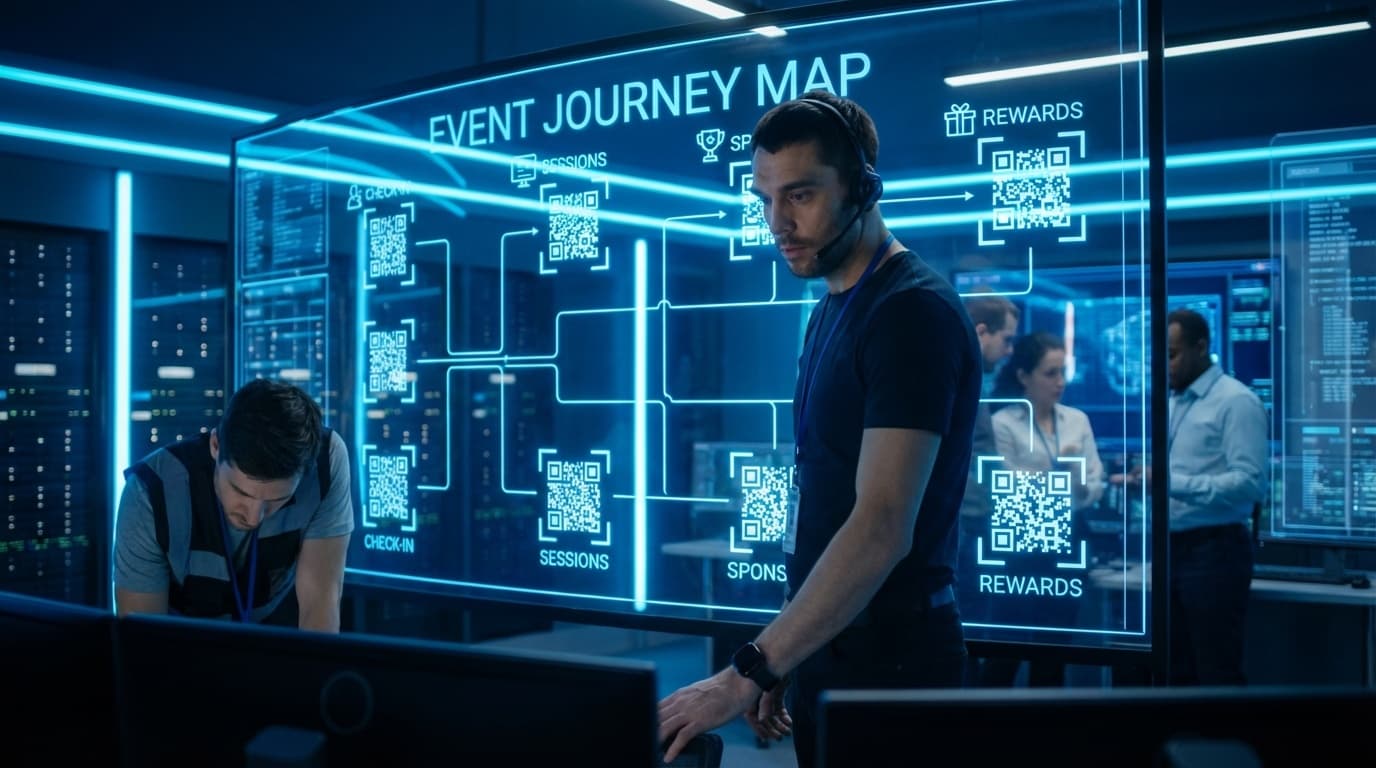
The real advantage is connecting offline and online behaviors. A scan can check someone in, open a mission, trigger a live poll, or link to a sponsor experience, all while capturing time, location, and context. When those scans use dynamic destinations, you can adjust flows during the event without reprinting anything. That flexibility is something static signage never offered.
For attendees, QR codes reduce friction. Instead of searching for URLs, installing apps, or typing on small keyboards, they point their camera, tap once, and arrive where they need to be. If the experience that follows is fast and focused, they're far more likely to participate again.
For sponsors, QR codes bridge presence and performance. A sponsor can see exactly how many people scanned their activation, what they did afterward, and how many opted into follow-up. This transforms vague impressions into measurable journeys that justify premium packages. Learn more about increasing sponsorship value with interactive technology.
Planning Your QR Strategy Across the Event Journey
QR codes work best when planned as part of a complete journey rather than pasted randomly onto materials. The approach is simple: map the stages where people interact with your event, then decide what you want them to do at each stage and which scans will guide them there.
Start with objectives. Are you trying to accelerate check-in, increase session participation, drive traffic to sponsors, grow first-party data, or sell post-event offers? Different goals require different QR use cases. A code on pre-event posters might focus on ticket sales. A code on badges might focus on missions, polls, or networking.
List all available surfaces. Tickets, confirmation emails, entrance banners, badge backs, lanyard cards, stage slides, table tents, restroom mirrors, charging stations, sponsor booths, swag. Each surface can host a code with specific purpose instead of promoting a generic website.
Connect each surface to a clear action. A mission QR shouldn't send people to a generic homepage. It should drop them into a simple step-by-step flow. A sponsor QR should lead to a context-aware experience explaining what the sponsor offers and what the attendee gains. For detailed placement strategies, see our guide on best event activation ideas.
Using a central platform lets you manage all codes from one place and update destinations without reprinting. This becomes essential when you're running multiple events or need to make day-of adjustments.
Essential QR Code Use Cases for Organizers
Once you have strategy, start implementing specific use cases. You don't need all of these at once. Start with a few that align with goals, test them, then expand over time.
Accelerated Check-In
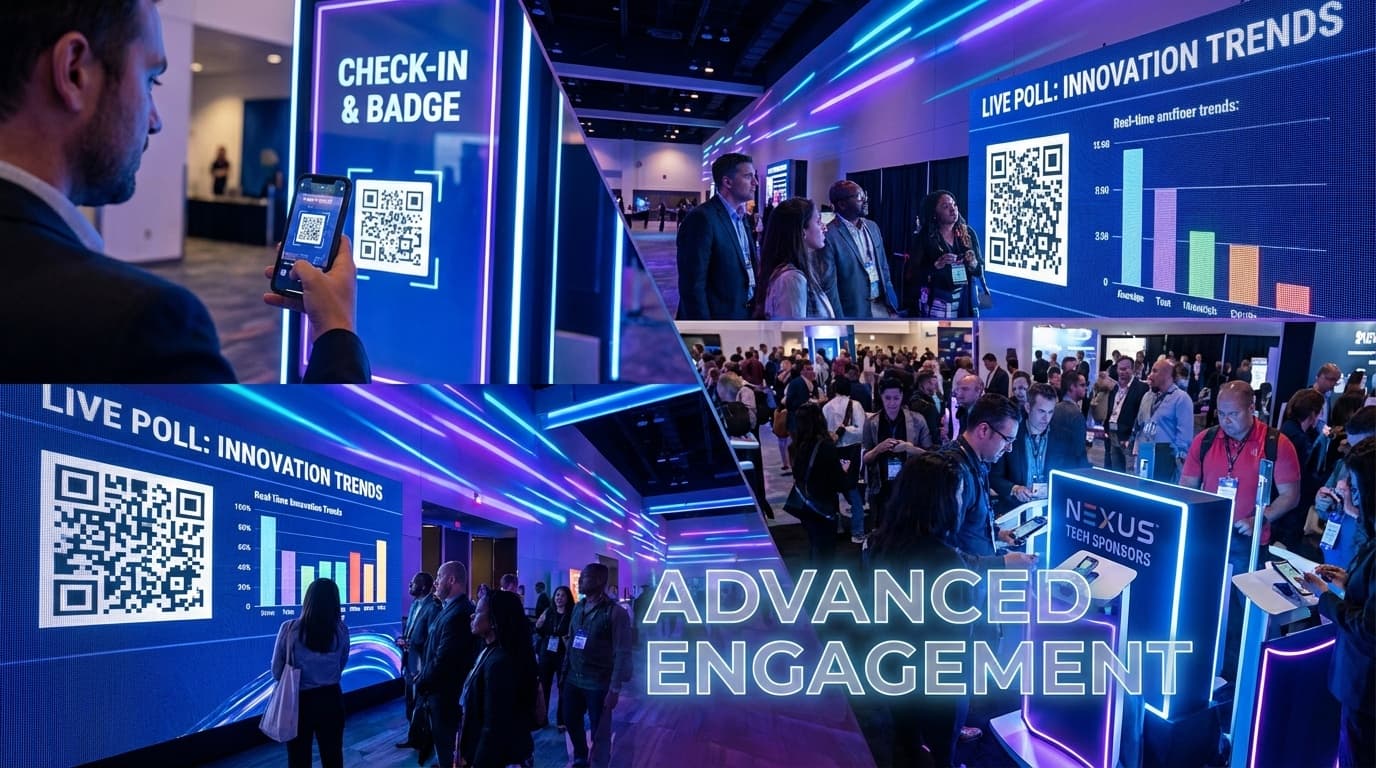
Attendees receive a QR in their confirmation email or wallet pass. Staff scan the code to verify registration and print badges. This reduces lines and gets people into the venue faster. Add a second QR on the badge itself that attendees scan to start a mission or access their personal event hub.
Session Engagement
Each session displays a code on stage or near the entrance. Attendees submit questions, vote on topics, download slides, or rate the talk. Because the scan happens in the room, you know exactly who was present and what caught their interest. Over multiple sessions, this builds rich engagement profiles. For more ideas, see real-time engagement ideas for events.
Sponsor Activations
Sponsors turn simple booths into live experiences. A scan might open a product configurator, a quiz matching attendees to solutions, or a gamified challenge with prizes. Creating a scan-and-win experience is particularly effective for driving booth traffic and capturing leads at peak interest.
Networking and Contact Exchange
Badge codes let attendees exchange contact info with a scan instead of fumbling with business cards. Advanced setups let people choose what to share. Full details, just LinkedIn, or a meeting link. This keeps networking fluid throughout the event.
Turn Every Attendee Into an Engaged Participant
Join event organizers using VISU to boost engagement, capture leads, and increase sponsorship value with smart QR campaigns.
Designing QR Journeys People Actually Complete
A QR code is only as good as what opens after the scan. If the page is slow, cluttered, or confusing, people close it and don't try again. You need to design QR journeys with the same care you'd give landing pages, but optimized for mobile in crowded spaces with spotty connectivity.
Keep each journey focused on one action. If the goal is joining a mission, show that first, not a full website menu. If the goal is voting, put the question and options on the first screen. Think two or three taps, not ten. The faster people complete the action, the more likely they are to scan again later.
Optimize for mobile first. Large buttons, readable text, layouts that work on small screens held in one hand. Avoid heavy video or bloated scripts that slow loading, especially if venue WiFi is unstable. Plain browser flows beat forced app installs or logins every time.
Show instant feedback. When someone completes a scan, give clear confirmation. Points added. Mission step completed. Reward unlocked. If they earned something physical like a drink or gift, tell them exactly where to claim it. Small touches build trust and train people to expect that scanning codes at your events is worth their time.
Tracking, Analytics, and Post-Event Follow-Up
One of the biggest advantages of QR codes is the analytics detail you can capture. Instead of guessing which activations worked, you see how many scans each code generated, at what times, and from which areas. Combined with session data and sponsor interactions, you get a clearer picture of what actually created value.
Tag codes by location and purpose. Label them as entrance check-in, stage polls, sponsor zone missions, or restroom awareness posters. Your analytics should group these categories and compare performance. Over time, you'll see patterns. Which surfaces drive most scans. Which offers people ignore.
Connect scans to consent-based identifiers. When someone completes a mission, redeems a reward, or downloads content, ask them to confirm email or phone in exchange for a recap, early-bird access, or ongoing perks. This turns anonymous scans into known contacts you can nurture. See our guide on collecting attendee data without being invasive.
Segment follow-up by engagement level. Attendees who scanned many codes, joined missions, or spent time in sponsor zones get deeper offers. People who only checked in once get a simpler thank-you. This engagement-based segmentation outperforms generic blasts. For promotion strategies that extend this approach, see how to promote events and sell more tickets.
Common Organizer Mistakes to Avoid
Even experienced organizers make these QR implementation mistakes:
Random placement without strategy. Codes pasted onto materials without clear purpose get ignored. Every code needs a specific action and journey behind it.
Generic destinations. Sending all codes to your homepage wastes the context you have. A sponsor booth scan should land on that sponsor's experience, not your main site.
Ignoring mobile constraints. Journeys designed on desktop fail on phones in crowded venues with bad WiFi. Test everything under realistic conditions.
No tracking infrastructure. If you can't see which codes drove engagement, you can't optimize or prove sponsor ROI. Set up analytics before printing anything.
Forgetting post-event value. QR infrastructure can power follow-up campaigns, surveys, and next-event promotion. Don't treat it as single-use.
Underestimating staff training. Your check-in team needs to troubleshoot scanning issues without creating lines. Brief them on common problems.
Tips for Organizer Success with Event QR
Map the full journey first. Before creating any codes, sketch the entire attendee path from discovery to follow-up. Identify where QR adds value versus where it's unnecessary friction.
Start with high-impact use cases. Check-in acceleration and sponsor lead capture usually deliver fastest ROI. Add gamification and session engagement as you gain confidence.
Use dynamic codes everywhere. Static codes can't be updated. Dynamic codes let you change destinations mid-event without reprinting. Worth the small extra cost.
Test under event conditions. Crowded WiFi, variable lighting, realistic scanning distances. What works in your office may fail in a convention center basement.
Brief sponsors early. Share sizing guidelines, CTA requirements, and tracking capabilities before they design booth materials. Better inputs mean better results for everyone.
Document and iterate. Record what worked, what failed, scan rates by placement. Feed insights back into next event's strategy. This knowledge compounds over time.
For broader context on attention-based engagement economics, see how people get paid for their attention. The principles apply directly to how you design value exchanges at events.
Build a QR-Powered Event Engine
QR codes for events are most powerful when they form a connected system. Instead of random codes on materials, you design journeys guiding attendees from check-in to engagement to follow-up, while giving sponsors real metrics and your team real control. That system becomes an engine you reuse across multiple events, venues, and formats.
Start with clear strategy. Test a few high-impact use cases. Measure response. Expand into more zones and advanced journeys as you gain data and confidence. Organizers who treat QR codes as a strategic layer prove value, delight attendees, and keep sponsors coming back. Those who treat them as an afterthought keep wondering why events feel flat while costs rise.
Ready to Centralize Your Event QR Strategy?
VISU helps organizers manage all QR journeys, track every interaction, and prove sponsor ROI from one platform.
FAQ: QR Codes for Events Organizer Guide
Do attendees need to download an app to use event QR codes?
No. Most modern phones scan QR codes directly from the camera and open browser-based pages. You can build complete journeys using smart links and responsive landing pages without forcing app installs. This reduces friction and increases participation significantly.
Where should organizers place QR codes at events?
Focus on high-traffic and high-attention spots: check-in desks, entrance banners, badge backs, session rooms, sponsor areas, table tents, screens, and even restroom mirrors. Each location should have a clear purpose like check-in, joining a mission, answering a poll, or exploring a sponsor offer.
How do you ensure attendees actually scan QR codes?
Make the value obvious in simple language. Instead of "scan here," tell people exactly what they get: "scan to skip the line," "scan to join today's mission," or "scan to claim your drink." Use clear design, good contrast, and codes sized appropriately for viewing distance.
How do organizers measure QR code impact on event results?
Use a platform that tracks scans, clicks, and conversions for each code. Tag codes by location and intent, then compare performance across zones and time slots. Combine scan data with registration, sponsor, and post-event metrics to understand how QR interactions influence attendance, leads, and revenue.
Should organizers use static or dynamic QR codes?
Dynamic codes are almost always better for events. They let you change destinations without reprinting, track detailed analytics, and make day-of adjustments. The small additional cost pays off in flexibility and measurement capability.
How can QR codes improve sponsor ROI at events?
QR codes give sponsors trackable attribution. Each scan ties to specific placements, enabling real cost-per-lead calculations. Forms can auto-populate with registration data. Post-event reports show concrete metrics instead of vague exposure estimates, making it easier to justify premium sponsorship packages.