

QR codes at events do more than speed up check-in. They power gamification, capture sponsor leads, and extend engagement weeks after the show ends. Here's how to use them strategically.
The reality? Most events still treat QR codes as fancy barcodes. Scan ticket, enter venue, done. But organizers who think bigger are using them to transform passive attendees into active participants, capture qualified leads for sponsors, and build relationships that last beyond the event itself.
Create Interactive Event Experiences
Use smart QR codes for check-in, gamification, and lead generation that sponsors actually value.
Quick video. Earn your first reward.
What This Guide Covers
This isn't a basic "what is a QR code" tutorial. Here's what you'll actually learn:
Strategic implementation: How to position QR codes throughout the event journey for maximum engagement, not just at entry gates.
Gamification mechanics: Turning passive attendees into active participants with treasure hunts, point systems, and live rankings.
Sponsor ROI: Capturing qualified leads at the moment of interest and proving value with real metrics.
Post-event extension: Using QR to maintain relationships weeks after the lights go down.
For the foundational overview of QR at events, see our main QR codes for events hub. This guide goes deeper into practical execution.
QR Codes as Digital Channels at Events
When we talk about convenience and speed, few tools match QR codes. They eliminate friction and create instant bridges between physical and digital worlds.
Fast check-in without lines. Attendees present the code on their phone, skip the queue, and enter in seconds. This reduces bottlenecks and frees staff for other tasks. Digital tickets replace printed ones, cutting costs and environmental impact while adding security through real-time validation.
On-demand content access. Videos, playlists, presentation slides, supplementary materials. All available via a quick scan. A music festival can place codes on screens to unlock artist playlists and behind-the-scenes content. A trade fair can transform each booth into a digital connection point.
According to Cvent data on trade shows in 2025, events adopting digital solutions increase audience satisfaction by up to 30%, primarily due to ease and personalization of experience.
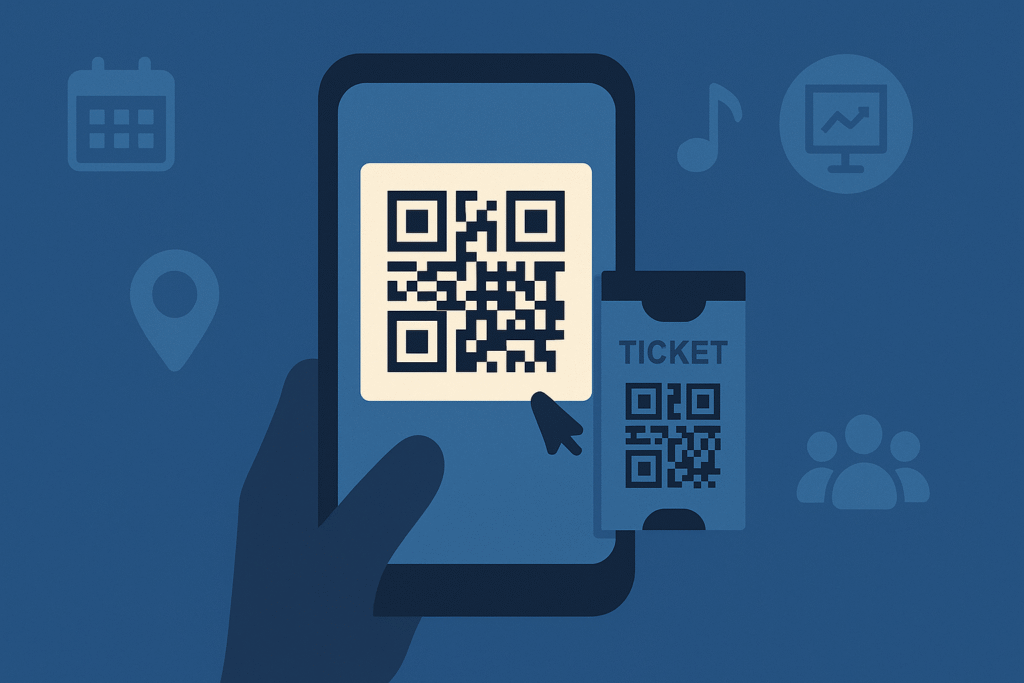
The key insight? QR codes for events create a bridge between in-person and digital experience that keeps audiences engaged even after the live moment passes. Learn more about real-time engagement ideas that maximize this potential.
Strategic Advantages for Organizers
The gains aren't just about attendee comfort. For organizers and sponsors, implementing QR codes brings advantages that directly impact ROI.
Real-time data collection. Each scan becomes information about preferences, timing, and audience profiles. Your event transforms into a market intelligence hub, generating insights that guide sponsorship decisions, programming, and communication.
Reduced operational costs. Less paper. Less check-in staff. Less confusion with lines. An event with QR codes saves on multiple fronts simultaneously. Corporate sustainability also gains prominence, with environmental impact reduction increasingly valued by audiences and stakeholders.
Engagement via gamification. QR codes serve as checkpoints in digital dynamics, stimulating genuine interaction and increasing audience retention. More on this below.
According to BizBash research on corporate event trends 2025, sponsors increasingly value solutions that combine brand experience with clear metrics. QR codes deliver exactly that: measurable creativity.
Real-World Examples That Work
Creative application grows each year. Here are cases that demonstrate actual potential:
Rock in Rio uses QR codes for interactive maps, attraction information, and exclusive artist content. Attendees navigate with more autonomy and discover experiences they'd otherwise miss.
Web Summit implements QR codes in presentations directing to slides, study materials, and speaker contacts. Facilitated networking that extends the event's value long after sessions end.
B2B trade fairs display QR codes at booths to generate leads directly in CRM, capturing data in a scalable and qualified way. For detailed strategies, see our guide on best event activation ideas.
Sporting events use digital tickets with QR codes that unlock rewards and exclusive promotions, amplifying the experience beyond the stadium.
These examples show how QR codes adapt to different contexts, from entertainment to B2B, always focused on generating value.
Gamification: Turning Attendees into Protagonists
Gamification is one of the most promising uses of QR codes at events. Imagine a festival where the audience scans codes scattered around the venue to accumulate points and exchange for prizes. Game mechanics transform passive spectators into active participants.
Digital treasure hunts. Position QR codes hidden in different event areas, encouraging exploration. Attendees visit spaces they'd normally ignore, increasing sponsor exposure and enriching overall experience.
Rewarded multiple check-ins. Create incentive systems rewarding those who visit multiple attractions or booths. This increases circulation and time spent on site.
Live rankings. Display the most engaged participants in real-time, creating friendly competition and social motivation. This approach transforms passivity into active participation, generating social media buzz that amplifies reach.
For implementation details, see our guide on building a scan-and-win event experience. The key is combining game mechanics with tangible rewards.
Turn Every Attendee Into an Engaged Participant
Join event organizers using VISU to boost engagement, capture leads, and increase sponsorship value with smart QR campaigns.
How Sponsors Profit from Event QR Codes
For attendees, the benefit is experience. For sponsors, it's tangible and measurable performance.
Qualified, instant leads. Each scan that includes registration, email, or social connection captures a hot prospect at the exact moment of interest. No more collecting business cards that sit in a drawer for weeks.
Personalized real-time campaigns. Direct users to dynamic ads and offers adapted to their profile. Relevance increases, conversion follows.
Clear impact metrics. Post-event reports show exactly how many interactions, clicks, registrations, and conversions each activation generated. Sponsors justify investment with concrete data, not exposure estimates.
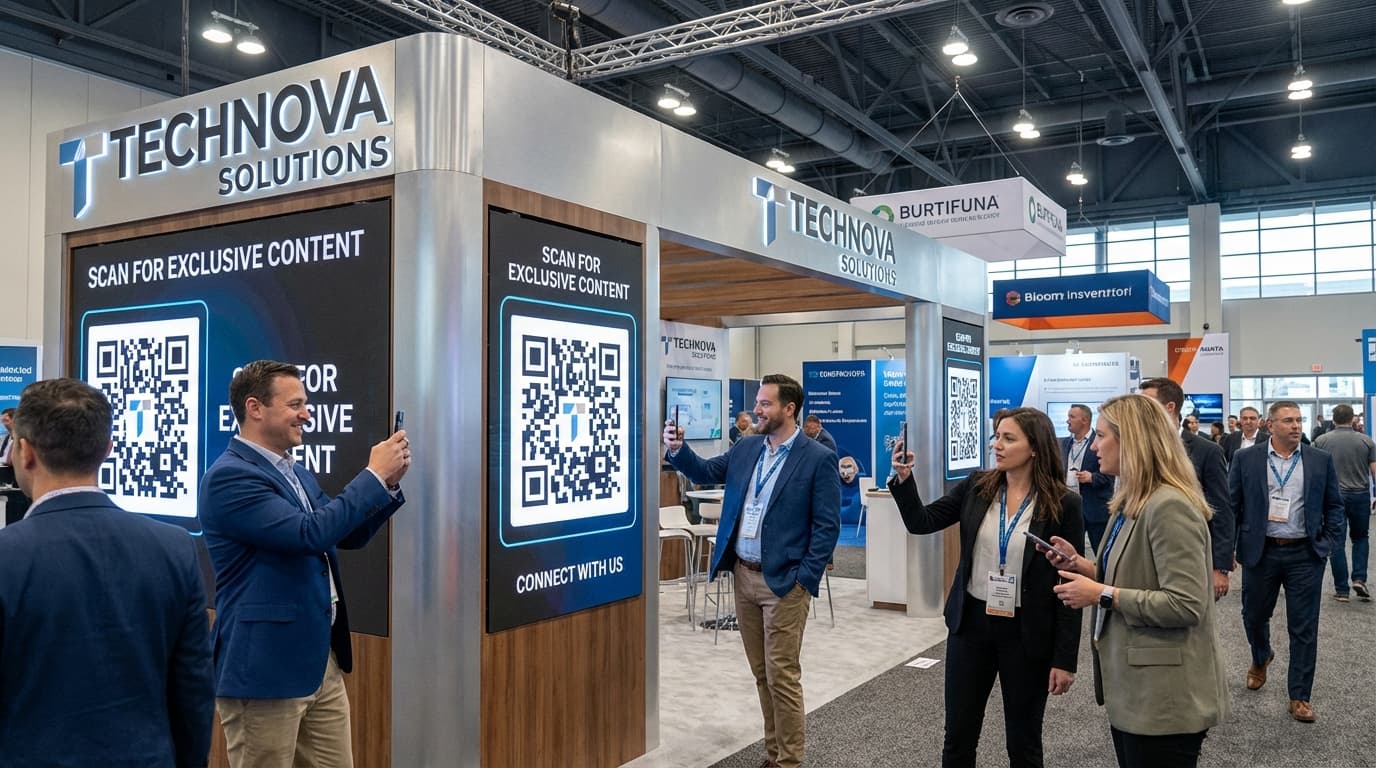
QR codes help brands connect creativity with measurable ROI. Learn more about increasing sponsorship value with interactive technology.
Extending the Experience Post-Event
The power of QR codes goes beyond the in-person moment. They're valuable tools for keeping relationships alive.
Instant satisfaction surveys. Position QR codes at the end of presentations or shows for immediate feedback. Response rates are significantly higher than surveys sent days later by email, because you're capturing opinions while the experience is fresh.
Post-event content access. Photos, videos, certificates, extra materials. All available via scanning, keeping audiences connected to the brand for weeks after. This is especially valuable for collecting attendee data in a value-exchange format.
Continuous communication. Redirect to online communities, VIP groups, or future campaigns. The relationship initiated at the event consolidates through digital channels that allow nurturing over time.
In practice, each scanned QR code is an opportunity to keep audiences engaged long after the physical event ends.
Common Mistakes That Kill QR Engagement
Even well-designed QR strategies fail when organizers overlook these pitfalls:
No clear value proposition. "Scan this QR code" isn't compelling. "Scan to win backstage access" is. Every code needs an explicit benefit.
Poor placement and timing. Codes buried in program booklets get ignored. Codes at high-traffic moments like entry, stage transitions, and exits get scanned.
Broken or slow destinations. Nothing kills trust faster than a scan leading to a 404 or a page that takes 10 seconds to load on crowded venue WiFi.
No tracking or attribution. If you can't measure which placements drove engagement, you can't optimize or prove sponsor ROI.
Forgetting offline scenarios. Large venues often have connectivity dead zones. Plan cached content or offline-capable destinations.
Tips for Maximum QR Impact at Events
Place codes at high-traffic moments. Entry, stage transitions, bathroom lines, exits. These are when attendees have available attention and phones already in hand.
Combine gamification with tangible rewards. Points alone don't motivate. Points that unlock prizes, discounts, or VIP access do. Make the reward visible and desirable.
Use strong visual signage. Clear instructions, prominent placement, visual hierarchy that draws the eye. Don't assume people will notice a small code in the corner.
Test everything under event conditions. Crowded WiFi, variable lighting, realistic scanning distances. What works in your office may fail in a convention center.
Brief sponsors on best practices. Share sizing guidelines, CTA requirements, and tracking capabilities before they design booth materials. Better inputs mean better results.
Launch post-event codes immediately. Survey and content access codes should deploy while attendees are still at the venue or traveling home. Momentum matters.
For the complete organizer perspective, see our QR codes for events organizer guide. And for broader context on attention-based engagement, explore how people get paid for their attention.
The Future: Hyperconnected Experiences
What comes next is even more promising.
Augmented Reality (AR). QR codes unlock filters, avatars, or holograms at events, creating viral moments that amplify organic reach.
Blockchain and NFTs. Tickets become unique, collectible assets with post-event value. A digital ticket can transform into verifiable memorabilia.
Hybrid events. QR codes bridge in-person and digital experiences, connecting geographically distributed audiences. Remote participants interact with physical elements through synchronized scans.
The accelerated adoption is driven by daily habits with mobile payments. Audiences are naturally ready for instant interactions at shows, fairs, and conferences.
Ready to Transform Your Event Engagement?
VISU turns QR codes into living media channels that unite technology, creativity, and measurable impact.
FAQ: QR Codes for Events Guide
What can QR codes do at events beyond check-in?
QR codes power gamification with treasure hunts and point systems, capture sponsor leads at the moment of interest, provide instant content access like slides and videos, enable networking through contact exchange, collect post-event feedback with higher response rates, and extend engagement through community invites and renewal offers.
How do sponsors benefit from event QR codes?
Sponsors capture qualified leads at peak interest with forms that auto-populate from registration data. They get clear attribution showing exactly which placements drove engagement, enabling real cost-per-lead calculations. Post-event reports provide concrete metrics instead of exposure estimates.
Do QR codes replace physical tickets completely?
Yes, and they add capabilities paper tickets can't match. Digital tickets with QR codes offer better security through encryption and real-time validation, instant delivery without printing costs, and the ability to unlock rewards, exclusive content, and post-event benefits.
How do you measure QR code engagement at events?
Track scans by placement, timing, device type, and user profile. Measure conversion through the full funnel from scan to landing page to desired action. Compare performance across different activations and sponsors to optimize future events.
What makes attendees actually scan QR codes?
Clear value propositions like "scan to win" or "get exclusive content." Strategic placement at high-attention moments like entry and stage transitions. Strong visual signage that draws the eye. Tangible incentives like prizes, discounts, or VIP access that make scanning worthwhile.
How much does QR implementation cost for events?
The cost is relatively low: creating codes, setting up landing pages, and integrating with analytics or CRM platforms. The return in data, engagement, and sponsor satisfaction typically pays off quickly. Dynamic QR platforms with tracking start free and scale with usage.