

Most marketers use QR codes. Very few use them as actual game mechanics. Usually, a QR code is just a shortcut to a landing page. Scan, view, done. That's a missed opportunity.
When you combine QR codes with missions, instant rewards, and visible progress, something different happens. Each scan becomes part of a loop that people want to repeat. A shelf tag can unlock a level. A coffee cup can trigger an instant win. An event badge can reveal challenges across sponsor booths.
This guide shows you how to design gamified QR codes that go beyond gimmicks. You'll learn what QR gamification actually is, why it works for engagement and data, how to structure journeys from scan to reward, and which use cases are working right now. If you're new to what gamification means in marketing, start there first.
Want to Skip Ahead?
Start building QR-powered gamified journeys with VISU today.
What QR Code Gamification Actually Is
QR code gamification uses QR codes as entry points into game-like experiences. Instead of landing on a static page, a scan enrolls someone in a mission, challenge, or reward journey. Each new scan can move them forward, unlock something, or reveal new content.
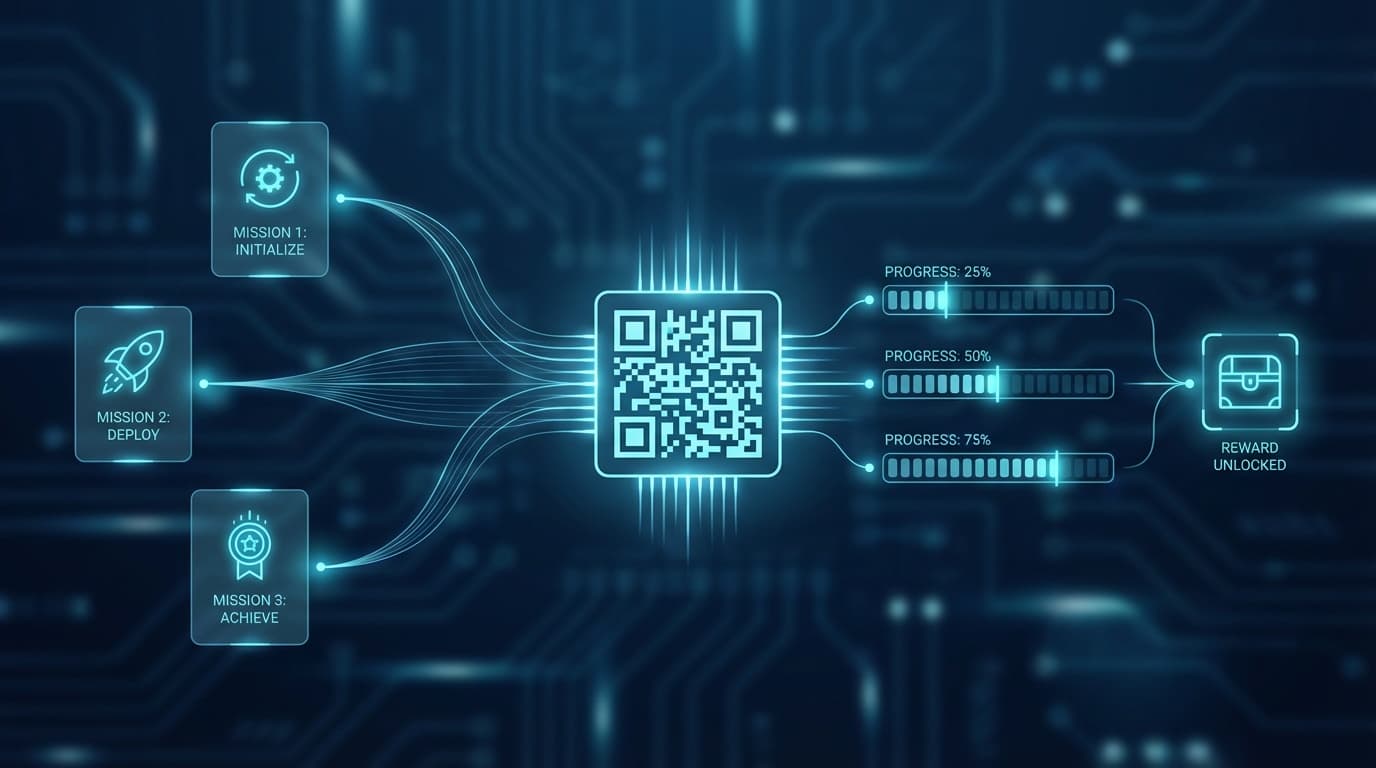
The mechanic is straightforward. Someone scans a code on a shelf, package, poster, or badge. The code routes through a smart link that logs the event and presents an interactive step—a question, a clue, a spin, or a progress bar. Additional codes in the journey unlock more steps and rewards. The environment becomes a map of micro-challenges.
What makes this powerful is flexibility. You can place codes anywhere: shelves, doors, city landmarks, event booths, even on other people. Anywhere you can put a visual marker, you can place an interactive node.
Because every scan is tracked, you see participation rates, completion rates, where people drop off, and which missions perform best. That's where QR gamification shifts from novelty to strategy.
Core Elements
- Entry point: A QR code that invites the scan
- Mission: A clear objective (visit locations, answer questions, collect items)
- Progress indicator: Steps, levels, or points showing how far someone has gone
- Reward logic: Instant wins, micro-rewards, tiered prizes, or draw entries
- Data capture: Optional profile or contact info collected along the way
Once you understand these pieces, you can mix them to fit your brand, audience, and context.
Why It Works for Engagement and Data
Gamified QR journeys work because they give people a reason to scan now—and again later. Traditional QR campaigns have one-time value. Scan, see a page, done. With gamification, the first scan is just the beginning. People want to see what's next, chase progress, and unlock rewards.
The psychology behind this is well-documented. Progress bars, streaks, collections, and surprise rewards tap into the same systems that keep people playing games. When used transparently, these mechanics turn ordinary brand touchpoints into moments of curiosity instead of interruption.
From a data perspective, you get much richer signals. Instead of a single hit, you see sequences of interactions—which missions people choose, how they move through spaces, where they drop off, what motivates them. These signals feed directly into customer insights and first-party data strategy.
QR gamification also bridges offline and online. Someone might scan in-store, continue the mission at home, and redeem a reward on their next visit. You get a continuous view of their journey, not isolated events.
Key Benefits
- Higher scan rates: Missions and rewards give clear reasons to participate
- More repeat interactions: People return to keep progressing
- Richer data: Multiple scans reveal interests and intent
- Better attribution: Physical touchpoints connect to digital outcomes
- Stronger recall: Memorable experiences stick more than static ads
Combined, these make QR gamification a real performance driver—not just a creative experiment. For more tactical guidance, see our gamification best practices.
Designing Journeys: From Scan to Reward
Good QR game design isn't about adding random puzzles. It's about building a structured journey with a clear objective and specific outcome. The mission might be to educate, move people through key locations, promote products, or drive signups. The mechanics support that goal.
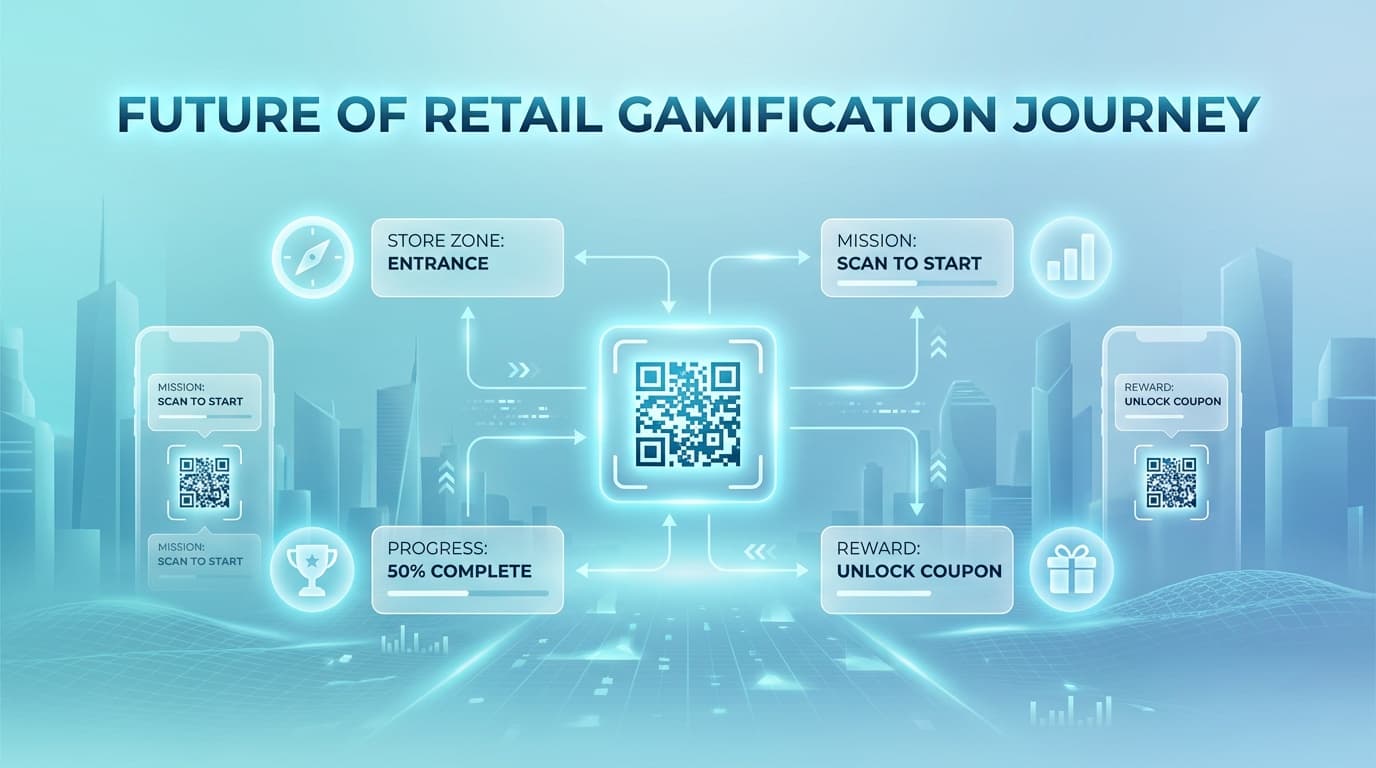
Start by defining the path. Where does the first scan happen? Poster, shelf, ticket, badge, screen? Then decide what the player needs to do. Visit three zones? Collect clues? Answer questions? Try a product? At each step, give enough value to keep them moving while maintaining anticipation.
Next, define your reward structure. You can offer guaranteed micro-rewards for completion, randomized instant wins, or entries into a bigger draw. The most effective campaigns mix a small guaranteed benefit with a chance at something larger. Players feel rewarded even if they don't win the top prize.
Finally, connect the journey to your core metrics. Maybe completion leads to a loyalty signup, an opt-in, a coupon, or a booking. The reward becomes the bridge between game and business outcome.
Design Checklist
- Define a clear objective: awareness, trial, data capture, loyalty, traffic, or sales
- Map physical and digital touchpoints where scans happen
- Design missions completable in a reasonable time window
- Choose rewards that feel fair, exciting, and sustainable
- Use a smart link platform so every scan is tracked
Real-World Use Cases for 2026
Once you understand the mechanics, QR gamification adapts to many contexts. Retailers use it to move customers through key zones. Event organizers use it to drive booth visits. Creators use it to reward fans for showing up. Loyalty teams use missions to make earning feel like a game instead of a spreadsheet.
In each case, the environment becomes a game board. Players move across shelves, tables, booths, or landmarks, scanning their way through stories and offers. Because everything runs through a single engagement layer, you can launch quickly and reuse components across campaigns.
Use Cases You Can Deploy
- Retail treasure hunts: Customers scan in different aisles to collect items and unlock store-specific rewards
- Event passport missions: Attendees scan at sponsor booths and sessions to earn points while organizers track engagement
- City or campus trails: Visitors follow QR clues across landmarks, combining tourism, learning, and local promos
- Packaging-based games: Each product unit unlocks daily spins, streaks, or collection missions
- Loyalty boosters: Members complete QR missions for bonus points on top of standard accrual
All these use cases share the same structure: scan → mission → progress → reward. You standardize the engine and customize only the story.
Conclusion: Turn Every Scan Into a Game Loop
QR codes aren't just utility links anymore. In 2026, they're one of the most effective ways to turn the physical world into a playable interface. Add missions, progress, and micro-rewards, and every scan becomes a chance to engage and move people closer to action.
For marketers, QR gamification offers a rare combination: it feels fresh to customers, it's grounded in behavioral science, and it generates clean, high-intent data. When you run these journeys through a platform that unifies scans, missions, and rewards, you get a system you can launch, measure, and optimize at scale.
Next time you place a QR code anywhere, ask: is this just a shortcut, or could it start a game loop? If you choose the second option, you're already thinking like a strategist in the new attention economy.
Turn Attention Into Growth
Capture every interaction with VISU.