

Paper coupons had their moment. They lived in wallets, expired in drawers, and left marketing teams guessing whether anyone actually used them. The math never added up: print thousands, distribute everywhere, hope for the best, and track almost nothing.
The QR code coupon rewrites that story. One scan delivers the discount, captures the data, and closes the loop between attention and action. No clipping, no typing, no friction. Customers get instant value; businesses get instant visibility into what works and what doesn't.
This guide covers why QR code coupons outperform traditional methods, the formats that match different business goals, strategic placement across channels, design best practices, and how to measure success and maximize ROI.
Why QR Code Coupons Are Replacing Paper
The shift from paper to digital coupons is driven by measurable results. According to Juniper Research, digital coupon redemption is projected to exceed $90 billion globally by 2027, with mobile-first formats like QR codes leading adoption.
The reasons are practical. Paper coupons require printing, distribution, and manual tracking. QR code coupons require a single design, unlimited distribution, and automatic analytics. The cost structure favors digital at every scale.
More importantly, QR code coupons capture data that paper never could. Each scan records time, location, device type, and whether the user completed a purchase. This feedback loop enables optimization that was impossible with paper-based promotions.

Turn Every Scan Into Measurable Sales
VISU helps retail and packaging brands launch QR campaigns that reward, track, and convert attention into real revenue.
Why QR Code Coupons Outperform Traditional Methods
Traditional paper coupons rarely break a 2% redemption rate. QR code coupons routinely hit 8 to 15 percent because they eliminate every obstacle between interest and action. No scissors, no wallet shuffling, no checkout confusion. Customers scan, see the discount, and apply it before they lose focus. For restaurants specifically, this approach transforms promotional campaigns from guesswork into measurable growth.
Superior Security
Static paper coupons can be photocopied and shared endlessly, draining promotional budgets. Dynamic QR coupons generate unique, one-time links that expire after use or after a set time. Fraud drops, margins stay intact, and finance teams stop sending angry emails about coupon abuse.
Automatic Personalization
A dynamic URL can detect time of day, location, or purchase history and serve the right offer to the right person. A coffee shop can display a pastry discount at 7 AM and switch to a cold brew deal by noon without changing a single poster. Context drives conversion.
Complete Visibility
Paper coupons leave marketers guessing. QR coupons feed dashboards with impressions, scans, redemptions, and revenue attribution. Every campaign becomes a learning opportunity instead of a leap of faith. You know exactly which placements, offers, and audiences deliver results.
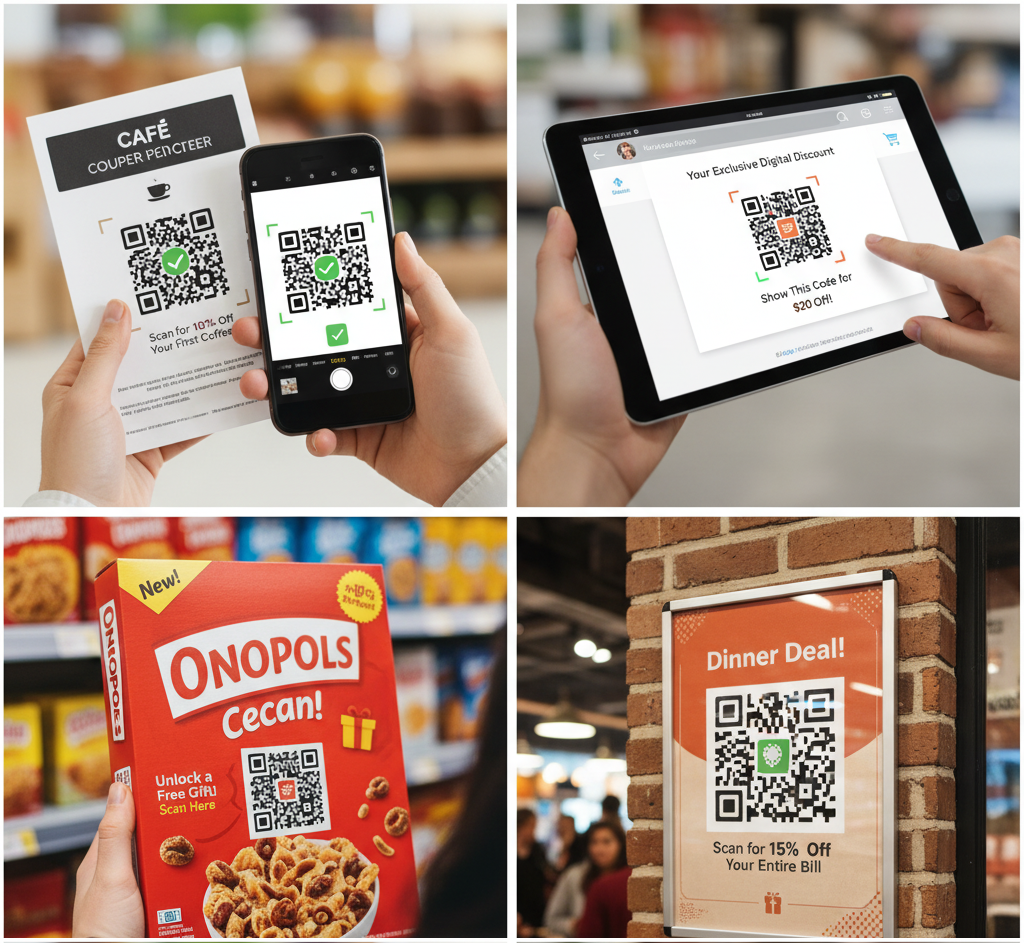
Coupon Formats That Match Business Goals
Different coupon formats serve different strategic objectives. Choosing the right format depends on whether you're optimizing for immediate conversion, repeat visits, or brand engagement.
Instant Discounts
The classic discount still works. Scan for 10% off, free shipping, or buy-one-get-one. Customers understand it immediately, and redemption barriers stay low. Best for driving immediate transactions and clearing inventory.
Cashback and Loyalty Points
Cashback and loyalty points shift the reward downstream. Instead of reducing today's transaction, they fund tomorrow's return visit. Retention rates climb because customers have skin in the game. Best for building long-term customer relationships.
Gamified Experiences
Gamified experiences add engagement layers. Spin-the-wheel, scratch-off, or mystery reward mechanics turn a simple scan into entertainment. Social sharing follows naturally because people love showing off wins. Best for brand awareness and viral reach.
According to behavioral research, gamified coupons can double engagement rates compared to static discounts. The element of surprise triggers dopamine, and customers remember the experience long after the transaction ends.
Location-Based Offers
Location-based offers tie discounts to geography. A QR code outside a store can activate only within 50 meters, ensuring the promotion reaches people who can actually walk through the door. Foot traffic becomes measurable. Best for driving in-store visits from nearby audiences.
Strategic Placement Across Channels
Where you place QR code coupons matters as much as what they offer. Different placements reach customers at different points in their decision journey.
Physical Touchpoints
Physical touchpoints deliver immediate context. QR codes on product packaging, shelf displays, table tents, and checkout counters reach customers at the moment of decision. Scan rates spike because intent is already high. The customer is already thinking about buying, the coupon just tips the scale. This strategy is particularly effective for restaurant QR code marketing where table presence drives engagement.
Traditional Media
Traditional media gains a second life with QR codes. Posters, flyers, and outdoor billboards become interactive gateways. A static image transforms into a trackable campaign asset the moment a QR code appears. You can finally measure the ROI of offline advertising.
Digital Channels
Digital channels close the omnichannel loop. Email campaigns, SMS messages, and social posts embed QR coupons that bridge online attention to offline redemption. Attribution stops being guesswork because you can trace the customer from first impression to final purchase.
System Integration
System integration multiplies impact. Sync QR coupon scans with CRM data and point-of-sale systems to map complete customer journeys. See which campaigns drive repeat purchases, which audiences respond best, and where the funnel leaks.

The VISU Advantage: Coupons That Build Ecosystems
Basic QR generators create codes. VISU creates marketing ecosystems. The difference shows up in every campaign metric.
Intelligent Campaign Management
VISU segments audiences by demographics, location, or referral source. One code, multiple experiences. A first-time scanner sees a welcome discount; a returning customer sees a loyalty bonus. Personalization happens automatically without manual intervention.
Real-Time Dashboards
Track cost per view, click-through rates, redemptions, and ROI in a single interface. No spreadsheet wrangling, no waiting for weekly reports. Decisions happen while campaigns run, not after they end.
Viral Referral Mechanics
Turn customers into advocates with multi-layer referral systems that reward both the user and the person who shared the code. Word-of-mouth becomes measurable and scalable. You can see exactly which customers drive the most referrals and reward them accordingly.
Flexible Reward Distribution
VISU enables reward distribution beyond traditional discounts. Instant cash transfers via PIX in Brazil, digital tokens, or gamified loyalty experiences keep customers coming back. The ecosystem keeps rewarding them, so they keep returning.
Real-World Example
A restaurant prints QR coupons on table tents: "Scan for 15% off your next visit." Customers scan, engage with a short brand message, and receive their discount code. The restaurant tracks redemptions in real time while VISU automatically distributes rewards to users and referrers. Return visits increase, customer lifetime value grows, and marketing waste disappears because every scan is measurable.
Ready to Reward Real Engagement?
Run your first VISU QR campaign and track every scan, view, and redemption from one real-time dashboard.
Design Best Practices for Maximum Impact
A well-designed QR code coupon converts better than a poorly designed one. These technical and creative considerations make the difference between scans and scrolls.
Choose Dynamic Over Static
Static QR codes lock destinations permanently. Dynamic codes allow editable URLs, trackable analytics, and fraud prevention features. For coupons, dynamic is essential because you need to track redemptions, prevent abuse, and potentially update offers without reprinting materials. Learn more in our guide to dynamic vs static QR codes.
Craft Compelling Calls-to-Action
A QR code alone rarely motivates a scan. Add benefit-focused text like "Scan to Save 10%," "Get Your Free Coffee," or "Unlock Your Exclusive Discount." Specificity outperforms vague curiosity. Tell people exactly what they'll get.
Optimize Technical Specifications
Coupons on packaging need at least 2x2 cm size with strong color contrast against the background. Avoid glossy or curved surfaces that distort scanning. Always test codes on multiple devices before large-scale printing—a code that doesn't scan is worse than no code at all.
Test and Iterate
A/B testing applies to coupons too. Experiment with different reward structures, CTAs, placements, and visual designs. Small improvements compound into significant redemption gains over time. The data from QR scans makes testing faster and more precise than paper ever allowed. See our QR code best practices guide for design optimization tips.
Measuring Success and Maximizing ROI
The advantage of QR code coupons is measurability. But data only matters if you act on it. Here's how to build a measurement framework that drives continuous improvement.
Track From the First Scan
UTM parameters and built-in analytics capture every interaction. Segment users by campaign source, geography, device type, or referral layer to understand which channels deliver value. Compare performance across placements to identify winners and cut losers.
Benchmark Against Baselines
Paper coupons typically achieve under 2% redemption; QR coupons often reach 8 to 15 percent. The gap reveals operational efficiency gains and marketing cost reductions. Track these improvements over time to demonstrate ROI to stakeholders.
Close the Attribution Loop
Connect redemption data directly to revenue through CRM and POS integrations. See which scans turn into purchases, which purchases turn into repeat customers, and which customers turn into advocates. Full-funnel visibility enables strategic decisions, not just tactical ones.
Extend Visibility Beyond Redemptions
VISU extends tracking beyond the redemption event. Monitor engagement with associated content, analyze referral chains to identify super-spreaders, and track cumulative rewards distributed across networks. Data becomes strategy when you can see the entire ecosystem.
The Future of Promotional Marketing
The coupon evolved from a static paper slip into a dynamic, trackable, and gamified digital asset. Businesses that embrace QR code coupons today position themselves ahead of competitors in both customer engagement and marketing intelligence.
The technology will continue evolving. Augmented reality layers, voice-activated redemptions, and AI-personalized offers are already in development. But the fundamental shift has already happened: from anonymous distribution to measurable engagement.
The question is not whether to adopt QR code coupons. The question is how quickly you can implement them to start turning every scan into measurable sales, lasting loyalty, and sustainable growth.
Frequently Asked Questions
How do QR code coupons help retailers increase ROI?
QR coupons cut printing and distribution costs while providing real-time analytics on every interaction. Retailers track each scan, redemption, and referral, turning promotions into quantifiable results. The data enables continuous optimization that compounds into significant ROI improvements over time.
Can QR coupons prevent fraud?
Yes. Dynamic QR coupons generate unique single-use links that expire after redemption. You can also set time limits, geographic restrictions, and quantity caps to prevent unauthorized sharing or reuse. This level of control was impossible with paper coupons.
Do QR coupons work on both print and digital channels?
Absolutely. They can be printed on packaging, receipts, table tents, or posters for physical distribution. They can also be embedded in email campaigns, SMS messages, and social media posts for digital distribution. The same code tracks engagement across all channels.
What analytics does VISU provide for coupon campaigns?
VISU tracks impressions, scans, redemptions, revenue attribution, referral layers, and user engagement patterns. The real-time dashboard shows campaign performance as it happens, enabling immediate optimization rather than post-campaign analysis.
Can VISU integrate coupon redemptions with my CRM or POS system?
Yes. VISU connects to CRM, POS, and e-commerce platforms via API or webhook. This integration ensures loyalty data, sales data, and reward distribution stay unified in your existing systems, enabling full-funnel attribution.
What is the difference between static and dynamic QR code coupons?
Static codes have fixed destinations and no tracking capability. Dynamic codes allow URL updates after printing, detailed analytics on every scan, and fraud prevention features like single-use links and expiration dates. For coupon campaigns where measurement and optimization matter, dynamic is essential.
How do gamified QR coupons compare to standard discounts?
Gamified coupons (spin-the-wheel, scratch-off, mystery rewards) can double engagement rates compared to static discounts. The element of surprise triggers dopamine response, making the experience memorable and shareable. They're particularly effective for brand awareness and viral reach.