

People won't wake up excited to fill forms or read product pages. But they'll happily chase streaks, complete missions, and collect badges for months. The difference isn't the task. It's how the brain experiences it.
Gamification works because it speaks directly to our reward system. Small actions become moments of progress, recognition, and surprise that feel worth repeating.
This guide breaks down why our brains respond so strongly to rewards, which psychological principles drive engagement, and how to design systems that feel satisfying rather than manipulative. By the end, you'll have a mental model for evaluating any gamified campaign.
Ready to Apply These Principles?
VISU helps brands create psychology-informed missions and rewards that drive real engagement.
Quick video. Earn your first reward.
How Rewards Shape Behavior
At the core of gamification is a simple loop. Action, reward, repeat.
You take an action. You receive feedback. Your brain updates its map of what's worth doing again. This is operant conditioning in action. Behaviors followed by positive outcomes become easier to start next time.
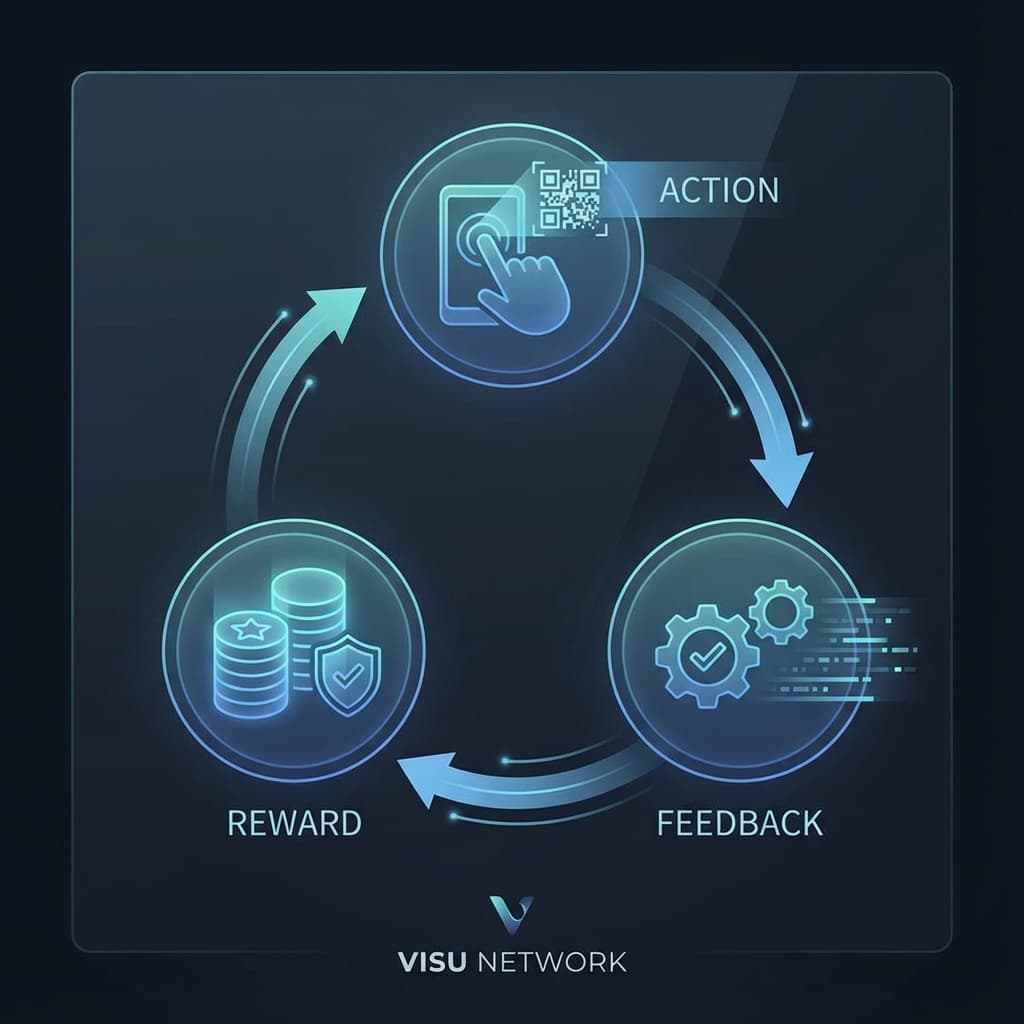
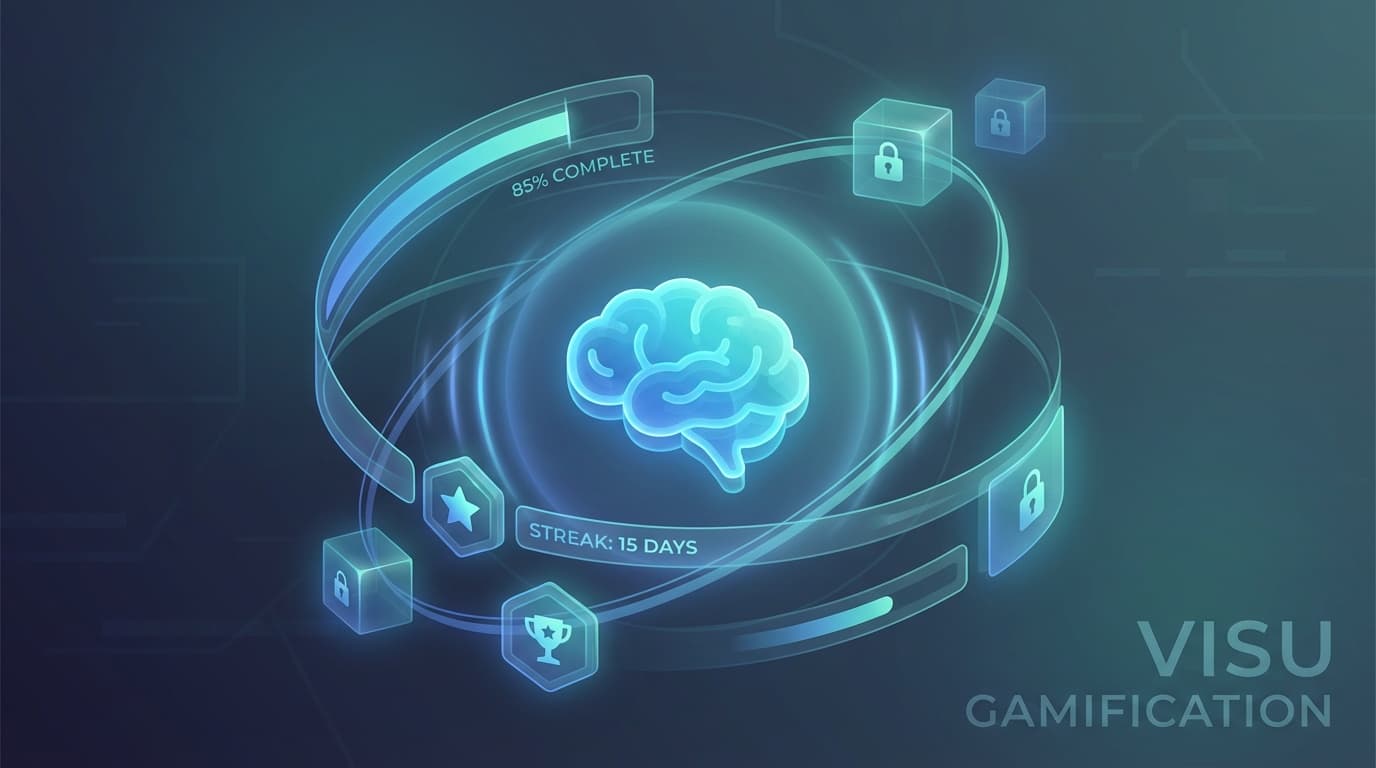
The interesting part? Rewards work even before they arrive. When customers see a progress bar at 80% or a message saying "one more scan to unlock your reward," their brain generates tension and curiosity. Completing the action releases that tension with a small hit of satisfaction.
That's enough to bring them back for the next mission.
And rewards don't need to be huge. Micro rewards like a few points, a new badge, or a fun animation often work better than big prizes. What matters is consistency. When every scan, tap, or visit has a clear consequence, customers learn to trust the system.
For brands, this means small behavioral nudges beat massive giveaways. A coffee shop can structure missions where each visit logs progress toward a surprise bonus. An event organizer can reward booth visits with tokens that unlock content later. Same psychology, different contexts.
Dopamine and Anticipation
Dopamine gets called the "reward chemical." But research shows it's more about anticipation than the reward itself.
Your brain releases dopamine when it predicts something good might happen. This is why variable rewards are so engaging. Mystery prizes, surprise bonuses, unexpected unlocks. The possibility of reward, even a small one, keeps people checking back.
Smart gamification mixes fixed and variable rewards. Fixed rewards like "free item after 10 visits" provide stability and fairness. Variable rewards like "surprise gift after completing a mission" add excitement. Together, they create rhythm without chaos.
But there's a line between healthy anticipation and unhealthy compulsion.
The goal isn't to trap brains in constant checking loops. It's to build surprise into journeys that still feel under user control. When customers understand the rules and can opt out anytime, they see your program as fun rather than addictive.
Design matters here too. Clear progress indicators, immediate feedback, soft animations. These help the brain link cause and effect. Hidden rules and delayed responses create confusion and erode trust, even when rewards are generous.
Core Psychological Principles
Beyond dopamine, four principles show up repeatedly in effective gamification: competence, autonomy, social relatedness, and scarcity.
Competence
The feeling you're getting better at something. In gamified customer journeys, this shows up as skill-based challenges, visible improvement, and meaningful levels. When customers see their expertise recognized, they feel proud. Not just rewarded.
A tutorial that unlocks advanced missions after basic steps? That's competence in action.
Autonomy
The sense of control over your actions. If every mission feels like a command, people resist. Even when rewards are attractive.
Support autonomy by offering choice. Multiple mission paths. Flexible ways to earn points. Let users decide whether to focus on visits, referrals, or content interactions. Ownership drives engagement.
Social Relatedness
Connection, recognition, belonging. Leaderboards, team missions, shareable achievements. When customers see others participating, it validates their effort. When they can compete or collaborate with friends, the reward isn't just the prize. It's the story they tell about it.
Scarcity
Loss aversion is real. People are more motivated to avoid losing something than to gain it. Limited-time missions, seasonal badges, exclusive tiers. These create healthy pressure when the rules are honest.
When scarcity is manufactured or misleading, it backfires fast.
For deeper context on how these principles fit strategy, see our gamification marketing guide.
See Psychology-Driven Gamification in Action
Learn how brands use VISU to create engaging customer experiences.
From Theory to Practice
Psychology only matters if you can apply it. Here's how it looks in real campaigns.
Retail scenario: A brand wants repeat visits and better first-party data. Instead of a simple discount, they launch a mission. Scan a QR code at the entrance. Answer a preference quiz. Earn a badge that unlocks a personalized offer next visit.
Each step is small. But together they create competence (learning the system), autonomy (choosing preferences), and reward (the personalized offer).
Event scenario: An organizer uses dynamic QR codes at sponsor booths for a discovery mission. Attendees choose a theme like sustainability or innovation. They visit aligned booths, scan codes, earn points, complete a story. At the end, they unlock a certificate or exclusive content.
The reward isn't just the prize. It's the feeling of purposeful exploration.
Tools like VISU Ads make these flows manageable. Configure conditions, rewards, and progress tracking from one dashboard. QR-based experiences, link-based missions, and push prompts share the same data model.
In both examples, nobody's being tricked. Psychology removes friction, clarifies goals, and adds small rewards to actions that already make sense. Customers get better experiences. Brands get cleaner data and higher engagement.
For more real-world applications, check our gamification examples from major brands.
Ethical Gamification and Long-Term Trust
Because gamification is powerful, it carries responsibility.
You can design systems that push people into excessive checking or spending by exploiting cognitive biases. Short-term metrics might spike. But trust and reputation erode.
Ethical gamification starts with one question: would I feel comfortable if a friend participated in this for months?
Transparent rules are the first layer. Customers should understand how points work, when missions end, what rewards to expect. Hidden conditions create frustration even when you deliver benefits.
Healthy boundaries matter too. Limit mission attempts per day. Design cooldown periods. Avoid mechanics that mimic gambling too closely. The goal is positive habits, not dependency.
Data respect completes the picture. If missions collect first-party data, be explicit about why and how it improves the experience. Give users control. Let them opt out without punishment.
Trust is a psychological asset. Once broken, it doesn't rebuild easily.
For implementation guidelines, see our gamification best practices. And if you want to understand how attention itself becomes valuable, explore how users can get paid for their attention.
Ready to Gamify Your Customer Experience?
Join businesses using VISU to turn interactions into engaging, rewarding experiences.
FAQ
Why do rewards make gamification effective?
Rewards close the loop between action and outcome in the brain. When behavior leads to points, progress, or recognition, people repeat it. Over time, this forms habits around your experience.
Is gamification just about triggering dopamine?
Dopamine and anticipation play roles, but sustainable gamification addresses deeper needs too. Competence, autonomy, and social connection support long-term satisfaction, not just short-term spikes.
How can brands gamify without being manipulative?
Transparency, meaningful choices, healthy limits, and genuine value. When people feel respected and in control, they see gamification as service, not tricks.
What's the simplest way to start?
Pick one journey like store visits or event engagement. Add a mission with clear goals, visible progress, and a reward that fits your audience. Track how participation and repeat behavior change.
Which psychological principle matters most?
Progress visibility is often the biggest lever. Show people where they stand and where they're going. A simple "3 of 5 complete" creates momentum that invisible tracking never does.
How do variable rewards affect engagement?
Variable rewards create anticipation, which releases dopamine. Mystery prizes and surprise bonuses keep people checking back. But mix them with fixed rewards for stability and trust.