

Why small, frequent incentives drive bigger behavior changes than big, distant promises.
Most retailers already run discounts, loyalty points, or big seasonal campaigns. Yet customers still browse, hesitate, and leave without acting. The problem isn't always the size of the reward. It's the distance between effort and gratification.
Micro rewards close that gap. They turn every small action into a meaningful win, quietly reshaping how people behave over time. To see where micro rewards fit into broader engagement systems, check our complete guide to gamification marketing.
Instead of promising something attractive after ten purchases or at month's end, micro rewards offer small but immediate incentives every time a shopper scans a QR code, watches a short demo, joins a list, or returns to the store. These tiny nudges feel light, almost casual. But they stack into powerful behavior changes.
When you design them well, shoppers come back more often, complete more journeys, and feel more loyal without feeling pressured. This guide explains what micro rewards are, why small incentives drive big shifts, and how to design them for modern retail journeys both online and offline.
Want to Skip Ahead?
Start building micro reward journeys with VISU today.
What Are Micro Rewards and How Do They Work?
Micro rewards are small, frequent incentives granted for completing specific actions inside a customer journey. Scan a QR code, open a message, visit a page, check in at a store. Each action earns something small but immediate.
They're designed to be low friction and low cost, while still meaningful enough for customers to notice progress happening. The effectiveness is rooted in core psychological principles we explore in depth in our piece on the psychology behind gamification.

What makes them different from traditional rewards? Timing and granularity. Traditional programs focus on long-term accumulation. The customer only feels payoff after many visits or a high spending threshold. Micro rewards focus on micro actions. The shopper feels rewarded right now for something small, which maintains momentum and curiosity.
In practice, micro rewards can be points, small discounts, digital tokens, mini game plays, early access to drops, or entries into a larger prize pool. What matters is that value is instantly visible and tied to a clear action. When customers see that the brand notices every interaction, they feel more engaged and are more likely to repeat.
From a retailer perspective, micro rewards also create new data signals. Each scan, unlock, or mission completed is a touchpoint you can track. With tools like VISU QR Ads, every QR scan delivers a micro incentive while feeding first-party data back into your campaigns. You don't just reward behavior, you learn from it.
The key characteristics: immediate (reward right after the action), specific (clearly tied to one behavior), repeatable (same action can be rewarded multiple times), lightweight (sustainable yet noticeable), and trackable (every event adds to behavioral data).
Imagine a shopper entering your store, scanning a code at the entrance, instantly unlocking a small boost in a digital wallet or a spin in a micro game. Even if the monetary value is tiny, the psychological signal is strong. The customer feels welcomed, seen, and curious about what happens next.
Why Small Incentives Drive Big Behavior Changes
Behavior science consistently shows that people respond strongly to small, frequent signals of progress. When you convert abstract goals like "save money" or "get rewarded" into tangible micro steps, you lower friction to act.
Micro rewards tap into this by giving the brain a constant stream of small wins instead of waiting for one big payoff at the end. For a structured approach to designing these systems, review our gamification best practices for 2026.
These small wins matter because they reduce the gap between intention and action. Many shoppers intend to join your loyalty program, return for a second visit, or complete a profile. But they delay. When a clear micro reward is attached, the decision feels easier. They're just saying yes to a tiny, low-risk action that feels good immediately.
Over time, micro rewards help build habits. When the same action is rewarded consistently, the brain begins to anticipate the positive outcome and the behavior becomes more automatic. In retail, this might mean scanning a QR code every time the customer enters, opening your message when a new mission drops, or checking in on weekends to see what's available.
From the brand side, micro rewards support better personalization. Track which incentives actually move behavior, then refine offers so customers see relevant micro benefits instead of generic coupons. Research shows companies that get personalization right generate significantly more revenue from their marketing because customers feel offers match their preferences and timing.
Most importantly, micro rewards shift the emotional tone of the relationship. Instead of feeling that the brand only cares at checkout or during big sales, customers feel appreciated for small interactions. That shift can be enough to choose your store again instead of a competitor, even when prices are similar.
The practical effects: higher engagement with touchpoints, more repeat visits, richer first-party data, reduced dropout at key steps, and stronger emotional connection. Think of micro rewards as the glue between brand intention and customer reality.
Designing Micro Reward Systems for Retail
To design a system that works, map the full journey and identify where small incentives can remove friction, increase curiosity, or reinforce good behavior. The goal isn't to reward everything. It's to place smart triggers at moments where a little nudge unlocks big value for both sides.
Our guide on building gamified customer journeys provides a detailed framework for this mapping process.
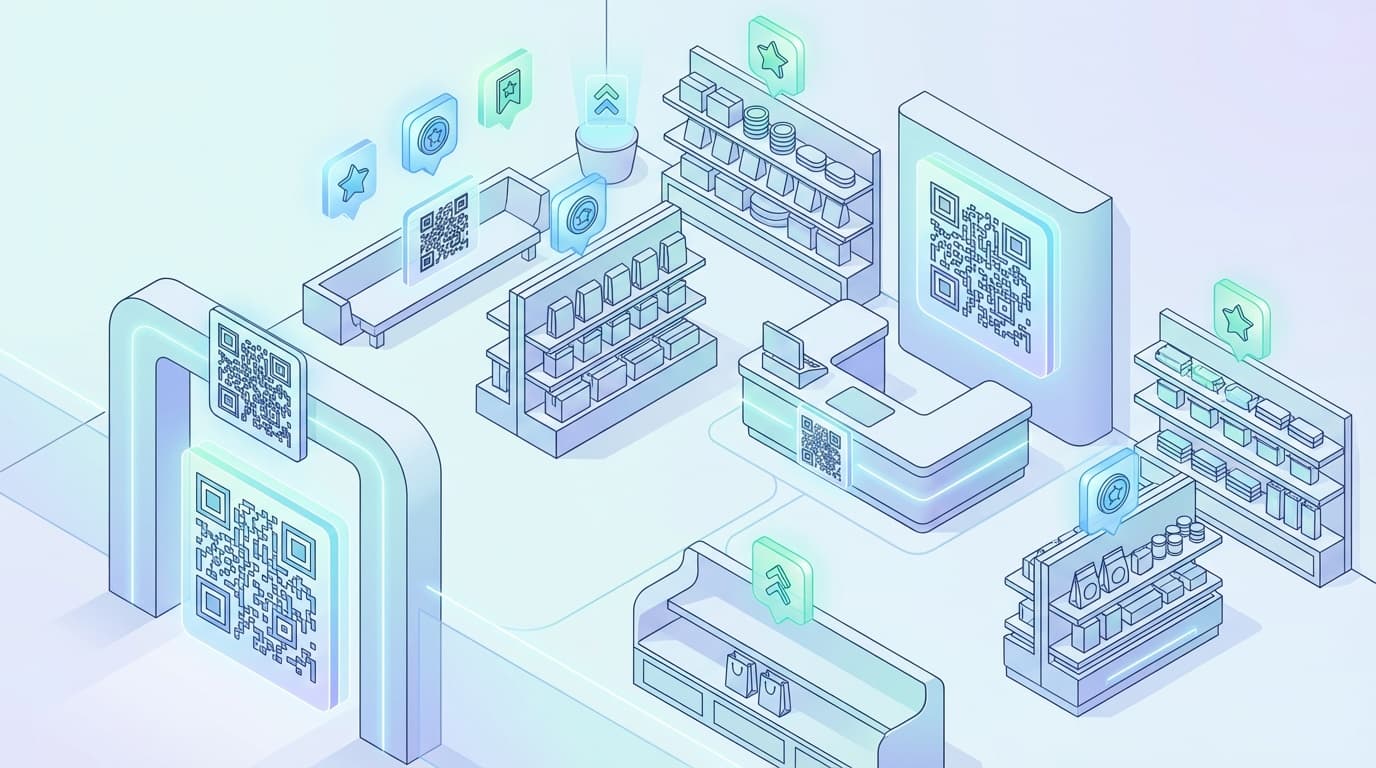
Start by visualizing three layers: outside the store, inside the store, and post-purchase. Outside, tie micro rewards to discovery actions like scanning a window QR for a surprise or joining a VIP list. Inside, reward exploration: visiting specific sections, scanning product tags, testing interactive content. Post-purchase, reward feedback, referrals, or returns for future visits.
Each touchpoint should have a clear rule. First scan of the day unlocks a small bonus. Scanning three featured products unlocks a mini game. Sharing feedback after checkout grants a bonus entry into a monthly draw. Because incentives are small, you can spread them across many steps without collapsing margins.
Think about variety too. If every micro reward is identical, customers learn the pattern quickly and excitement fades. Mix fixed rewards with random elements. Sometimes predictable small bonus, sometimes slightly higher or a different type of surprise. The unpredictability keeps them coming back.
Design your system to be channel-agnostic. Same principles should work on the ecommerce site, in the physical store, and in any hybrid experience. That's where connected tools matter. Using a unified layer for QR codes, smart links, and push campaigns, you can orchestrate micro rewards that follow the shopper wherever they go. Many apps that pay for store visits use similar mechanics to drive foot traffic.
The checklist: journey map ready, defined trigger events, reward catalog with mix of fixed and surprise rewards, unified tech layer, and measurement plan tracking visits, engagement, and average order value.
See It in Action
Learn how brands use VISU for micro reward journeys.
Implementing Micro Rewards With VISU
Once strategy is clear, execution matters. Micro rewards only work if they're easy to launch, manage, and adjust. Retail teams don't have time to rebuild flows every week. They need a system where marketing can configure missions, rewards, and QR journeys without asking developers to custom code everything.
For inspiration on reward structures, explore our QR code rewards program guide.
With VISU, micro rewards become a natural extension of your customer journeys. Attach small incentives to QR scans at the entrance, interactive shelf tags, packaging, receipts, or digital content. Every scan redirects through a smart experience that can update missions, show current progress, and deliver rewards without forcing users to download a new app.
If you already run loyalty or cashback experiences, layer micro rewards on top using VISU solutions for retail. Instead of replacing your program, micro missions make it more alive. Customers don't just earn points at checkout. They earn small perks for discovering new products, joining segments, or responding to key campaigns.
On the campaign side, VISU QR Ads connect every code to a measurable micro reward funnel. Test different incentives, routes, and creative angles, then see which lift scan rate, engagement time, and store traffic. Because everything ties to first-party data, you keep full visibility of how small incentives translate into real behavior changes.
Example flows: entrance welcome mission (scan door QR for small bonus plus three quick missions for this visit), shelf discovery quest (scan two featured shelf tags for limited-time micro discount or bonus spin), checkout thank you (scan receipt QR to log visit, answer one question, earn bonus for next trip), weekend challenge (complete missions Friday to Sunday for stacked reward), post-purchase feedback loop (smart link brings customer to feedback page where sharing experience unlocks micro reward for in-store use).
Each flow uses micro rewards as a bridge between content and behavior. Instead of thinking campaigns first and rewards later, design journeys where incentive structure is part of the experience itself.
Bringing It All Together
Micro rewards aren't about giving away more value. They're about distributing your incentive budget across the journey so customers feel rewarded at the right moment.
In retail, that means swapping heavy, distant promises for light, immediate wins that nudge shoppers forward step by step. When small incentives tie to clear actions, they transform how people move through your store, engage with campaigns, and return over time.
By combining micro rewards with smart QR journeys, personalized content, and unified analytics, you turn attention into a measurable asset. Every scan, click, and visit becomes both a small win for the customer and a data point for your brand. The result is a retail experience that feels playful, personal, and worth returning to, even when the discount itself is tiny.
Brands that start designing micro reward systems now will be ahead as customers demand more interactive experiences. Instead of fighting for attention with bigger promotions, you can quietly win by making every interaction count. The real opportunity? Learning to get paid for your attention instead of giving it away.
Turn Attention Into Growth
Capture every interaction with VISU.