

Clothing retail in 2026 isn't about racks and discounts anymore. It's about experiences that make customers feel seen, styled, and part of something worth sharing.
The shift from transactional selling to experience-driven commerce is complete. Customers don't visit stores just to browse. They expect personalized, interactive, and shareable journeys that reflect their identity and values. Retailers still thinking only in terms of product and price miss the deeper driver of fashion purchases: self-expression in a social context.
Research on omnichannel fashion retail shows that retailers who integrate physical and digital touchpoints effectively outperform peers in both revenue growth and profitability. At the same time, advances in data, mobile, and in-store technology allow even mid-sized clothing stores to deliver experiences that were previously available only to big chains.
This guide translates those trends into practical marketing ideas for clothing stores. The focus is on strategies you can implement with clear mechanics, behavioral drivers, and expected impact. Many of them leverage QR codes, loyalty mechanisms, and attention-based rewards that platforms like VISU make easy to deploy.
Turn Your Clothing Store Into an Experience Hub
Use QR campaigns, loyalty mechanics, and interactive moments to drive foot traffic and repeat purchases.
Quick video. Earn your first reward.
Digital Integration and QR Code Strategies
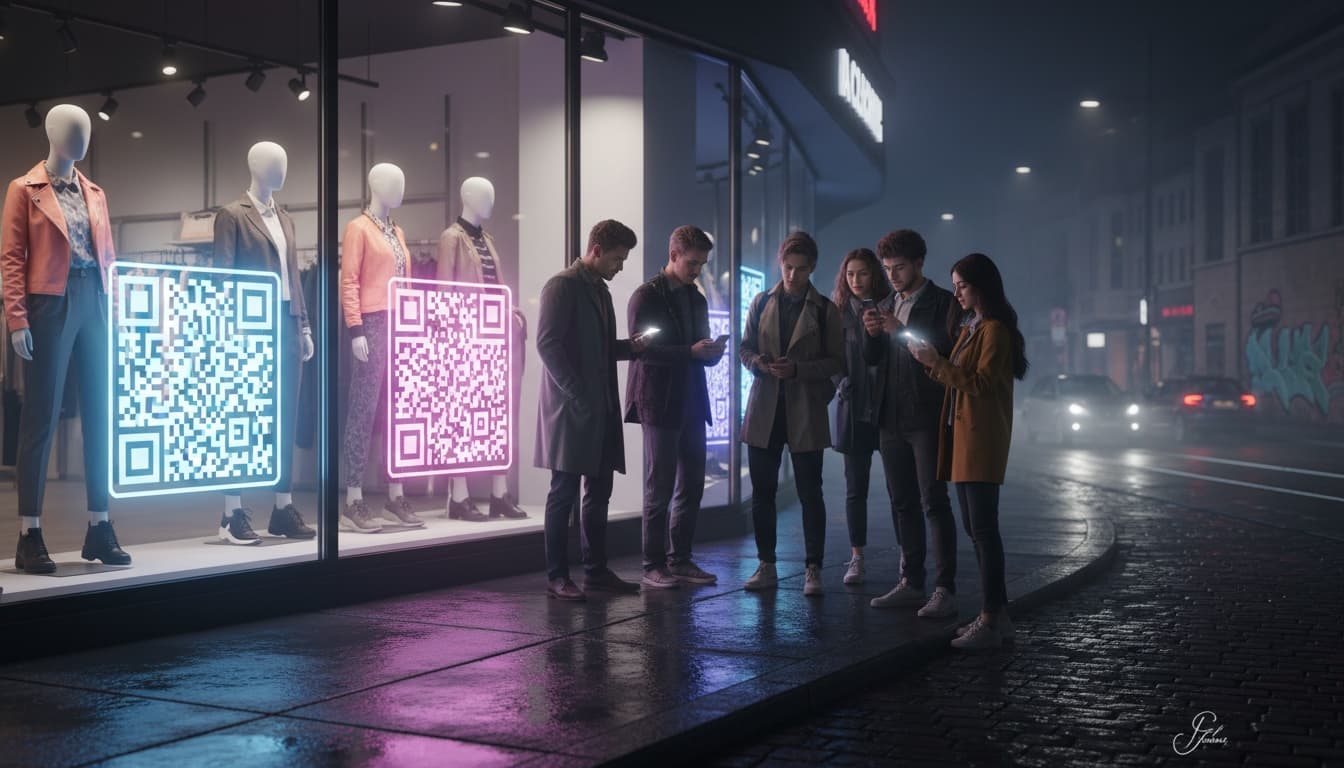
1. QR-enabled window displays that sell after hours
Transform your storefront into a 24/7 sales funnel. Place large, visually integrated QR codes on key window displays that link to mobile lookbooks, "Reserve My Size" flows, and "Book a Styling Session" forms. Ensure the landing page is mobile optimized and loads in under three seconds.
When someone stops to look at a mannequin, they're already in an intent state. QR codes capture that attention and remove friction between discovery and action. A passerby can reserve an item in their size, confirm availability, and schedule a visit without entering the store. This is one of the most effective ways to increase foot traffic to your retail store even when you're closed.
Track scans, reservation rates, and visit conversion. Well-executed window QR systems can generate double-digit scan rates and meaningful incremental store visits, especially in high foot traffic locations.
2. QR-powered virtual styling sessions
Attach QR codes to product tags that open 60 to 90 second styling videos for each hero item. Show three scenarios for the same piece: work, weekend, and evening. Include complementary items available in store and online, and highlight how to reuse the piece across seasons.
Most customers struggle to visualize how a single shirt or dress fits into their existing wardrobe. Short styling videos reduce that uncertainty and show versatility, which justifies higher price points and encourages multi-item purchases.
Measure the impact by comparing conversion and basket size for items with styling content versus control groups. The combination of physical try-on plus digital storytelling often boosts both metrics significantly.
3. Size availability alerts with alternative suggestions
Use QR codes on sold-out sizes to redirect customers to a quick restock alert flow instead of letting them walk away frustrated. The QR page should allow customers to choose their size, opt into SMS or email notifications, and see recommended alternatives currently in stock.
By acknowledging the stockout and offering proactive solutions, you protect the relationship and create a future sale opportunity. You also capture first-party data tied to specific products and preferences. For a deeper dive on this, check our guide on QR codes in retail.
Over time, restock alerts and alternative recommendations can produce high conversion rates because they reach customers at the exact moment their desired item becomes available again.
Interactive In-Store Experiences and Technology

4. Smart mirror selfie stations with social integration
Create an "Instagram corner" in your store with a branded smart mirror, professional lighting, and clear hashtag suggestions. Add a QR code that links to an online gallery of outfits and automatically tags the store location or campaign when customers share photos.
Each selfie becomes user-generated content that promotes your store to the customer's personal network. This type of authentic content usually outperforms brand-generated posts and compounds over time as more shoppers participate. Building memorable in-store experiences like this creates organic marketing that money can't buy.
5. AR virtual try-on for accessories and outerwear
Implement augmented reality solutions for categories where appearance matters more than precise fit: hats, sunglasses, jewelry, and outerwear. Customers can see how items look without entering a fitting room or unboxing multiple items.
AR experiences reduce friction, shorten decision times, and encourage experimentation with styles that customers may not have considered. Even relatively simple AR filters integrated into your store app or a tablet station can deliver measurable impact on conversion and average order value.
6. Interactive product information via QR codes
Place premium-looking QR tags next to curated displays. Scanning them should reveal fabric compositions, care instructions, sustainability information, user reviews, and additional colors or sizes available online.
Customers increasingly research while they shop. By owning that information layer, you keep them in your ecosystem instead of pushing them to search engines or marketplace listings where competitors can appear. This is part of a broader strategy around visual merchandising that combines physical displays with digital depth.
Make Every Display Work Harder
Add QR-powered information, styling content, and rewards to turn browsers into buyers.
Quick video. Earn your first reward.
Behavioral Psychology and Customer Engagement
7. Real-time scarcity countdown displays
Use digital displays linked to your inventory system to show real-time stock levels for key items and sizes. Phrases like "Only 3 left in M" or "Last one in this color" activate loss aversion and encourage faster decisions.
Combine this with QR codes that allow customers to buy now, reserve for pickup, or sign up for a restock alert when sold out. The key is to keep the scarcity honest and data-driven to protect trust and avoid compliance issues.
8. Outfit completion suggestion systems
Train staff to think in terms of complete looks rather than individual pieces. Instead of generic upsell questions, equip them with specific, relevant suggestions: "This blazer balances that silhouette perfectly" or "This belt gives the dress more structure."
Extend this logic to QR codes and digital displays that show completed looks with add-on items. Make it easy for customers to add all suggested pieces to their basket in one step, both in store and online. This is one of the best retail promotion tactics because it increases basket size without feeling pushy.
9. Social proof displays based on real data
Install screens that highlight trending items, most purchased pieces this week, or "most photographed" outfits based on social media tags. This reduces decision anxiety and gives hesitant shoppers confidence that they're choosing popular, validated items.
Use aggregated, anonymized data only. The goal is to show momentum without revealing any individual customer's behavior.
Community and Influencer Activation Strategies
10. Micro-influencer collaboration programs
Instead of concentrating budget on a single macro influencer, build a portfolio of local micro-influencers with 1,000 to 10,000 engaged followers. Prioritize alignment with your brand aesthetic and audience over raw follower count.
Offer store credit, early access to new collections, and exclusive events in exchange for regular styling content and store visits. Give influencers freedom to maintain authenticity rather than scripting every post. Authenticity drives engagement; scripts kill it.
11. Customer style challenge campaigns
Launch recurring style challenges where customers create outfits around a theme: "Monochrome Monday," "Capsule Wardrobe Weekend," or "Date Night Under $100." Ask participants to post looks using your branded hashtag and tag the store.
Reward winners with store credit, feature them on your channels, and display selected looks in store. This builds community and provides a steady stream of real-world styling content that resonates more than polished brand photography.
12. Local fashion workshop series
Host monthly workshops on topics like building a capsule wardrobe, caring for fabrics, or accessorizing for different body types. Use these sessions to capture leads, gather qualitative feedback, and identify your most engaged customers.
Workshops position your store as an expert hub rather than just a place to buy clothes. This strengthens loyalty and often leads to higher conversion rates among attendees who feel invested in the relationship.
Loyalty Programs and Retention Drivers
13. Visit-frequency tiered loyalty systems
Design your loyalty program around visit frequency as well as spend. Create Member, Preferred, and VIP tiers where customers earn points per dollar plus bonus points per visit. Tie higher tiers to benefits like early access to drops, exclusive previews, and complimentary alterations.
Communicate progress clearly. The goal gradient effect means customers accelerate activity as they see themselves approaching the next tier or reward threshold. Building effective retail loyalty programs is one of the highest-ROI investments a clothing store can make.
14. Personalized QR code loyalty enrollment
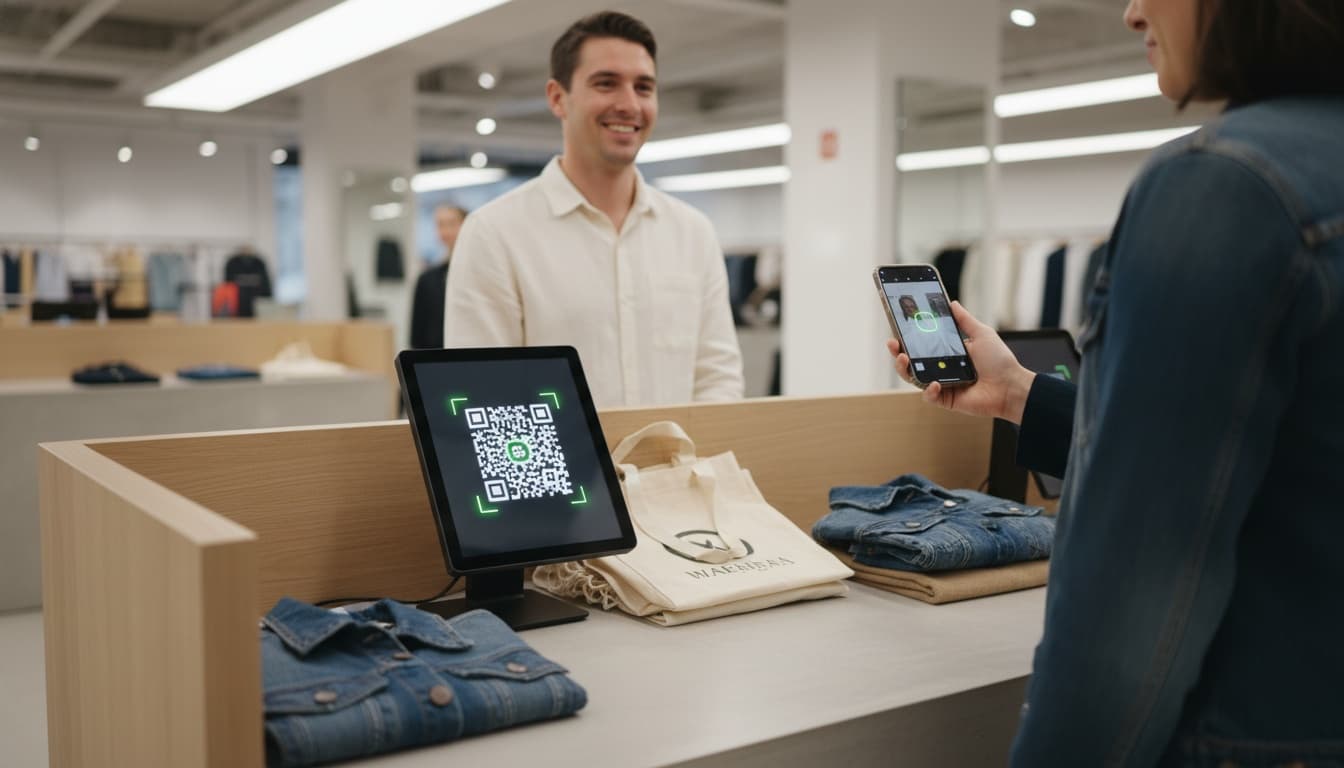
Replace paper forms with QR enrollment. Place a single, well-designed QR code at checkout and in fitting rooms. When scanned, it opens a pre-filled enrollment form using mobile autofill and delivers an instant welcome reward: bonus points or a small discount on the next visit.
Integrate QR flows with your POS and CRM so loyalty IDs are attached to transactions immediately. This creates a clean data foundation for personalization and lifecycle marketing.
15. Seasonal wardrobe transition services
Offer wardrobe audit services to help customers transition between seasons. During a one-to-one session, staff review photos of the customer's closet, suggest pieces to keep or donate, and identify gaps that your store can fill.
These services deepen the relationship and shift perception from "store" to "style partner." They also generate specific shopping lists tied to upcoming seasons and occasions, driving targeted purchases.
Advanced Technology and Personalization
16. AI-powered style recommendations
Use AI capabilities in your CRM or e-commerce platform to analyze purchase history, browsing behavior, and engagement. Generate style recommendations for each customer and surface them via email, SMS, or in-store tablets used by staff.
Relevant recommendations increase open rates, click-through, and conversion while making customers feel understood. Over time, you can shift from generic promotions to personalized capsules and micro-collections per segment.
17. Weather-triggered campaigns
Connect your marketing stack to weather APIs and create triggers for key conditions. Promote raincoats and waterproof footwear during sudden storms, or lightweight dresses and linens during heat waves.
Because these messages align directly with customers' immediate needs, they typically generate higher engagement than generic seasonal promotions. Combine them with localized inventory data to show what's available at each store.
18. Mobile app with gamification
For multi-store or higher-volume retailers, consider a dedicated app that centralizes loyalty, notifications, and product discovery. Add gamified mechanics: achievement badges for visits, points for scanning QR codes, and challenges tied to styling themes.
The app becomes the central hub for your attention strategy, capturing data from each interaction and enabling more precise remarketing. For stores not ready for a full app, the same mechanics can work through mobile web and SMS.
Event-Based and Community Marketing
19. Local event tie-in promotions
Map the local calendar of concerts, festivals, and cultural events. Create mini collections and styling guides tailored to those occasions. Promote them in store, on social, and via QR codes that link to curated product lists.
Event-based marketing shows that you understand how your customers actually live and socialize. It also gives your campaigns natural deadlines, which supports urgency without feeling artificial.
20. Customer closet swap events
Host quarterly closet swap events where customers can bring gently used items to trade with others. Combine the event with previews of new arrivals, styling tips, and loyalty point bonuses for purchases made that day.
Closet swaps appeal to sustainability-minded shoppers and create a social, low-pressure environment where people discover your brand through community rather than advertising.
Retention and Repeat Purchase Drivers
21. Post-purchase care and styling content
After each purchase, send a short sequence of care tips, styling ideas, and "three ways to wear" content for the items bought. Include links to complementary products and user-generated photos for social proof.
This post-purchase content extends the emotional arc of the purchase and positions your brand as helpful rather than purely transactional. It's also a natural moment to remind customers about getting paid for their attention through your loyalty program.
22. Automated "we miss you" flows
Identify customers who haven't purchased in 60 to 90 days and trigger personalized re-engagement offers. Reference their preferred categories or brands and deliver incentives like double points on a visit this week or a free accessory with a minimum spend.
Deliver offers via email and SMS, and consider adding QR codes that make redemption frictionless in store. Measure incremental revenue and adjust incentives based on customer lifetime value.
Implementation Framework and ROI Expectations
You don't need to implement all 22 ideas at once. Start with three to five that match your store size, staffing, and technology stack. Assign owners, define success metrics, and build simple dashboards for weekly tracking.
A practical rollout framework could look like this:
Week 1: Digital foundation
Update store listings and Google Business Profiles with current photos, hours, and categories. Launch QR-enabled window displays linking to mobile lookbooks. Implement simple size alert flows for high-demand items.
Week 2: In-store enhancement
Deploy product information QR codes on key displays. Set up a mirror selfie station and define branded hashtags. Train staff on outfit completion and loyalty enrollment scripts.
Week 3: Community engagement
Onboard first micro-influencers and schedule store visits. Announce your first styling workshop or style challenge. Launch the visit-frequency loyalty structure.
Week 4: Measurement and optimization
Establish baselines for scan rates, conversion, average transaction value, and repeat visit rates. Analyze which QR flows and campaigns generate the highest incremental revenue. Double down on top performers and retire underperforming experiments.
Performance benchmarks
Performance varies by brand, location, and execution quality, but practical benchmarks for well-executed programs include QR code scan rates of 15 to 25 percent among customers who notice the codes, social engagement 3 to 5 times higher from customer-generated content versus brand content, loyalty member retention 20 to 35 percent higher than non-members, and workshop attendee conversion rates of 40 to 60 percent within 30 days.
To evaluate financial impact, use a simple ROI framework: Marketing ROI equals incremental revenue plus customer lifetime value impact, minus implementation costs, divided by implementation costs, times 100. For example, if you invest $5,000 per month into a mix of QR flows, loyalty mechanics, and events, and you can attribute $8,000 in incremental revenue plus $3,000 in improved customer lifetime value, the monthly ROI is 120 percent.
The clothing retailers who win in 2026 treat marketing as the design of experiences rather than a set of disconnected promotions. By integrating behavioral psychology, technology, and community building, you turn every scan, selfie, and visit into a compounding asset for your brand.
Turn Store Visits Into Loyal Customers
Join retailers using VISU to boost foot traffic, collect first-party data, and drive repeat purchases with smart QR campaigns.
FAQ — Marketing Ideas for Clothing Stores
What is the most effective first marketing initiative for a clothing store?
For most clothing stores, the highest-impact first move is combining QR-enabled window displays with a simple loyalty program. This captures passerby attention, drives measurable visits, and creates a database of customers you can market to again without relying only on ads or marketplaces. Start simple, measure everything, and expand what works.
How can small clothing stores compete with large fashion chains?
Small stores win by being more personal, more local, and more focused. Use micro-influencer collaborations, workshops, and personalized styling services to create relationships that big chains cannot match. Layer QR codes and loyalty mechanics on top so every interaction becomes trackable and repeatable. Your size is an advantage when it means agility and authenticity.
Do QR codes really work for fashion retail customers?
Yes, when QR codes unlock real value instead of generic links. They work best when tied to specific actions: reserving sizes, accessing styling content, enrolling in loyalty, or redeeming exclusive rewards. The key is clear messaging and fast, mobile-optimized landing pages. Check our QR codes in retail guide for implementation details.
How can a clothing store measure the ROI of marketing experiments?
Define a small set of metrics per initiative before you launch: scan rate, conversion rate, average basket size, and repeat visit rate. Compare these metrics to historical baselines and control groups. Use promo codes, unique QR links, and loyalty IDs to attribute revenue to specific campaigns. Start with simple tracking and add sophistication as you learn.
How many marketing ideas should a clothing store run at the same time?
Most stores perform best when they focus on three to five initiatives at a time. This is enough to test different levers like traffic, conversion, and loyalty without overwhelming the team. Once you identify clear winners, standardize them as part of your core playbook and test new ideas on top.
What's the best way to build a loyalty program for a clothing store?
Design around visit frequency as well as spend. Create tiers that reward both behaviors. Make enrollment frictionless with QR codes at checkout and fitting rooms. Deliver instant welcome rewards to build momentum. And communicate progress clearly so customers feel motivated to reach the next level. See our guide on retail loyalty programs for detailed frameworks.
How important are in-store experiences for clothing retail in 2026?
Critical. Online shopping offers convenience, but physical stores offer experience. Selfie stations, styling consultations, AR try-on, and community events give customers reasons to visit that screens can't replicate. The stores winning today treat the physical space as a stage for memorable moments, not just a place to hold inventory. Learn more about creating in-store experiences that drive sales.