

How to turn your funnel into a game customers actually want to play, with missions, rewards, and progress that drive real conversions.
Most customer journeys were built for a different era. Forms, generic emails, linear funnels. People move through them once, forget the experience, and rarely come back. Meanwhile, those same people spend hours in apps that reward streaks, missions, and small wins.
That gap is the opportunity. Gamification turns each step of your journey into a reason to keep going, not a dead end. When every visit, scan, or tap unlocks progress, customers stop feeling pushed through a funnel and start feeling pulled into something they want to finish.
But here's where most brands mess up: they copy surface-level tricks without understanding why they work. Points with no clear reward. Badges that mean nothing. Spin-to-win popups that feel like spam. A real gamified journey needs structure, clear rules, and a value exchange that makes sense for both sides. If you're new to this, our gamification marketing guide covers the basics.
This guide shows you how to design gamified journeys that actually convert. We'll cover the building blocks, how to map stages into missions, how to connect online and offline touchpoints, and how to know if your game is driving revenue or just noise.
Want to Skip Ahead?
Start building gamified journeys with VISU today.
What Is a Gamified Customer Journey?
A gamified customer journey turns key actions along your funnel into missions, rewards, and feedback loops. Instead of asking people to just browse, subscribe, and buy, you guide them through clear steps that feel like advancing in a game. Each step gives them something back: points, discounts, status, exclusive access.
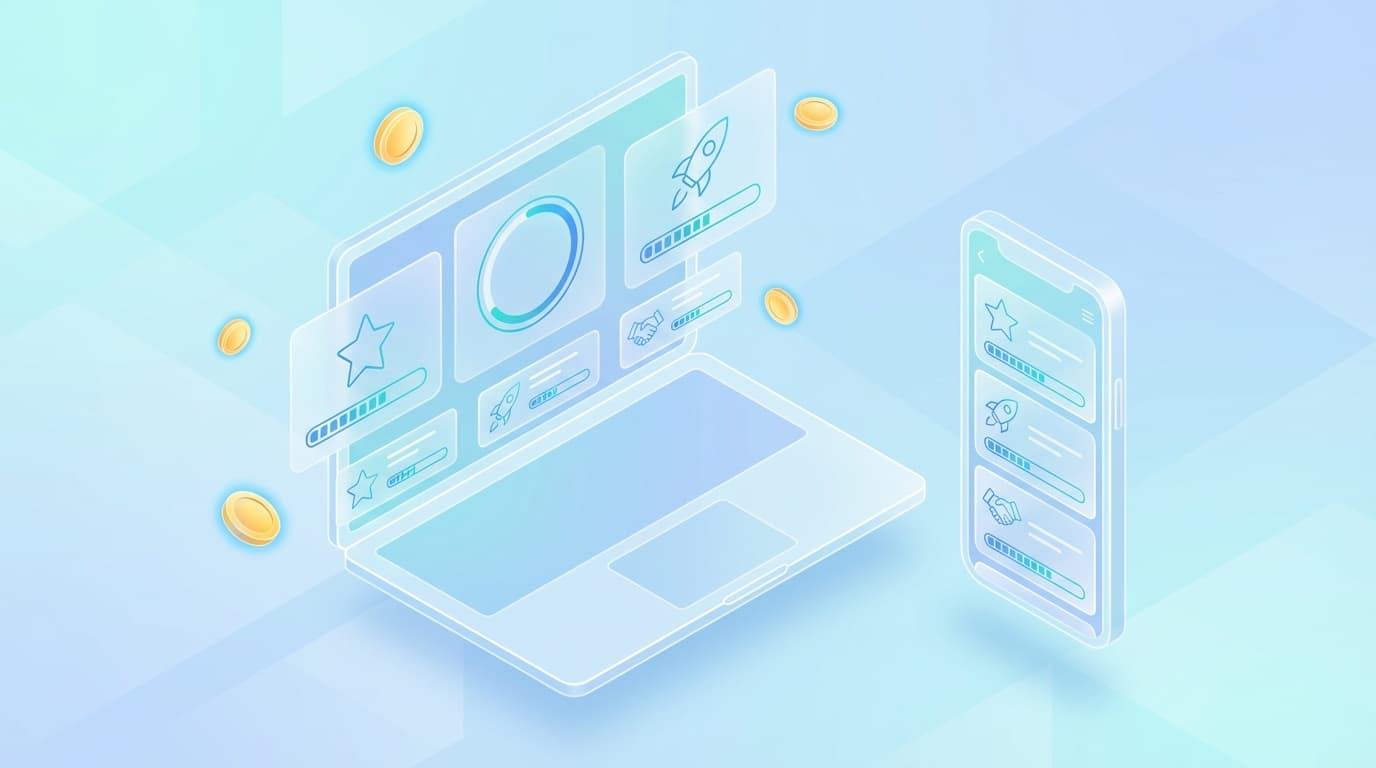
The journey still follows the classic stages: awareness, consideration, purchase, onboarding, usage, loyalty. Gamification doesn't replace this structure. It sits on top of it. For each stage, you define actions that matter for your business and design mechanics that make those actions more attractive.
The core principle is value for value. Want more data? Give more control and transparency. Want recurring visits? Give cumulative rewards that grow over time. One-time discounts help with a single conversion but rarely create lasting engagement. Mechanics like levels, streaks, and collections keep people coming back. Understanding why these work psychologically helps you design better.
This works across online and offline touchpoints. A QR scan on packaging counts as a visit. A tap on a smart link completes a mission. A short survey unlocks a higher tier. When rules are consistent, the journey feels like one unified system instead of disconnected campaigns. Good customer engagement strategies connect all these moments.
Core Mechanics That Drive Conversions
Not every game mechanic fits every journey. The ones that work best for conversions share three traits: they create clear progress, they make the next action obvious, and they connect outcomes to real benefits.
Points and coins give instant feedback, but alone they're not enough. You need structures that turn those points into something people care about. That could be access to an exclusive tier, early access to products, better service, or stronger guarantees. The more rewards align with your core product, the more sustainable the system. For implementation guidance, check our gamification best practices.
Levels and tiers work well for journeys with repeated purchases. When customers see how close they are to the next tier, they're more likely to complete extra missions. Combine this with time-bound challenges like monthly goals or streaks, and you create fresh reasons to return.
Quests and missions guide specific behavior. Instead of presenting a menu of options, bundle 2-3 actions together: watch a demo, answer a question, save preferences. Completing the quest unlocks a reward bigger than each action alone, which nudges people through the full sequence.
The key is visual progress. Bars, rings, and checklists beat numbers alone. People need to see how far they've come and how close they are to the next reward. Even micro rewards work better when progress is visible.
Designing Your Gamified Funnel Step by Step
Start by mapping what already happens. List the main touchpoints from first contact to repeat purchase. Mark where users drop off and where your data is incomplete. These friction points are exactly where game mechanics can help by making the next step more rewarding and more obvious.
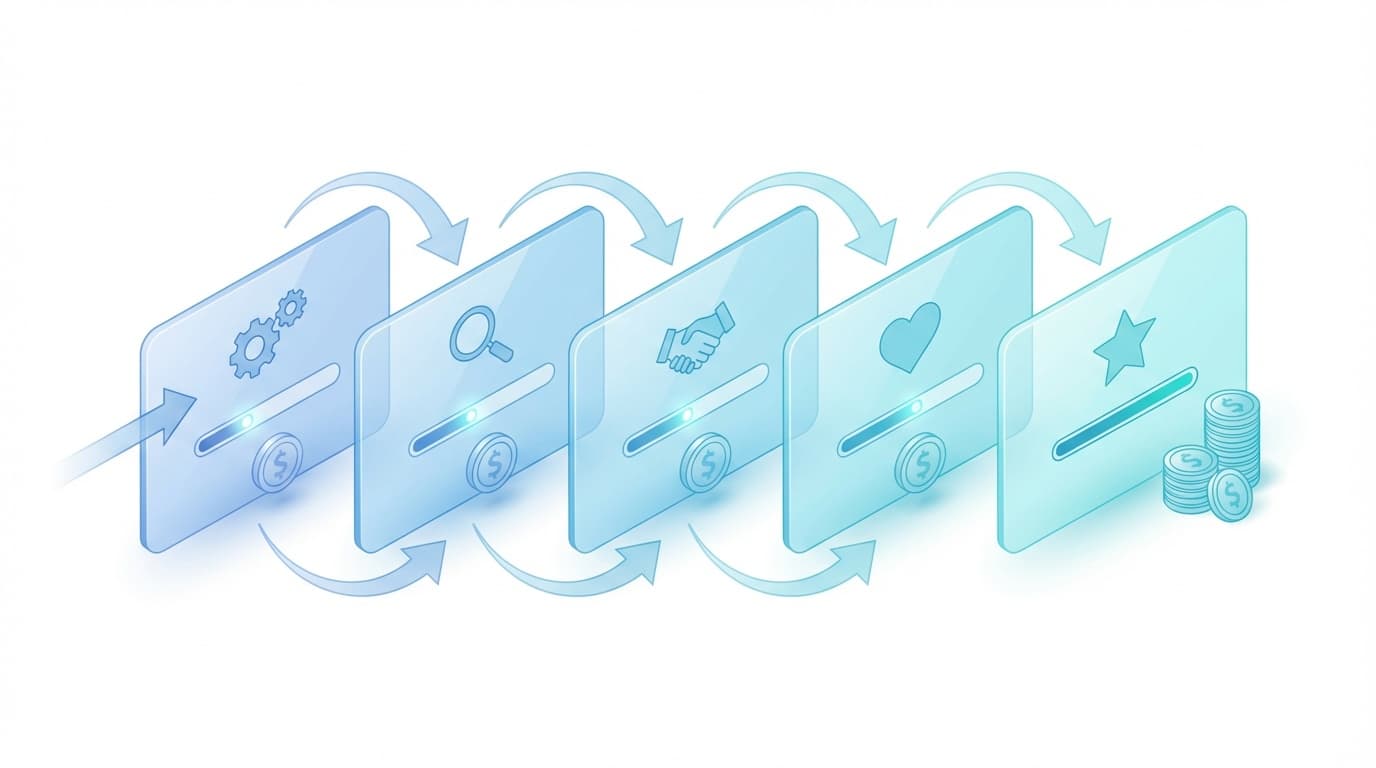
Once you have the map, choose one primary mission for each stage. For awareness, maybe it's scanning a QR code or tapping a link. For consideration, saving a product or viewing a comparison. For purchase, completing checkout. For loyalty, returning within a set period or referring a friend.
Next, assign rewards and feedback. Early stages work well with instant micro-rewards: bonus points, entry into a draw, a small discount. Deeper stages unlock bigger benefits: free upgrades, exclusive experiences, better terms. Make sure customers see these rewards before they act, so they know what they're playing for.
The infrastructure can get complex, but you can start simple. Use dynamic QR codes that redirect to the right mission page, tracking every scan as a journey step. Platforms like VISU QR Ads connect offline triggers to online missions without rebuilding your stack.
Finally, document everything in a playbook your team can understand. Which actions earn what. Which limits protect margins. How often missions reset. A simple rules page linked from your journey increases trust because customers see the system is fair.
See It in Action
Learn how brands use VISU for gamified customer journeys.
Measuring and Optimizing Gamified Journeys
A beautiful journey that doesn't move the numbers is just decoration. You need a measurement plan before launch.
Define the metrics that matter: lead-to-customer rate, repeat purchase rate, average order value, 30-day retention. Then connect those to your missions. For each mission, track participation and completion. Participation shows if people notice it. Completion shows if it's clear and worthwhile. A big gap between them usually means friction. Simplify the steps or improve the reward.
Also monitor game-specific signals: how many users return for streaks, how often they check the mission hub, how many rewards go unclaimed, how many referrals come through game incentives. These show whether your journey feels worth repeating.
Use A/B tests when you can. Fixed reward vs. variable. Short mission vs. long. Different thresholds for tiers. Small changes can have big impact on costs and momentum. The latest gamification statistics show what separates real programs from vanity projects.
Since dynamic tools let you change missions in real time, there's no reason to wait for quarterly reviews. Treat your gamification like a product that improves every week.
Common Mistakes to Avoid
Most brands fail at gamification because they copy features without adapting the logic.
Mistake 1: Too many mechanics at once. Points, levels, badges, wheels, draws, all on the same screen. Customers don't know where to start. Confusion kills momentum faster than a simple system.
Mistake 2: Rewarding the wrong behavior. Incentivizing clicks instead of meaningful actions inflates vanity metrics while hurting profitability. Large bonuses just for opening emails floods your system with low-intent activity. Rewards should mirror real value creation.
Mistake 3: Hidden or changing rules. When rules are unclear or shift without notice, customers feel manipulated. Trust erodes. Clear communication and consistent enforcement are non-negotiable.
Mistake 4: Ignoring physical touchpoints. The most powerful moment to trigger a mission is often at the shelf, in the store, or at the event. QR codes and NFC on printed materials bring people into the game when their attention is already high.
For more examples of what works, see how major brands execute gamified journeys.
Start Small, Design for Real Value
Gamified journeys work when they respect how people actually make decisions. Most customers aren't trying to max out points. They want less friction, a bit of recognition, and more value for their attention. When your missions support those goals, your funnel becomes somewhere they want to return.
You don't need a massive platform to start. Begin with one mission around one touchpoint: a QR code at checkout that rewards the first scan. Track participation, completion, and any lift in repeat visits. Learn what works. Then add layers gradually.
Over time, a well-designed gamified journey becomes a competitive advantage that's hard to copy. Competitors can match your discounts. They can't easily clone the combination of data, experience, and trust you build by rewarding attention consistently. If every touchpoint creates a small win, conversions become the natural outcome. The real opportunity is learning to get paid for your attention instead of giving it away.
Ready to Build Your First Journey?
VISU makes gamified marketing accessible for brands of any size.