

Most brands know that people are constantly interacting with their stores, events, and physical touchpoints, but very few can see what is actually happening in real time. They see revenue, they see occasional reports, yet the live experience inside their spaces is still a black box. In 2026, that gap is no longer acceptable. The brands that win are the ones that treat their physical locations like they treat their websites: measurable, testable, and optimized based on live engagement data.
Customers move through entrances, aisles, waiting areas, digital kiosks, shelves, and checkouts. They scan QR codes, open links, join missions, and respond to micro incentives. Each of these interactions is a signal that can be tracked and improved. The problem is not that the data does not exist; it is that most teams do not have a structured way to collect and use it in real time.
This guide explains how to track real time engagement in physical spaces in a way that is practical, privacy aware, and directly connected to business outcomes. You will see which signals matter, which tools can capture them, and how to turn raw activity into insights and actions. Throughout the article, we connect these concepts with platforms like VISU Solutions, which transform physical spaces into measurable engagement layers.
Why Real Time Engagement in Physical Spaces Matters
Physical spaces generate some of the strongest signals of intent that your brand will ever see. When someone walks into a store, spends time in a specific zone, interacts with signage, or scans a QR code on a shelf, they are doing something far more meaningful than a casual online scroll. Tracking these moments in real time lets you see how attention flows through your environment and how your design and campaigns influence behavior.
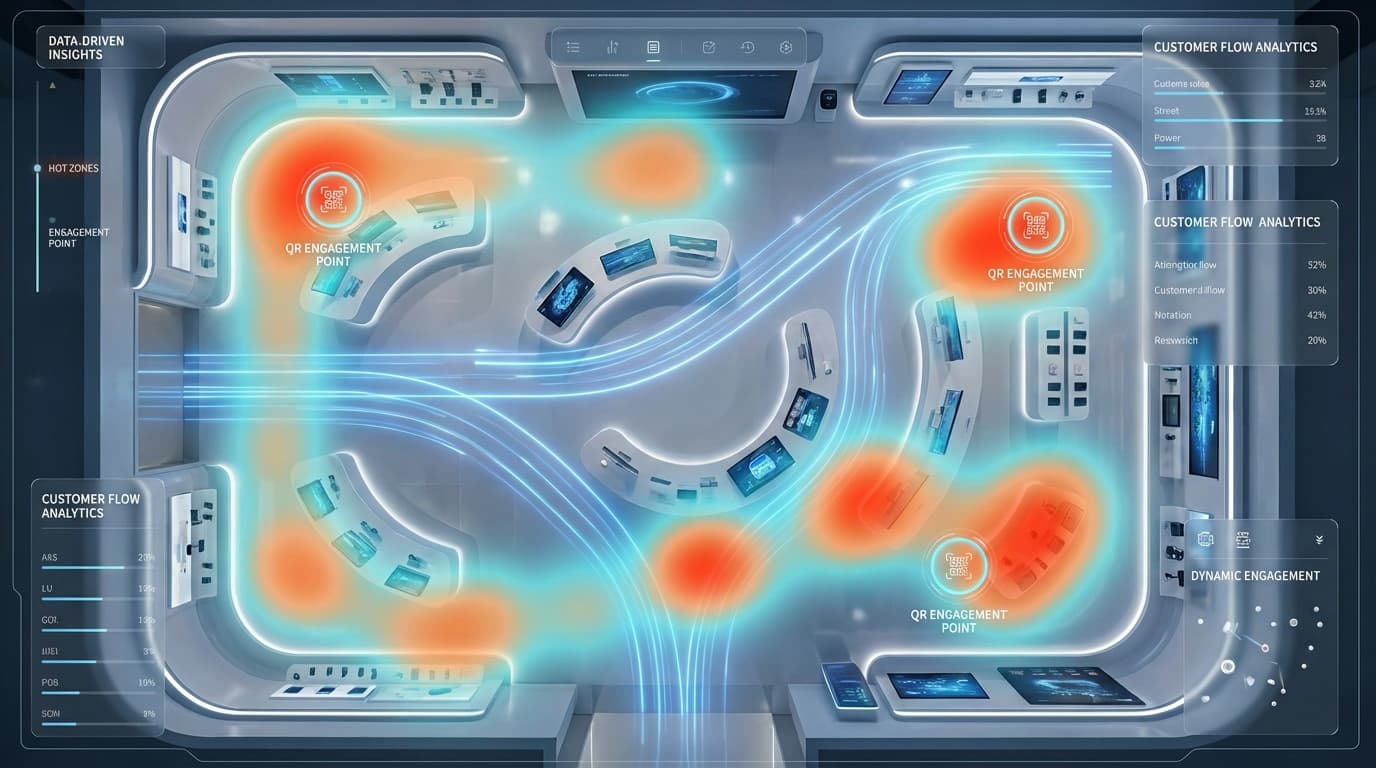
Without live visibility, decisions in physical spaces are based on intuition. Teams hope that a new layout will help, hope that a campaign will drive visits, hope that a display will catch attention. With real time engagement tracking, you no longer have to guess. You can see how many people reach a zone, how long they stay, how often they scan, and what happens next.
Real time data also changes how teams work operationally. If foot traffic clusters around a specific area, you can send staff there. If a queue grows, you can open another checkout. If a mission or QR activation is underperforming, you can adjust messaging or incentives while the campaign is still running instead of only after it ends.
From a customer point of view, real time engagement data unlocks more relevant experiences. When your systems know that a visitor has just scanned a code, entered a mission, or returned for a second visit, you can trigger the next step in the journey automatically. That could be a micro reward, a personalized tip, or a targeted content experience powered by tools like VISU QR Ads.
In short, real time engagement transforms physical spaces from static environments into living interfaces. You gain both operational control and marketing precision.
Benefits of tracking real time engagement in physical spaces
- Better decisions: Layouts, staffing, and campaigns are based on live data, not assumptions.
- Higher conversion: You can fix friction points while customers are still in the space.
- Richer customer journeys: Each offline action can trigger a relevant digital step.
- Stronger loyalty: Real time personalization and micro rewards encourage repeat visits.
- Improved attribution: You can see how physical touchpoints influence sales and signups.
As more retailers and venue operators adopt real time analytics, the gap grows between brands that see what is happening and brands that are still blind to their own spaces.
The Core Real Time Engagement Signals You Should Track
To avoid drowning in data, you need to focus on engagement signals that say something meaningful about behavior. The goal is not to collect every possible data point. It is to capture the few that clearly show how people use your space and how they respond to your experiences.
In practice, the most useful signals fall into a few categories: presence, movement, attention, interaction, and outcome. When you combine these layers, you get a clear picture of what is happening inside your environment at any given moment.
Presence tells you who is there and when. Movement shows how people navigate. Attention reveals where they slow down. Interaction captures scans, taps, and mission steps. Outcome links these behaviors to conversions such as signups, redemptions, or purchases.
Most physical engagement tools, from computer vision and Wi Fi analytics to QR journeys, are designed to capture variations of these signals in different ways. You do not need every technology on the market. You need a stack that captures enough of these signals to answer the questions that matter for your business.
When these signals are tracked through a unified layer like VISU, they become even more powerful, because you can follow a single visitor as they move from offline triggers to digital engagement and back.
Key real time engagement signals in physical spaces
- Foot traffic: How many people enter the space and at what times.
- Dwell time: How long visitors stay in specific zones or near specific touchpoints.
- Path patterns: How people move through aisles, corridors, and zones.
- Scan and interaction rate: How often visitors engage with QR codes, NFC tags, or digital displays.
- Mission progress: How many visitors complete multi step journeys, such as a scan to win route through the store.
- Return rate: How often the same visitor comes back to the location or re engages with a mission.
- Outcome events: Actions tied to business results, such as coupon redemptions, signups, or purchases.
These metrics can be collected with a mix of sensors, analytics, and QR journeys. The important part is that they are linked to real people moving through real spaces, not just abstract numbers in a dashboard.
For example, a spike in dwell time near a display but a low scan rate might mean your copy is not clear enough. A strong scan rate but a low mission completion rate might indicate that the later steps are confusing. Real time signals make these patterns obvious.
How to Instrument Physical Spaces for Real Time Engagement Tracking
Once you know which signals matter, the next step is instrumenting your space so that those signals are captured in real time. This usually requires a combination of existing infrastructure, small additional sensors, and a journey layer that connects everything together.
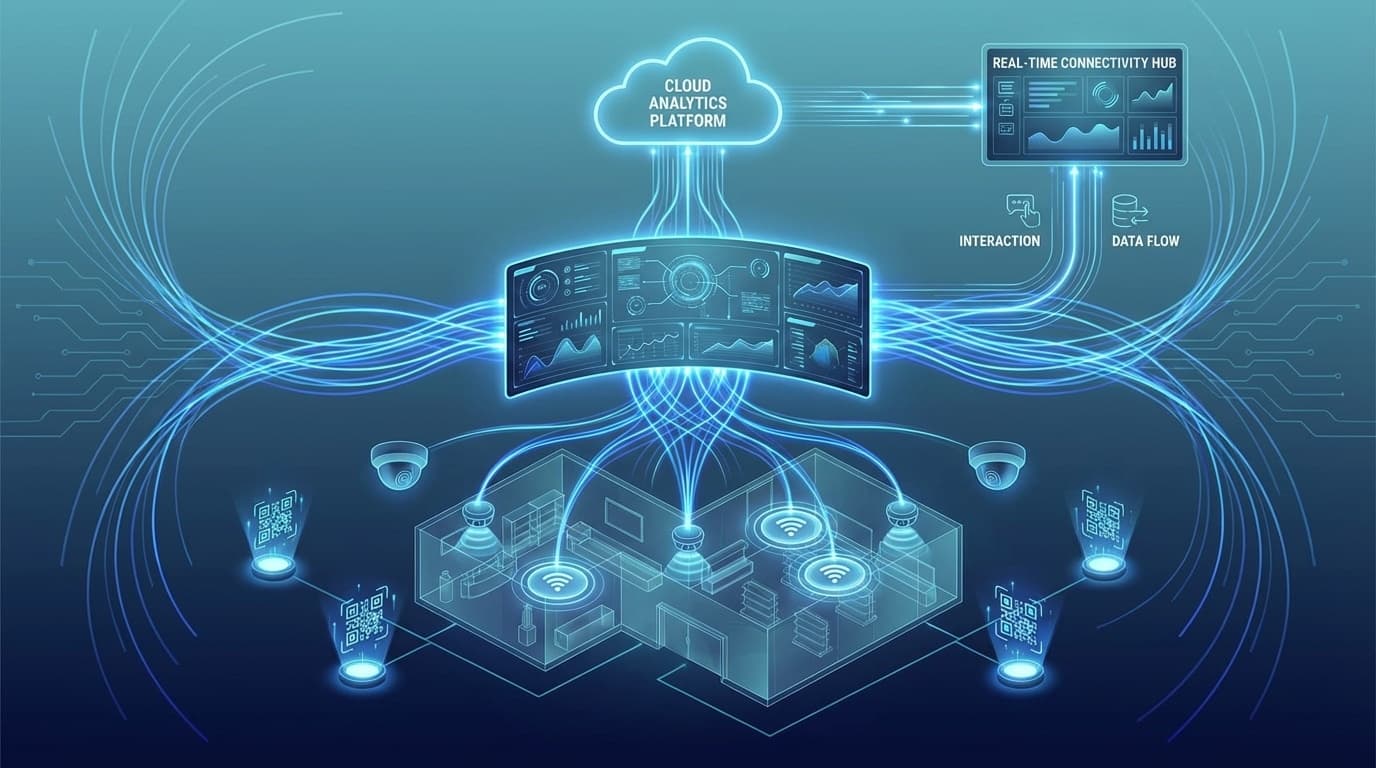
In many environments, Wi Fi access points and cameras are already in place. Modern solutions can reuse this infrastructure to estimate foot traffic and dwell time without adding visible hardware. For stores, malls, campuses, and venues, Wi Fi and computer vision are powerful building blocks for passive measurement, while QR codes and smart links capture active engagement.
QR journeys are especially important because they link the physical world to a digital experience that you control. When a visitor scans a code printed on signage, a shelf, a badge, or packaging, you can route them through a smart link layer that logs the event and then shows a contextual page, mission, or reward powered by VISU Link and VISU QR Ads.
The final component is an engagement platform that unifies these signals. Instead of having one dashboard for cameras, another for Wi Fi, and a third for QR scans, you want a single place where you can see the journey end to end. That is what turns instrumentation into a real strategy instead of a collection of tools.
Practical ways to instrument your physical space
- Use existing Wi Fi and hardware: Leverage access points and sensors you already have to measure presence and movement.
- Add smart QR touchpoints: Place branded codes at entrances, hot zones, displays, and packaging to capture active engagement.
- Design missions: Turn scattered scans into structured journeys that guide visitors through key areas.
- Connect everything to one platform: Use a system like VISU Solutions to log every event in one data layer.
- Respect privacy: Work with anonymized or consent based identifiers and clear communication about data use.
With this setup in place, your physical space becomes measurable in almost the same way a website is. You can run experiments, adjust on the fly, and tie engagement to business results.
Turning Real Time Engagement Data Into Action
Collecting real time engagement data is only valuable if you act on it. The real advantage comes from closing the loop: detecting what is happening now, deciding what it means, and triggering a response that improves the experience or performance of the space.
Some actions are operational. If heatmaps show that a certain area is overcrowded, you can adjust staff or open new service points. If there is a cold zone with almost no dwell time, you can test a new layout or move high interest products there.
Other actions are marketing driven. If scan rate is high but mission completion is low, you can simplify the steps or increase micro rewards. If certain zones drive a lot of engagement but little conversion, you can adjust offers or messaging. Real time analytics make these decisions timely instead of reactive.
Finally, some actions are automated. When a visitor reaches a certain mission step, you can trigger a reward. When dwell time in a zone exceeds a threshold, you can push a contextual tip or offer. When a visitor returns for the second or third time, you can show a different experience than the first visit. All of this is orchestrated through smart journeys instead of manual intervention.
Over time, your physical space becomes a dynamic system where every interaction teaches you something and triggers something in return.
Examples of turning real time data into action
- Queue relief: When sensors detect growing lines, open extra checkouts and notify staff in real time.
- Layout A or B: Use computer vision and scans to compare two layouts and keep the one with better dwell time and conversion.
- Dynamic missions: Increase or decrease micro rewards based on current traffic to steer visitors toward quieter zones.
- Live campaign tuning: Pause underperforming QR activations and redirect scans to a better performing journey while the campaign is still active.
- VIP recognition: Recognize returning visitors with special missions based on their prior engagement history.
These examples are not limited to retail. They apply to events, campuses, museums, gyms, and any physical environment where people move and interact with branded touchpoints.
Conclusion: Make Your Physical Space As Measurable As Your Website
Physical spaces used to be blind spots. You could see sales, but not the journey. You could change layouts, but not know exactly why something worked. In 2026, that is no longer the case. With real time engagement tracking, your stores, venues, and locations can be measured and optimized with the same rigor that you apply to digital funnels.
By focusing on meaningful signals, instrumenting your spaces with the right mix of sensors and QR journeys, and unifying data into a single platform, you can watch engagement as it unfolds and respond while customers are still there. This is how you turn attention into growth instead of letting it disappear unmeasured.
If you want your physical environments to act like high performing digital products, the path starts with visibility. Track what matters in real time, then let each insight guide the next improvement.
Turn Attention Into Growth
Capture every interaction with VISU.