

Scan-and-win turns every QR code at your event into a gamified touchpoint. Attendees get instant rewards, you get real-time engagement data, and sponsors get measurable ROI.
Live events promise energy and connection. But in 2026, audiences expect something more: instant rewards for their attention. A scan-and-win experience delivers exactly that. Instead of hoping people stop by a booth, you invite them to scan a QR code and unlock a chance to win in seconds.
Done right, this turns your entire venue into a gamified playground. Every banner and sponsor activation becomes a touchpoint where attendees trade a few seconds of attention for perks, upgrades, or prizes. Behind the scenes, you collect first-party data, track engagement in real time, and prove ROI to sponsors with precision.
Turn Every Scan Into Engagement Data
VISU powers scan-and-win experiences with dynamic QR codes, real-time tracking, and sponsor attribution in one platform.
Quick video. Earn your first reward.
What Scan-and-Win Actually Means for Events
A scan-and-win experience is simple: attendees scan QR codes around your venue to unlock chances to win. Each scan might give an instant prize, points toward milestones, or entries into a draw. It connects directly to your main QR codes for events strategy and transforms passive attendees into active participants.
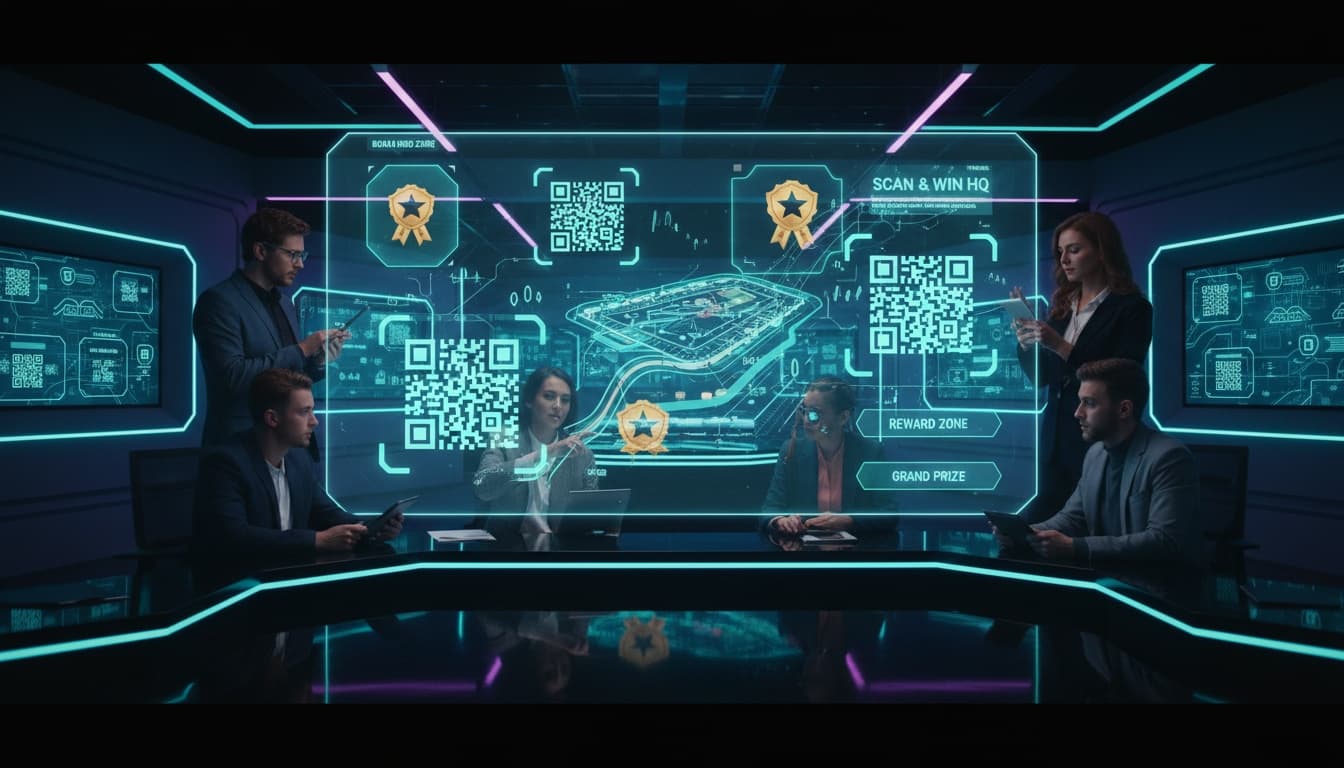
Think of maturity in four levels. At basic, you place a few codes linking to a prize wheel. Minimal tracking, no broader strategy. Works for small activations but leaves value on the table.
At intermediate, codes span multiple zones with different reward types. You track scans by location and see which areas drive engagement. Sponsors start seeing value because you report exact interaction counts.
At advanced, scan-and-win becomes a full engagement layer. Codes connect to missions, streaks, and progress systems. Attendees build profiles as they play. The system integrates with your real-time engagement strategy and feeds insights to sponsors.
At strategic level, it powers your entire event journey. Pre-event campaigns introduce the mechanic. Onsite activations drive traffic and data. Post-event follow-up segments participants by engagement. This is where ROI multiplies.
Why does it work? Perceived fairness and excitement. Everyone sees the same codes and has similar odds, but timing makes it feel personal. The mechanic taps into curiosity without casino-style pressure.
Designing the Mechanics: Rules, Rewards and Fairness
The difference between a flop and a hit usually is not visuals. It is mechanics. You need clear rules, rewards worth the effort, and fairness people trust implicitly.
Decide what each scan does. Instant small rewards? Raffle entries? Points toward milestones? A hybrid often works best. Every scan gives a small chance at an instant perk like a drink voucher, while also adding points toward bigger prizes at event end. Short-term excitement plus long-term motivation.
Define reward tiers matching your budget. Low tier: consumables, discounts, digital goodies. Mid tier: branded merch, exclusive content, VIP lounge access. High tier: limited but aspirational items like premium passes or speaker one-on-ones. Even small wins should feel satisfying.
Fairness is math plus communication. Control odds and stock so you do not run out early or dilute the experience. Use simple language: "every scan is a chance to win." People forgive not winning when rules feel transparent.
Integrate sponsors into the mechanics. A sponsor might provide a prize tier or host codes in their zone granting extra chances. When sponsors see contributions linked to measurable interactions, selling higher packages gets easier. This connects to increasing sponsorship value with interactive tech.
Building the Onsite Journey from QR Codes to Rewards
Mechanics set, now build the onsite journey. How do people encounter codes, scan, see results, and claim prizes? Treat it like a funnel: attract, scan, reveal, claim, continue. Each stage quick and visually consistent.
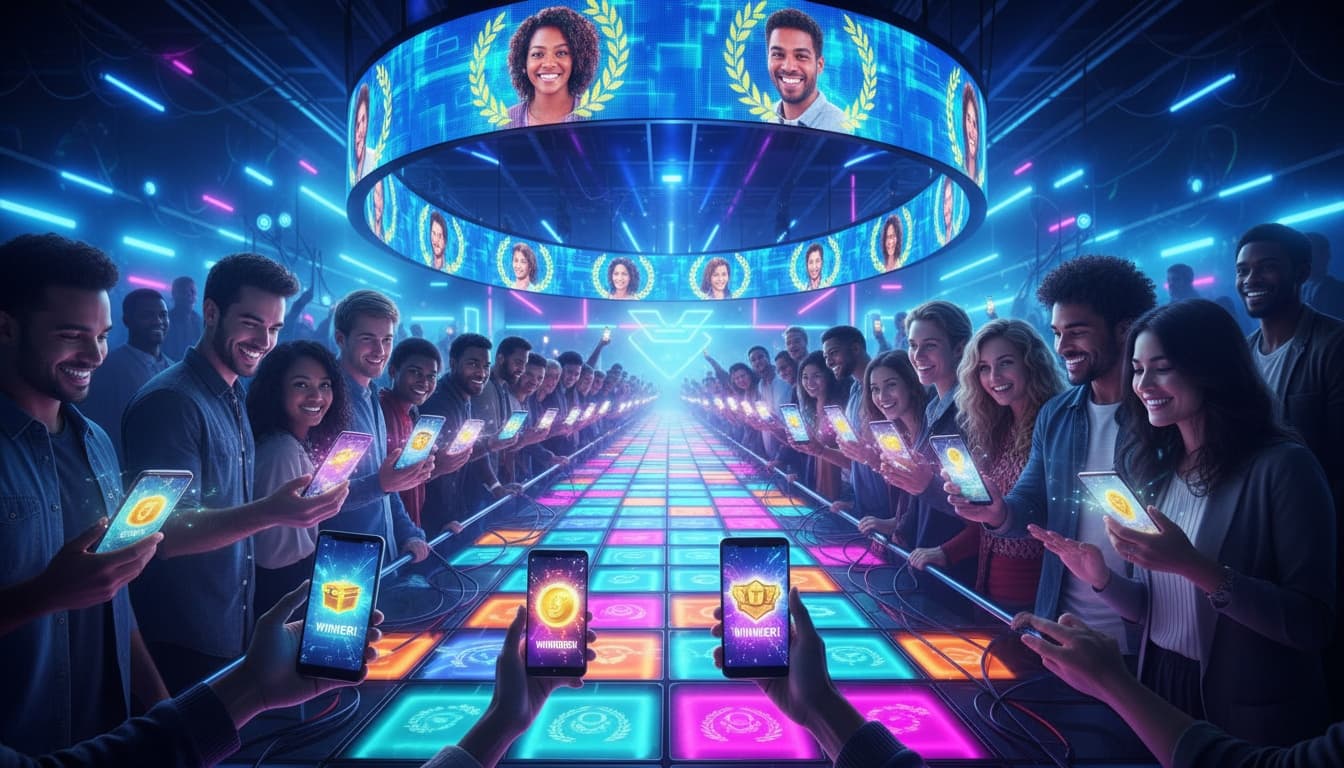
Visual discovery comes first. Codes large enough for viewing distance, at natural pause points, with clear calls to action. Skip generic "scan here." Use benefit copy: "scan to play and win instantly" or "scan to unlock today's mission."
The scan needs speed. Phone camera points, fast-loading mobile page appears. Detect device type, load lightweight, handle traffic spikes. Page shows immediately: spinning reward, counting entries, adding points.
Reveal and claim follows. Digital rewards like discount codes can end on screen. Physical rewards need a claim point: prize desk, sponsor booth, or staffed wall. Confirmation shows what they won and where to go. Staff validates with a quick QR scan or code check.
Continuation transforms one-shot into sustained system. After playing once, invite them to keep going: "want more chances?" with links to missions or zones. Progress bars, streaks, badges make each scan part of a longer story. This connects to your broader activation strategy.
Turn Every Attendee Into an Engaged Participant
Join event organizers using VISU to boost engagement, capture leads, and increase sponsorship value with smart QR campaigns.
Data, Sponsors and ROI Behind Scan-and-Win
Surface level feels playful. Underneath, engineer for data and revenue. Every scan and claim reveals what people care about, where they spent time, which sponsors moved the needle.
Start with basics: total scans, unique participants, average scans per person. Break down by location: entrance, stages, sponsor zones, lounges. This gives you a venue engagement heat map. When sponsors ask how their zone performed, show exact scan counts and claims through their touchpoints.
Layer consent-based profiles at milestones. When attendees complete missions or enter big draws, invite them to save progress with email or phone. Make the trade explicit: "save entries and get exclusive offers for our next event." This turns scan-and-win into a first-party data engine. Aligns with collecting data without being invasive.
Sponsors gain when contributions map to metrics. If they provide prizes or host QR zones, calculate cost per engaged attendee, leads generated, downstream conversions. A few events of data lets you refine strategy and build a predictable engagement engine.
Implementation Checklist for Your Next Event
Going from idea to live activation does not have to overwhelm. Structure matters. Get alignment early between event team, sponsors, design partners, and tech platform.
Start with a one-page blueprint. Goals, core mechanic, how people join, code placements, prize list. Share with stakeholders for feedback before printing or coding. Prevents last-minute chaos onsite.
Configure your QR infrastructure. Separate campaigns for entrance, stages, sponsors, lounges so you compare performance later. Test flows on multiple devices under poor connectivity. The organizer guide for QR codes covers technical setup.
Create visual assets with your design team. Code templates for banners, table tents, screens, prize walls. Consistent colors and slogans. Train staff too. Volunteers to sponsor reps should explain how it works and help winners claim perks smoothly.
Define post-event closure. What follow-up do participants receive? How do you share results with sponsors? What do you test next time? Treat scan-and-win as reusable system, not one-off gimmick. Setup cost drops, impact compounds.
Mistakes That Kill Scan-and-Win Participation
Overcomplicating mechanics kills fastest. If people need to read paragraphs or download apps before playing, most walk away. Keep it simple: scan, see result, claim or continue.
Poor code placement wastes investment. Codes tucked in corners, printed too small, or where people rush past get minimal scans. Every code needs visibility, pause time, clear call to action.
Running out of prizes early destroys trust. When word spreads that good stuff is gone, engagement collapses. Plan inventory carefully. Consider time-gating some rewards so something is always available.
Ignoring post-scan experience misses opportunity. Broken page, slow load, confusing result? They will not scan again. Test thoroughly, monitor real-time, fix issues before they spread.
Disconnecting from event goals leaves value behind. If scan-and-win is isolated from sponsors, data collection, and follow-up, you are running a party trick instead of strategic engagement.
Tips for Maximum Scan-and-Win Engagement
Announce winners visibly. When attendees see others winning on screens or hear announcements, social proof kicks in. More scans follow. Make winning feel real and public.
Create time-limited bonus windows. "Double points 2pm to 3pm in sponsor zone" creates urgency and directs traffic. Promote via push or PA announcements.
Use missions for depth. Instead of random codes, create themed missions: "visit all four sponsor zones" or "scan at three stages." Structure makes it feel like a game worth completing.
Train staff to invite participation. Someone near a QR code saying "have you scanned yet? everyone's winning" converts far more than silent signage.
Follow up with everyone, not just winners. Every player is an engaged lead. Send personalized emails with stats, near-misses, and next event offers. Single activation becomes ongoing relationship. Connects to monetizing attention strategies.
Frequently Asked Questions: Scan-and-Win Events
Do I need a mobile app?
No. Most successful 2026 systems are browser-based. Attendees scan with their phone camera and land on a lightweight page. No download friction, works across devices.
How many QR codes do I need?
Quality over quantity. Mid-sized events work well with 10 to 30 touchpoints at key zones: entrances, stages, sponsor areas, lounges. Placement and call-to-action matter more than code count.
What prizes work best?
Mix small instant perks with aspirational rewards. Drink vouchers and merch for frequent wins. Premium experiences for rare wins. Even modest prizes perform when odds feel fair.
How do I prove sponsor ROI?
Connect sponsor codes to metrics: scans, unique participants, zone dwell time, follow-up conversions. Trackable links show exactly how many leads their involvement generated.
How do I handle venue connectivity issues?
Design for resilience. Lightweight pages loading on 3G, local caching, queued submissions. Test under poor conditions. Have backup claim processes.
Does this work for multi-day events?
Absolutely. Daily missions, cumulative points, final-day grand prizes. Reset some rewards daily, keep overall progress persistent. Gives attendees reasons to return.
Ready to Launch Your Scan-and-Win Experience?
VISU gives organizers dynamic QR codes, real-time analytics, and sponsor attribution in one platform.