

The gamification market hit $19.4 billion in 2025 and is projected to reach $92.5 billion by 2030. Here are 50+ statistics that show why brands are betting big on game mechanics.
Gamification has moved from buzzword to business strategy. Companies across retail, healthcare, finance, and education are using points, badges, challenges, and rewards to drive engagement, retention, and revenue. But how well does it actually work?
We compiled 50+ gamification statistics from recent studies, market reports, and real case studies. No recycled numbers from 2015. No vague claims without sources. Just data that helps you make informed decisions about gamification investments in 2026. If you're new to the concept, start with our guide on what gamification marketing is and why it matters.
Add Gamification to Your Marketing
VISU helps brands create QR-based missions and rewards that drive real engagement.
Quick video. Earn your first reward.
Gamification Market Size Statistics
The gamification industry has grown from a niche concept to a multi-billion dollar market. These statistics show the scale and projected growth of gamification adoption worldwide.
The global gamification market was valued at $19.42 billion in 2025, according to Mordor Intelligence. This represents massive growth from just $9.1 billion in 2020. By 2030, the market is forecasted to reach $92.5 billion, driven by a compound annual growth rate (CAGR) of 26%.
North America currently holds the largest share of the gamification market, but the Asia Pacific region is expanding fastest with the highest projected CAGR through 2030. This growth reflects increasing adoption across enterprise software, mobile apps, and customer loyalty programs.
More than 70% of Global 2000 companies now use some form of gamification in their operations, whether for employee training, customer engagement, or sales performance. The technology has moved from experimental to essential for many organizations.
ROI & Business Impact Statistics
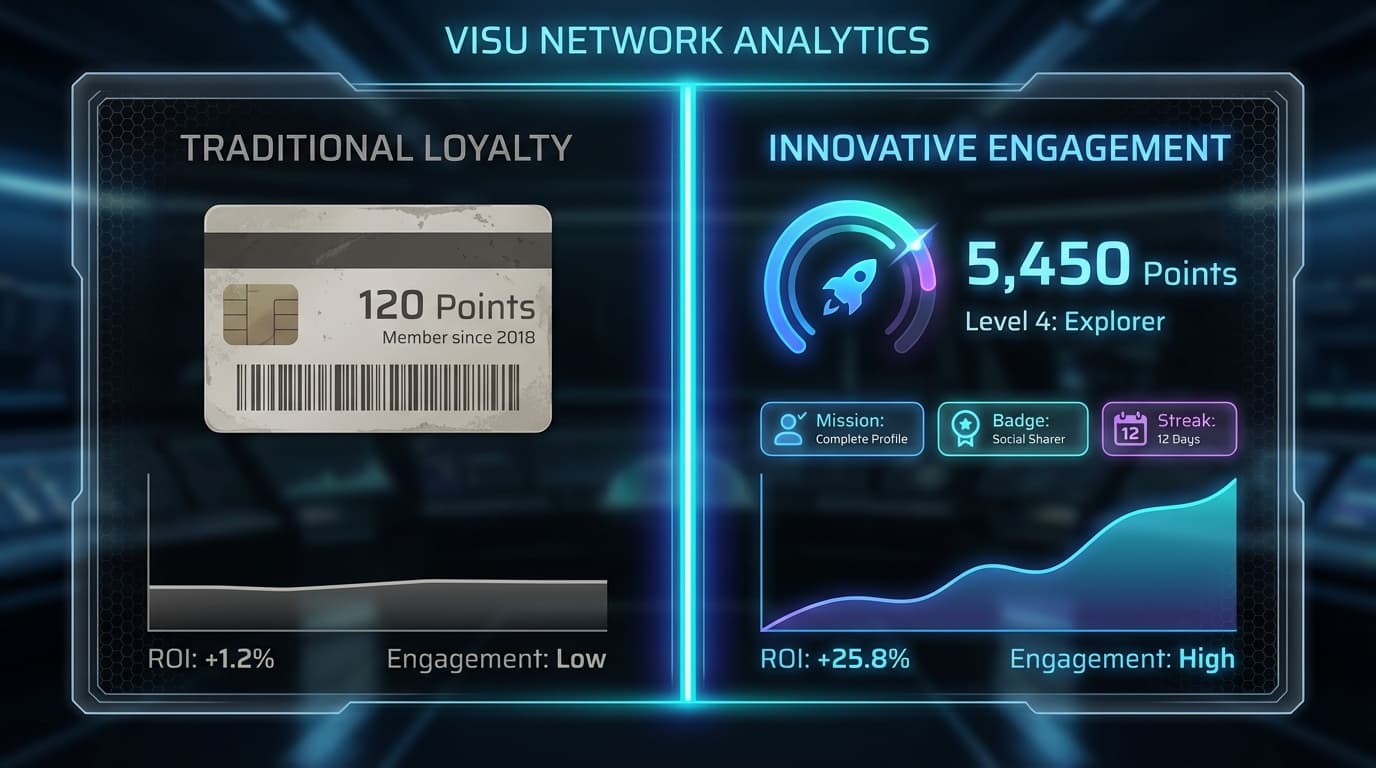
Does gamification actually deliver returns? These statistics from real implementations show measurable business impact across sales, customer acquisition, and revenue.
Sales performance: Hewlett-Packard reported a 30-42% increase in revenue within two months after deploying sales gamification. Lawley Insurance closed more sales in a 2-week gamified contest than in the previous 7 months combined.
Customer acquisition: Extraco Bank achieved a 700% increase in new customer acquisitions through a gamified onboarding system. Teleflora increased traffic from Facebook by 105% and conversion rates by 92% using social gamification.
Trial conversion: Autodesk gamified their free trial experience, incentivizing users to learn the software through challenges and rewards. The result was 54% higher trial usage, 15% more buy clicks, and 29% increase in channel revenue.
Loyalty program lift: Limango's gamified challenges drove a 3x increase in purchase frequency. Dacadoo multiplied user retention rates and increased monthly active users by 62% after adding gamification mechanics to their health platform. For context on how these numbers compare to traditional programs, see our loyalty program ROI benchmarks.
According to a MarketsandMarkets report, gamification consistently delivers higher ROI compared to traditional engagement strategies, which is a key driver behind continued market growth.
Engagement & Retention Statistics
Engagement is where gamification shines. These statistics demonstrate how game mechanics affect user behavior, time spent, and long-term retention.
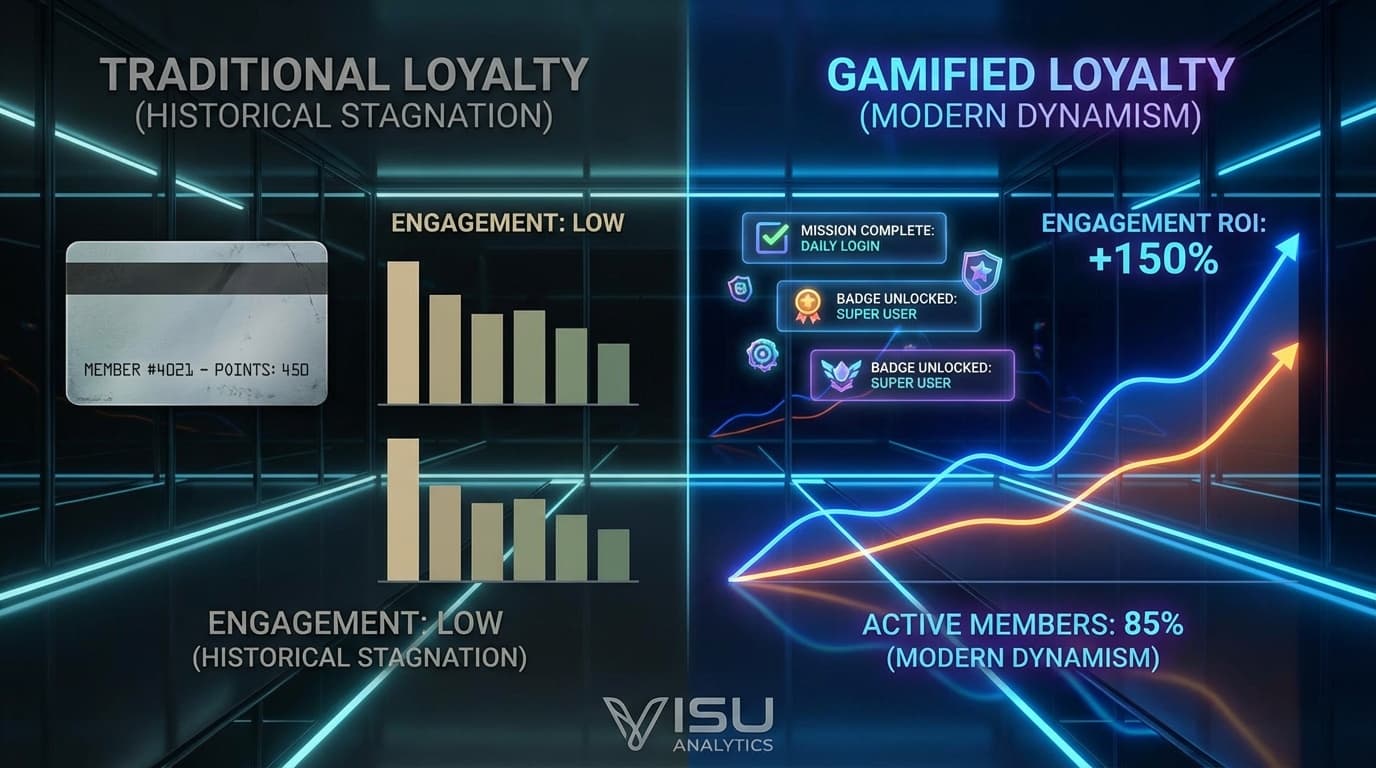
Studies show gamified experiences can increase engagement by up to 150% compared to traditional approaches. Samsung Nation reported a 500% increase in customer product reviews and 66% increase in site visits after implementing gamification.
Verizon Wireless found that more than 50% of site users participate in their gamified environment, spending 30% more time on site than non-gamified visitors. NickTV's game-based platform generated 750,000 page views in 2 months, representing 200% of their usual traffic.
For retention specifically, Bell Media increased customer retention by 33% through social loyalty rewards. SessionM's gamification platform showed 35% higher retention and 25% lower bounce rates compared to non-gamified experiences.
The psychology is straightforward. Gamification taps into intrinsic motivators like progress, achievement, and recognition. When users see visible progress toward goals, they're more likely to continue engaging. For a deeper understanding of why this works, see our breakdown of the psychology behind gamification.
Employee & Training Statistics
Gamification has become a standard tool for HR and L&D teams. These statistics show impact on employee engagement, training completion, and workplace satisfaction.
89% of employees say gamification makes them more productive at work, and 88% report feeling happier when game elements are part of their job. 83% of employees who receive gamified training feel motivated, compared to just 39% of those using traditional methods.
Training efficiency improves dramatically. Deloitte found that gamified training programs took 50% less time to complete while improving long-term engagement. AstraZeneca achieved a 99% completion rate for gamified medicine training among their agent network.
Sales teams using gamification hit targets 78% faster, according to Market.Biz research. Inside View gamified employee social media usage and saw Twitter updates increase by 312%.
For recruiting, 78% of job seekers say companies using gamification appear more attractive and forward-thinking. This perception advantage helps with talent acquisition in competitive markets.
Retention benefits extend to employees too. CaLLogix reduced attrition by 50% and absenteeism by 80% through gamification, saving $380,000 per year. Blue Shield's gamified wellness program got 80% of employees participating and helped 50% of smokers quit.
See Gamification in Action
Learn how brands use VISU to create gamified customer experiences.
Industry-Specific Statistics
Gamification adoption varies by sector. These statistics show which industries are seeing the strongest results and highest adoption rates.
Retail leads adoption, accounting for 28.5% of total gamification market revenue in 2023. Supermarket loyalty members are among the most engaged globally, earning points weekly and redeeming them about every two weeks.
Healthcare shows strong interest, with 78% of consumers aged 25-34 saying they would use gamified elements in their healthcare treatments. Tyson Foods implemented VR-based safety training and saw a 20% year-over-year reduction in workplace injuries.
Education has seen transformative results. Beat the GMAT increased student time on site by 370% through gamification. Duolingo built a multi-billion dollar business largely on streak mechanics, growing to 300 million users averaging 10 minutes per day.
Financial services use gamification for customer acquisition and education. Investorville, Australia's Commonwealth Bank property-investing game, created 600 new loans. This demonstrates how gamification can drive high-value conversions, not just engagement.
For more examples across industries, see our collection of gamification examples from major brands.
Game Mechanics Statistics
Not all game mechanics perform equally. These statistics show which elements drive the strongest results and how users respond to different gamification features.
Points, badges, leaderboards, and rewards remain the most widely used features in gamification implementations. 87% of loyalty programs still use points as their primary reward mechanism, and 9 in 10 loyalty members want flexibility to redeem rewards across multiple brands.
Streaks are particularly powerful because habit formation takes an average of 66 days. Duolingo's CEO has called streaks the most impactful feature in scaling the company to a multi-billion dollar business. The mechanic creates daily engagement loops that compound over time.
Progress tracking drives completion. DevHub added gaming feedback and watched the percentage of users who finished their sites jump from 10% to 80%. Visible progress toward goals reduces abandonment at every stage.
Leaderboards increase competitive engagement but must be designed carefully. IBM's internal social network saw a 92% increase in comments posted after adding leaderboards. However, when the leaderboards were removed, activity dropped by 52%, showing how dependent engagement can become on these mechanics.
Understanding which mechanics work for your audience is critical. Our guide on gamification best practices covers how to select and implement the right elements.
Case Study Statistics
These specific case studies show documented results from gamification implementations across different business objectives.
Caixa Bank (Brazil): Set a goal of 5% increase in annual sales (R$8.6 billion to R$9 billion). Achieved a 49% increase in just six months, adding over $1 billion USD in revenue.
SAP Community Network: Gamified their reputation system and saw usage increase by 400% and community feedback grow by 96%.
Domino's Pizza: Created Pizza Hero, a gaming app letting customers design their pizza. Result: 30% increase in sales revenue.
Moosejaw: The clothing company's gamified system generated 76% of sales revenue from gamified activities, including 240k social media impressions and a 560% ROI on marketing spend.
Ford Escape Route: This gamified campaign generated $8 million in vehicle sales, 600% increase in Facebook likes, and over 100 million Twitter impressions.
Google Travel Expenses: Gamified their expense reporting system and achieved close to 100% employee compliance.
Foldit: Gamers solved a 15-year AIDS virus protein problem within 10 days, demonstrating gamification's potential for complex problem-solving.
These results span enterprise, consumer, and scientific applications, showing gamification's versatility when properly implemented. On the consumer side, it's worth noting that not all reward models work equally well. Many users have grown frustrated with the problems with cashback apps, which is why gamified approaches that offer immediate value tend to outperform.
What These Statistics Mean for Your Strategy
The data is clear: gamification works when implemented thoughtfully. Market growth, ROI benchmarks, and engagement metrics all point in the same direction.
But statistics only matter if you act on them. The brands seeing results aren't just adding points and badges. They're designing systems that align game mechanics with business objectives and customer psychology.
The opportunity is real. And for consumers tired of traditional loyalty programs, there's a flip side: platforms now exist where you can get paid for your attention rather than just earning points toward future purchases.
Ready to Gamify Your Marketing?
VISU makes it easy to add missions and rewards to your customer journey.
FAQ
How big is the gamification market in 2026?
The global gamification market was valued at $19.42 billion in 2025 and is projected to reach $92.5 billion by 2030, growing at a CAGR of 26%. North America holds the largest market share, while Asia Pacific is growing fastest.
What ROI can companies expect from gamification?
ROI varies by implementation, but documented results include: HP saw 30-42% revenue increase from sales gamification, Extraco Bank achieved 700% increase in customer acquisition, and Autodesk improved trial conversion by 29%. Moosejaw reported 560% ROI on their gamified marketing spend.
Does gamification actually improve engagement?
Yes. Studies show gamification can increase engagement by up to 150%. Samsung saw 500% more product reviews, Verizon users spend 30% more time on site, and 83% of employees report feeling more motivated with gamified training versus 39% with traditional methods.
Which industries use gamification most?
Retail leads with 28.5% of gamification market revenue. Healthcare, education, and financial services are also major adopters. More than 70% of Global 2000 companies use gamification in some form, whether for training, customer engagement, or sales performance.
What are the most effective gamification mechanics?
Points, badges, leaderboards, and rewards remain most common. Streaks are particularly powerful for daily engagement, with Duolingo crediting them as the most impactful feature for growth. Progress tracking significantly improves completion rates, with one study showing completion jump from 10% to 80%.
How does gamification affect employee performance?
89% of employees say gamification makes them more productive, and sales teams using gamification hit targets 78% faster. Gamified training takes 50% less time to complete while improving engagement. Companies like CaLLogix reduced attrition by 50% through gamification.