

Every brand wants higher engagement, but very few know how to measure it correctly. Most teams still rely on surface level numbers that look positive but do not reflect real customer behavior. Views, generic clicks, and inflated vanity metrics hide the truth. In 2026, the brands that win are the ones that measure meaningful actions, not noise. Engagement becomes valuable when it connects attention with outcomes that drive revenue, retention, or real time participation.
Customer attention is scattered across platforms, devices, and offline environments. Shoppers scan QR codes in stores, interact with packaging, follow creators, and jump between content journeys throughout the day. Traditional analytics tools only track what happens online, which means most signals are lost. To understand the full picture, brands need metrics that capture real interactions, not just digital behavior.
This guide shows the customer engagement metrics that actually matter in 2026 and explains how to track them across every touchpoint. Whether you are in retail, events, creator ecosystems, or omnichannel environments, these metrics reveal the difference between shallow activity and real engagement. The examples in this post connect directly with the tools and capabilities available in VISU Retail Solutions, where every scan, tap, and mission becomes measurable.
Why Traditional Engagement Metrics Are Not Enough Anymore
Most brands still rely on metrics designed for the early social media era. These indicators were useful when customer behavior happened primarily inside apps or websites. In 2026, customers move between offline and online environments dozens of times per day. If you only measure digital signals, you miss the majority of real world intent. This disconnect creates blind spots and leads to incorrect conclusions about what actually drives behavior.
Another limitation of traditional metrics is that they do not account for intent. A user can click without caring, scroll without meaning, or like a post without reading. These empty signals distort decision making. Brands invest in campaigns that look strong on paper but do not convert. Without intent based metrics, you measure activity, not engagement.
The final issue is fragmentation. Brands track data across multiple tools that do not talk to each other. CRM metrics stay in one system, QR data in another, and mobile interactions in a separate analytics platform. This fragmentation makes it impossible to understand the complete journey. A customer who scanned a shelf code, explored a product page, visited the store again, and redeemed a reward looks like four disconnected users when systems are not unified.
The solution starts by defining a new set of engagement metrics that capture real behavior and by using tools that allow you to track offline and online touchpoints in one place. This is why brands are shifting to experience platforms that centralize journeys, missions, QR triggers, and analytics.
Warning signs that your current metrics are outdated
- You rely on clicks or views as your primary indicator.
- You cannot see how offline interactions influence online behavior.
- You track campaigns but not journeys.
- You cannot measure repeat interactions across environments.
- Your metrics do not predict revenue or retention.
If any of these feel familiar, it is time to upgrade your measurement strategy.
The Engagement Metrics That Actually Matter in 2026
In 2026, the most useful engagement metrics are the ones that show whether the customer is moving through the experience with intention. These indicators reveal if the journey is compelling, if your incentives work, and if your touchpoints create meaningful value. When these metrics rise, loyalty, repeat visits, and revenue rise with them.
The following metrics work across retail, events, creators, and omnichannel environments. They measure how customers behave in real time and how their attention translates into outcomes that matter. Because they are tied to action, not impression, they are much harder to fake and far more predictive of long term performance.
These metrics also align closely with the data captured by VISU QR Ads and smart journeys that track scans, missions, and incentives across offline and online environments. When combined, these tools allow brands to see the complete picture.
Here are the engagement metrics that matter most in 2026 and why they are essential.
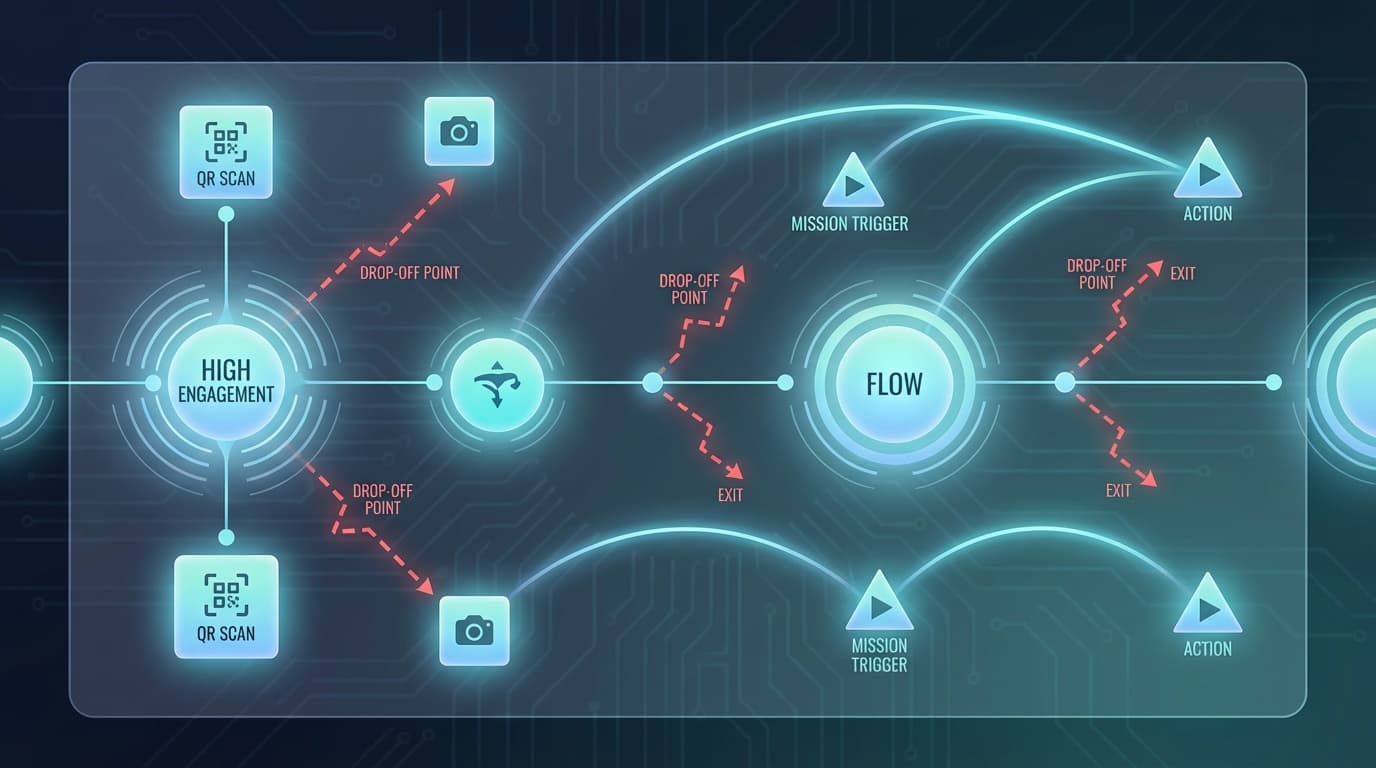
When you understand these patterns, you can redesign journeys that feel natural for customers and cost effective for the brand. You stop guessing which campaigns work and start optimizing based on real signals. These metrics also reveal opportunities to add interactive layers, such as micro rewards or missions that boost customer participation.
The engagement metrics you should actually track
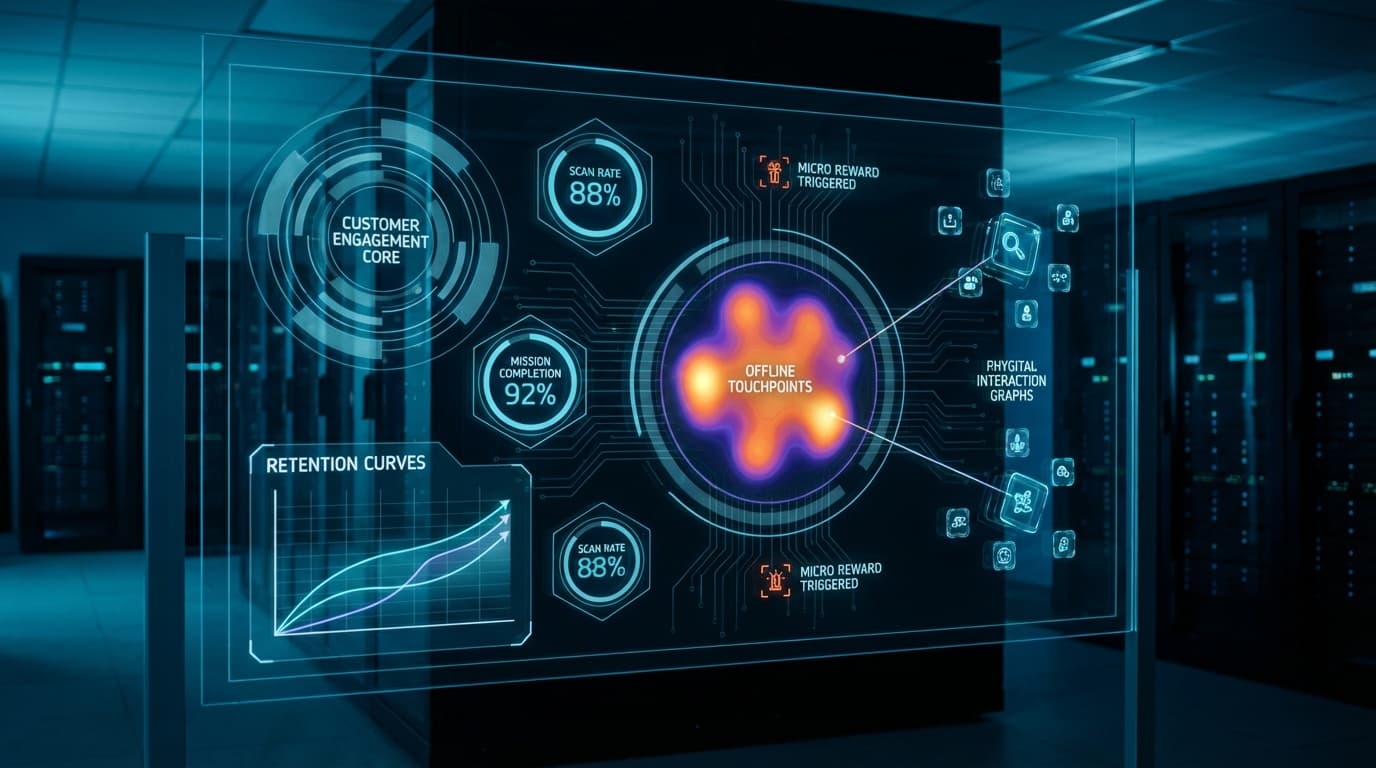
- Scan Rate: Measures how many customers engage with offline touchpoints like shelf codes, signage, or packaging.
- Mission Completion Rate: Shows how many users finish multi step journeys, which is a strong indicator of high intent.
- Repeat Interaction Frequency: Tracks how often a user returns to scan, tap, or engage with content.
- Time on Journey: Measures how long customers explore interactive experiences, not just visit a page.
- Reward Claim Rate: Reveals which incentives actually motivate customers to act.
- Post Engagement Action Rate: Tracks actions taken after an interaction, like visiting a store section or redeeming an offer.
- Conversion Assisted by Offline Touchpoints: Shows how much offline engagement influences online or store conversions.
These metrics are actionable because they tell you exactly which parts of the journey are working and which need improvement. They also tie directly to revenue, making them useful for decision making at the leadership level.
How to Track Engagement Accurately Across Offline and Online Journeys
Tracking engagement in 2026 requires tools that unify offline and online signals. Most analytics platforms only track digital events. Retailers and brands need solutions that measure what happens in physical spaces as well. This includes QR scans, mission progress, movement inside locations, and reward activity. Only then can you understand the full experience.
One of the most important measurement upgrades is using dynamic QR codes instead of static ones. Dynamic codes route each user through a smart link layer that logs every action before redirecting. This does not interrupt the experience but gives you full visibility. Every scan becomes a data point you can use to optimize campaigns.
Another key component is journey level analytics. Instead of tracking pages, you track stages. You measure how users move between discovery, exploration, decision, and post purchase phases. When you track journeys instead of isolated events, you can see drop off points and moments of high engagement.
For retailers, these insights are especially valuable. Offline behavior often predicts online intent. A customer who scans a shelf QR, looks at product details, and receives a micro reward is far more likely to return or complete a purchase. You need tools that detect these moments automatically.
Platforms like VISU QR Ads track these interactions and feed them into unified dashboards. This allows teams to make decisions based on real behavior instead of assumptions.
Ways to track engagement with accuracy in 2026
- Use dynamic QR codes to capture every scan event.
- Track mission progress, not just pageviews.
- Measure repeat scans to understand loyalty patterns.
- Analyze heatmaps of journey stages.
- Link reward data with user actions to identify motivators.
- Use unified dashboards that combine offline and online data.
When you track accurately, engagement strategies become far easier to optimize. You know what to scale, what to adjust, and what to remove altogether.
Conclusion: Great Engagement Comes From Great Measurement
The brands that dominate in 2026 are the ones that understand customer behavior with precision. They do not rely on vanity metrics or outdated funnels. They measure real actions that reflect real intent. When measurement improves, engagement design becomes easier, more strategic, and more profitable.
By focusing on meaningful metrics and tracking offline and online journeys together, brands can create experiences that attract and retain customers automatically. Engagement becomes a continuous loop where every touchpoint matters, every scan teaches something new, and every reward drives the next action.
If you want to design better journeys in 2026, start by measuring the things that actually shape behavior. Everything else becomes clearer from there.
Turn Attention Into Growth
Capture every interaction with VISU.