

Attendees will share data when the exchange feels fair. Value-first framing, progressive profiling, and clear consent turn data collection from creepy to helpful.
Every event organizer wants better attendee data. Who they are, what they care about, which experiences actually move them. But nobody wants to be the event that feels invasive or "always watching." In 2026, collecting data without creeping people out is not just legal requirement. It is brand requirement.
The tension is real. You need data for personalization, ROI proof, and future ticket sales. Attendees need to trust that sharing is safe and worth it. When balance is wrong, people give fake info and ignore your forms. When it is right, they scan and opt in willingly because value is obvious.
Build Trust While Capturing Data
VISU powers progressive data collection through QR journeys, smart links, and consent-based profiling that attendees actually appreciate.
Quick video. Earn your first reward.
What Makes Data Collection Feel Creepy
Most attendees are not against sharing information. They fill forms for visas, flights, and bank accounts all the time. What triggers the "creepy" feeling is data collected without context, without consent, or without visible benefit. It feels like watching, not serving.

One red flag: asking too much too soon. Long registration forms packed with personal questions feel like interrogation. Attendees do not know if your event is worth that disclosure yet. They abandon or fill with junk.
Another source of discomfort: opaque tracking. Cameras, scanners, check-in stations everywhere, but no idea what is tracked or stored. Later emails referencing activity in oddly specific ways feel like surveillance. Problem is not technology. It is lack of explanation.
Finally, one-way extraction. Attendees share info and never see it improve their experience. No personalized agendas, no relevant recommendations, no tailored perks. They learn sharing is pointless and become guarded. This connects to your main QR codes for events strategy where every touchpoint should deliver value.
Designing Value-First Data Exchanges
The most reliable way to collect better data: tie every ask to immediate, tangible value. Not "complete your profile." Instead: "tell us what you care about so we build your personal agenda" or "share preferences to unlock better recommendations."
Start by listing what attendees actually want. Choose right sessions without missing key content. Navigate venue easily. Discover relevant people and sponsors without wasting time. Receive tailored offers instead of spam. Each need justifies a specific data request when you show the link clearly.
Example: ask about job role and interests, then immediately propose three suggested sessions. Ask about event goals, show a mission checklist tailored to those goals. Ask about sponsor preferences, tell them exactly what content to expect. You are not promising abstract personalization. You deliver it on the next screen.
Incentives can help but should support value, not replace it. Gamified systems with scan-and-win mechanics make sharing fun. The key: keep relationship honest. "Share this so we can do X, plus you get Y as reward." Not "give us everything for something vague."
Progressive Profiling with QR Journeys
Easiest way to reduce friction: spread data collection over time instead of stuffing into one form. QR-powered journeys let attendees scan at natural moments, share small bits in context, and build profiles that feel organic.
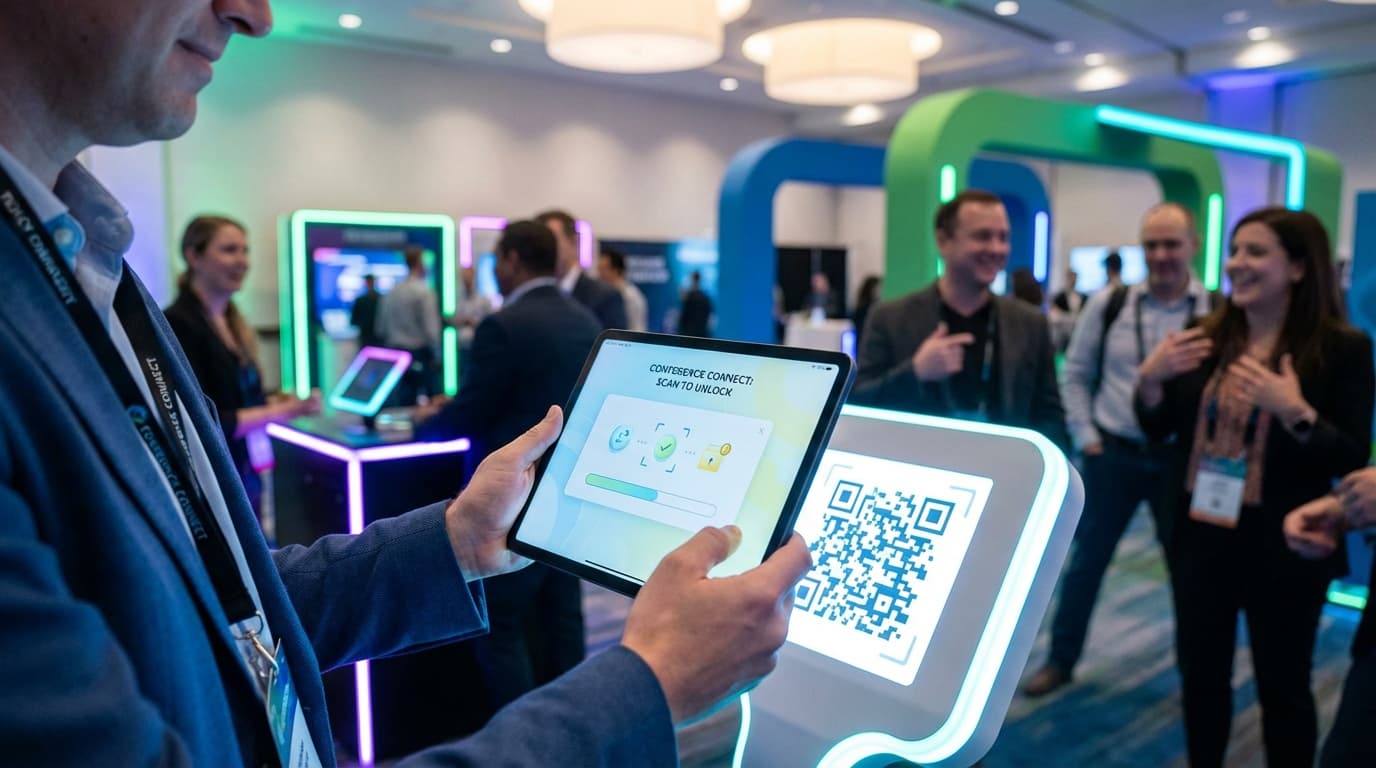
Progressive profiling means asking only what you need at each stage. Registration: basic contact and one or two segmentation questions. Check-in QR: invite to add preferences for smarter agenda. Session poll: capture role or challenge data. Sponsor booth: ask permission to share details for tailored follow-up.
Technically, easier than ever. Dynamic QR campaigns let you put scannable entry points on badges, signage, tables. Each scan pre-fills what you know and only asks for the next missing piece. Attendees see short, focused interaction instead of field walls. This connects to your organizer guide for QR codes.
Smart links extend the same logic beyond venue. Pre-event emails route through trackable URLs that collect interaction data and invite preference-setting before arrival. Post-event campaigns ask for one more piece in exchange for exclusive content, without overwhelming inboxes.
Turn Every Attendee Into an Engaged Participant
Join event organizers using VISU to boost engagement, capture leads, and increase sponsorship value with smart QR campaigns.
Transparency, Consent and Giving Attendees Control
Even smart QR flows feel wrong if people do not know what happens with their info. Transparency and consent are not just legal checkboxes. They reduce anxiety and build long-term trust.
Start with clear micro-copy wherever you collect data. Not generic statements. Exactly what you will do: "We use this to recommend sessions while you are here" or "We share this email only with sponsors whose codes you scan." Plain language beats policy excerpts.
Make consent granular. Not one blanket "marketing" toggle. Separate options for organizer and sponsor communications. Let people opt into what they find useful. You can still drive strong engagement with those who choose deeper options because they chose intentionally.
Control should be ongoing. Easy way to review and update preferences from a profile page linked in QR flows and emails. If they want to reduce frequency or unsubscribe, make that path short. Losing forced contacts is better than keeping resentful ones who mark you as spam. This aligns with increasing sponsorship value through quality over quantity.
Using Data Post-Event Without Breaking Trust
The moment after your event is where trust is confirmed or broken. Flood of emails ignoring preferences? They feel used. Relevant recaps and tailored suggestions? Trust deepens and they come back.
Start with value-packed recap using data obviously. Send each attendee a summary of sessions they checked into, links to related content, suggestions for missed talks based on stated interests. This is when they realize "sharing preferences improved my event, even after it ended."
Segment follow-up by behavior, not just contact fields. People who scanned many codes, completed missions, or spent time in sponsor zones get deeper communication. Light engagers get softer sequence. Respecting signals avoids fatiguing your audience.
For sponsors, share data at promised level only. If you said you would pass along only those who scanned their codes or opted in, stick to it. Include context: interests, sessions attended, missions completed. Higher quality outreach for sponsors, less generic funnel feeling for attendees. Connects to your real-time engagement strategy.
Mistakes That Destroy Attendee Trust
Asking for everything upfront kills completion rates. Long registration forms with 15 fields make people abandon or lie. Start minimal, build over time.
Hiding how data is used creates suspicion. If people cannot find a clear answer in three seconds, they assume the worst. Explain at point of collection, not buried in policies.
Sharing data without explicit consent destroys relationships. If attendees opted in for event updates but get blasted by every sponsor, they will not trust you again. Honor the specific permissions given.
Ignoring preference signals wastes the advantage. You collected engagement data but sent everyone the same generic sequence anyway. Segment or do not bother tracking.
Keeping data forever without purpose creates liability. If you are not using something to improve experience, do not collect it. Regular audits remove dead fields and reduce risk.
Tips for Trust-Building Data Collection
Show value before asking. Give something useful first, then request info. A session recommendation quiz that delivers results before asking for email converts better than form-first approaches.
Use human language in every prompt. "Help us personalize your day" beats "Complete required fields." People respond to requests that sound like people wrote them.
Make opt-outs as easy as opt-ins. If unsubscribing takes five clicks and a login, you are training people to mark you as spam instead. One-click works.
Tell attendees what you learned about them. A post-event email saying "Based on your activity, we think you'd love these resources" proves data led to value, not just extraction.
Remove fields that do not improve experience. If you have never used "company size" to personalize anything, stop asking. Every unnecessary field erodes trust and completion. Connects to monetizing attention ethically.
Frequently Asked Questions: Attendee Data Collection
What types of attendee data are safe to collect?
Basic contact details, role, industry, and interest topics are generally safe when you explain why and how they will be used. Avoid highly sensitive personal information unless clearly necessary. Always comply with local privacy regulations governing consent and storage.
How can I ask for more data without long forms?
Use progressive profiling. Small number of fields at registration, then additional details through QR missions, polls, and profile prompts. Each step connects to a benefit like better recommendations or specific perks.
How do I explain data usage so attendees actually read it?
Replace dense legal paragraphs with short sentences near fields and buttons. "We use this to personalize your agenda" or "We share this only with sponsors whose codes you scan." Link to full policies for coverage, but front-line explanations should be human and fast.
What is the best way to share data with sponsors?
Share only what you have permission for, only from attendees who opted in. Focus on those who interacted with sponsor codes or content. Give sponsors context for intelligent follow-up. Avoid dumping full lists into generic outreach.
How do I handle attendees who refuse to share data?
Respect their choice. Offer a baseline experience that works without personalization. Some people will engage more once they see others getting value from sharing. Forcing data collection creates resentment and fake entries.
How long should I keep attendee data?
Only as long as needed for stated purposes. Define retention periods upfront. Regular audits identify data no longer serving experience improvement. Shorter retention reduces liability and signals respect for privacy.
Ready to Collect Data Attendees Actually Want to Share?
VISU gives organizers progressive profiling, consent management, and QR journeys that build trust instead of breaking it.