

Event activations have evolved beyond photo walls and branded tote bags. The best ideas in 2026 combine physical spaces with digital layers, use QR codes to capture interest in real time, and turn sponsors into experience partners. Here's what actually works.
The reality? Most event activations still feel like afterthoughts. Static banners, generic booths, maybe a wheel to spin. Attendees walk past without stopping. Sponsors wonder why they paid for a logo placement. But organizers who design activations as journeys, not installations, see real engagement, qualified leads, and events that people actually remember.
Turn Activations Into Measurable Journeys
VISU helps event organizers connect QR codes, missions, and sponsor experiences into trackable engagement flows.
Quick video. Earn your first reward.
What "High-Impact Activation" Actually Means
Not all activations are equal. Here's how they break down in terms of real impact:
Journey-based experiences: Activations designed as small journeys with micro-actions that create emotion, collect data, and drive business outcomes like leads or trials. These generate measurable ROI and memorable moments.
Interactive touchpoints: Zones with clear value exchange where attendees scan, participate, and receive immediate rewards. Most successful event activations operate here.
Enhanced booths: Traditional stands with added digital elements like screens or QR codes, but without a cohesive journey. Better than static, but leaves value on the table.
Static installations: Banners, backdrops, and logo placements with no interaction mechanism. High cost, low engagement, unmeasurable impact.
The ideas in this guide focus on the first two categories, where activations become engines for attention and data rather than just decoration. For foundational QR strategy, see our QR codes for events hub.
Interactive Check-In and Welcome Zones
The first minutes of an event are high energy but also high friction. People queue, find badges, orient themselves. This makes the entrance area one of the most powerful spots for activation, yet many venues waste it with only a registration desk and banners.
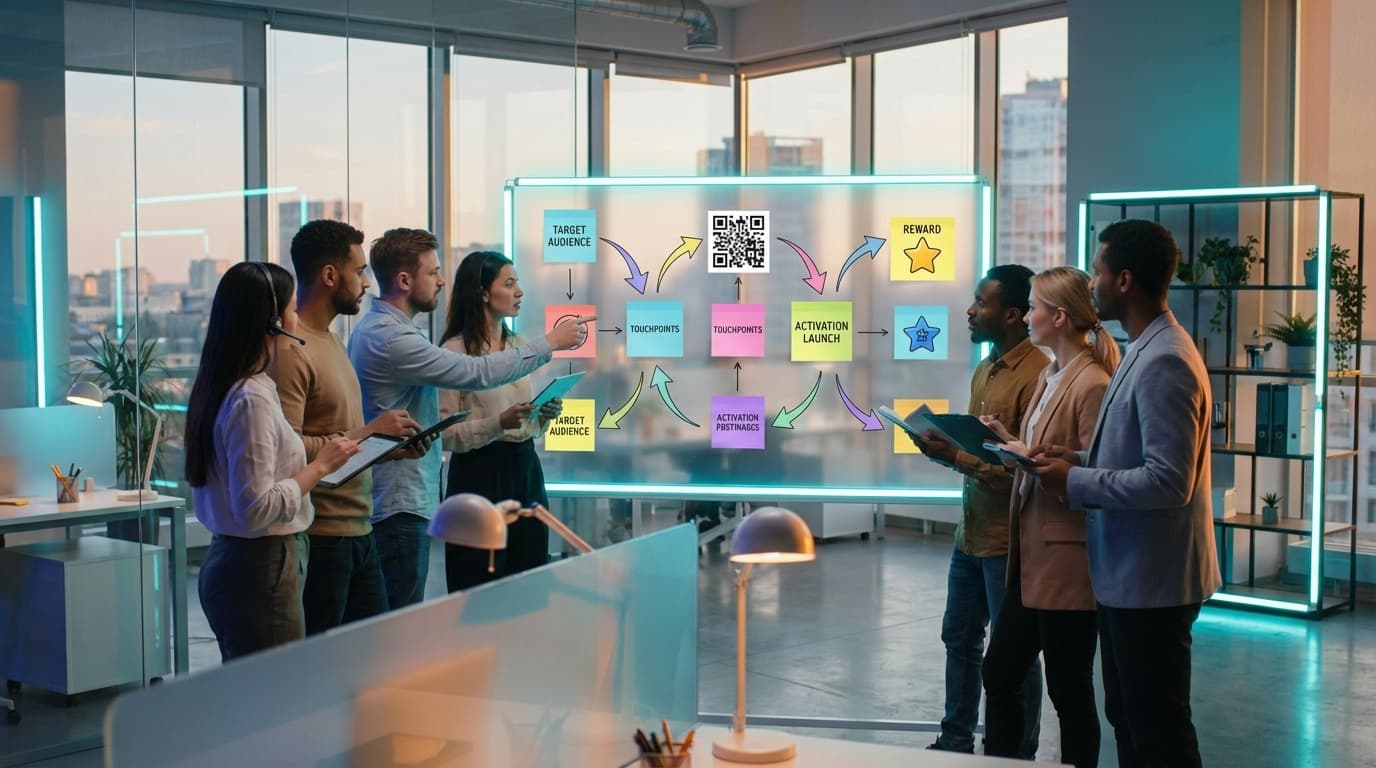
Check-in missions. Right after badge pickup, attendees see a sign inviting them to scan a QR code to start their event journey. The first mission might be "visit two key areas and answer a quick question" in exchange for a reward at the info desk. This gives people reason to explore instead of clustering in one place.
Orientation hubs. A digital map showing live recommendations based on crowd flow or schedule changes. Attendees who scan receive personalized routes: suggested sessions, booths to visit, side activities. Track which suggestions generate most traffic and adjust programming for future editions.
First scan, first perk. The first time attendees scan their badge or event QR, they instantly see a surprise. Drink voucher, reserved seat, early contest access. This creates positive feedback and sets the expectation that scanning at your event is worth it.
Place your first major activation within meters of check-in. Use missions and routes to move people toward key sponsors and zones. The welcome zone sets the tone for everything that follows.
Sponsor Experience Zones Instead of Static Booths
Sponsors invest in events because they want qualified attention, not just logos. Traditional booths try to solve this with giveaways and demos, but they struggle to stand out in busy halls. The most successful events replace generic stands with experience zones that make sponsors part of the story.
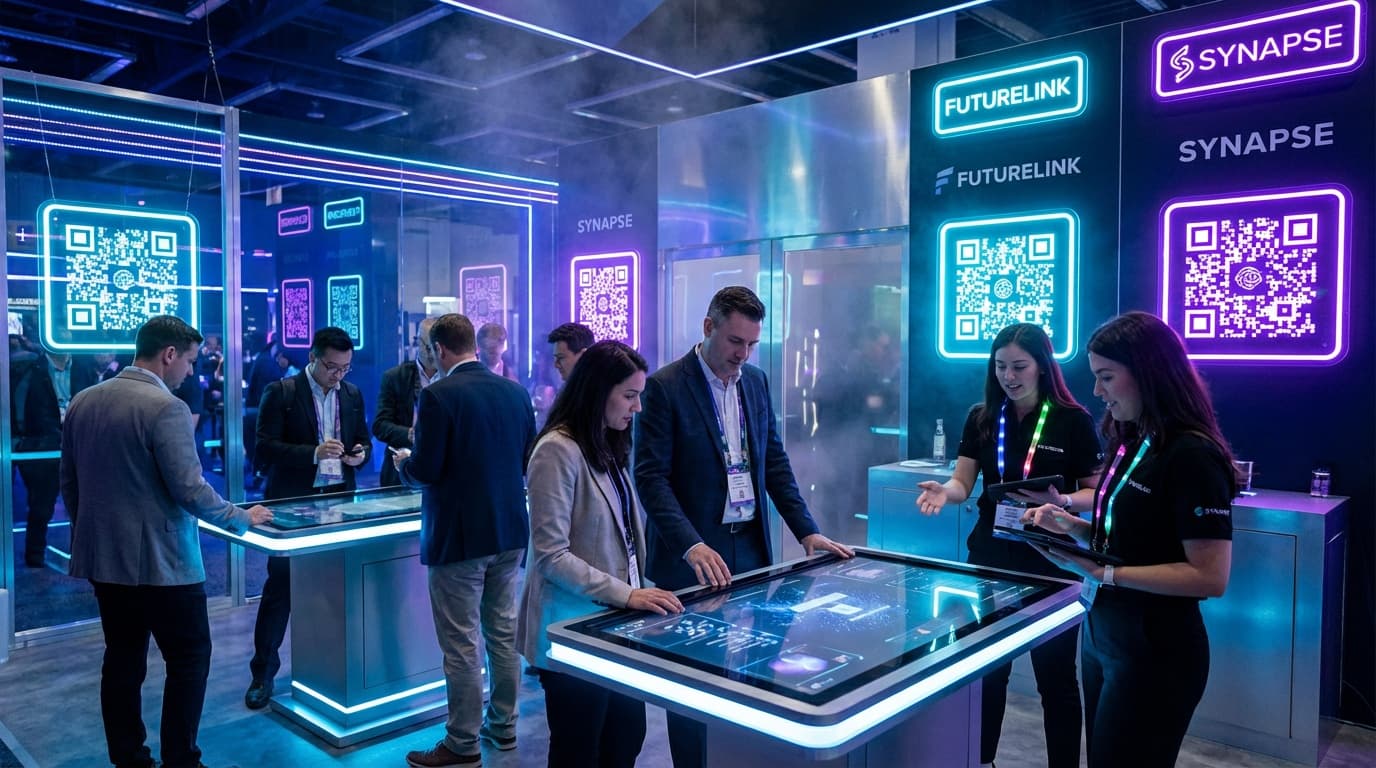
Themed challenge zones. Instead of a standard stand, sponsors host small areas where attendees complete missions related to their offer. A software company might run a "productivity lab" where visitors scan codes to unlock tips, vote on challenges, and see live results. At the end, they exchange completion for a consultation or resource pack.
Co-created lounges. Make sponsors co-owners of relaxation or networking areas. Attendees scan to access perks like charging stations, coffee, or reserved seating. While there, they interact with lightweight digital experiences introducing the sponsor in useful, non-intrusive ways. Every scan is tracked, so you report exactly how many people spent time and what they engaged with.
Dynamic QR rotation. The same physical code can promote different content across time slots. Morning scans unlock educational content. Afternoon scans drive contest entries or limited offers. Sponsors adapt to traffic patterns and test different hooks without changing setup. Learn more about increasing sponsorship value with interactive technology.
Report performance using scans, dwell time, and completion rates. Sponsors see real numbers tied to their presence, justifying premium packages for future events.
Gamified Missions and Scavenger Hunts
Gamification is one of the most reliable ways to increase participation, especially at larger events where people feel lost. Design missions spanning multiple zones, and you encourage exploration, new connections, and sponsor discovery. The key is simple rules and clear rewards.
QR-powered scavenger hunts. Hide mission codes at key locations: stages, partner booths, art installations, networking corners. Attendees scan each point to collect virtual stamps. Once they reach a threshold, they redeem rewards like VIP upgrades, exclusive merch, or private session access. For implementation details, see how to build a scan-and-win event experience.
Role-based missions. First-time attendees get a "starter path" introducing key areas. Returning visitors receive an "expert path" with smaller sessions or side experiences. Sponsors plug micro-missions into these paths, gaining organic exposure without hard selling.
Visible progress. Show completion percentages or leaderboards on screens around the venue. Highlight stats like "300 people completed the innovation track this morning." This encourages participation and gives useful data about which parts resonate.
Keep mission rules short enough to read in under ten seconds. Mix locations so attendees discover both main and hidden areas. Offer rewards that feel meaningful but sustainable. For broader context on gamification mechanics, explore our event gamification guide and gamification examples from major brands.
Turn Every Attendee Into an Engaged Participant
Join event organizers using VISU to boost engagement, capture leads, and increase sponsorship value with smart QR campaigns.
Content-Driven Activations
Not all activations need big structures. Some of the most effective ideas revolve around content and storytelling. Instead of only broadcasting from stage, create smaller nodes where attendees contribute perspectives, appear in content, or co-create material that lives beyond the event.
Live polls and interactive questions. Before or after key sessions, invite attendees to scan and answer one focused question. Results appear live on the main screen, giving speakers chance to react in real time. Weave poll insights into recap content or reports that sponsors share. See more real-time engagement ideas for events.
Story corners. Set up a small branded area with good lighting and simple backdrop. Attendees scan to book a slot or join a queue. Inside, they answer curated prompts like "biggest insight of the day" or "one thing you'll try after this event." Edit clips into highlight reels and share later, turning attendees into co-creators.
Creator spots. If your audience includes creators or influencers, dedicate a small studio-like area with dynamic visuals, QR-driven prompts, and tools that make filming easy. Creators scan to unlock shot ideas or trending hook suggestions, then tag your event when publishing. Each piece of content carries your brand into new audiences.
Connect all content activations to clear tags and links so you can track reach and tie it back to engagement metrics.
From Activation to Ongoing Relationship
The best activation ideas don't end when people leave. Each scan, mission, poll response, or story clip can become a bridge to future interactions if you design data and follow-up flows carefully.
Connect engagement to consent-based identifiers. When someone completes a mission or joins an activation, invite them to save progress, receive a summary, or unlock perks by confirming email or phone. Explain the benefit: "get a personalized recap of your event journey" or "receive exclusive discount for our next edition." For ethical approaches, see collecting attendee data without being invasive.
Segment follow-up by behavior. Attendees who spent time in sponsor zones receive co-branded offers from those partners. People who engaged with specific tracks get targeted invitations to future niche events. Because you know which activations they completed, you reference those experiences directly and keep the narrative alive.
Inform future strategy. See which zones generated most scans, which missions drove highest completion, and which QR journeys led to conversions. Use insights to refine your activation playbook for the next event. The best organizers treat each event as a learning cycle.
Activation Mistakes That Kill Engagement
Even creative ideas fail when organizers make these common mistakes:
No clear value proposition. If attendees can't tell what they gain in three seconds, they keep walking. Every activation needs an obvious "what's in it for me" visible from a distance.
Too much friction to participate. App downloads, account creation, long forms. Each step loses people. Browser-based QR journeys with one-tap actions convert far better.
Disconnected from the rest of the event. Activations that feel random or unrelated to the event theme confuse attendees. Integrate activations into the overall journey and narrative.
No measurement infrastructure. If you can't track scans, completions, and conversions, you can't prove ROI to sponsors or improve for next time. Set up analytics before the event.
Rewards that don't motivate. Generic swag nobody wants doesn't drive participation. Offer upgrades, exclusive access, or meaningful perks that attendees actually value.
Ignoring follow-up opportunity. Capturing engagement data without using it for post-event communication wastes the relationship you built.
Tips for Activation Success
Design as journeys, not installations. Think about the sequence of micro-actions you want attendees to take. Each step should feel rewarding and lead naturally to the next.
Make value exchange obvious. Attendees give time, attention, or data. They should immediately understand what they get in return. Show the reward before asking for participation.
Use QR and smart links instead of apps. Browser-based experiences work on any phone without installation. Friction kills activation participation faster than anything.
Build modular concepts. Design activations you can scale up for larger venues or compress for smaller events. Swap themes for different sponsors without rebuilding everything.
Test before the event. Run through the entire activation journey yourself. Time each step. Identify friction points. Fix problems before attendees encounter them.
Surface progress visibly. Screens showing leaderboards, completion stats, or live results create social proof and momentum that drives more participation.
For broader event strategy, see our QR codes for events organizer guide. And for context on attention economics, explore how people get paid for their attention.
Build an Activation Playbook
The most effective event activations share a pattern. Simple to join. Visibly rewarding. Connected to QR journeys and smart links. Built to generate data that proves value. You don't need to reinvent the wheel for every event. Build a playbook of tested ideas and adapt them to each venue, audience, and sponsor.
Start by upgrading one or two areas: the welcome zone and one sponsor experience. Add clear missions, visible rewards, and real-time dashboards so your team and partners see impact. Expand as you gain confidence.
When you treat activations as engines for attention, data, and relationships, they stop being cost centers and become growth levers. That's what separates memorable events from forgettable ones.
Ready to Transform Your Event Activations?
VISU connects QR codes, missions, and sponsor experiences into trackable journeys that prove ROI.
FAQ: Best Event Activation Ideas
What makes a high-impact event activation in 2026?
High-impact activations are designed as journeys, not static installations. They guide attendees through micro-actions that create emotion, collect data, and drive business outcomes. The best ones have clear value exchange, minimal friction through browser-based QR journeys, and modular design you can adapt across events.
How do I choose which activation ideas fit my event?
Start with audience, venue layout, and sponsor goals. Choose activations that are easy to understand, match attendee motivations, and sit in high-traffic areas. Test performance with one or two activations, then expand successful concepts into a larger playbook.
Do activations need complex technology?
No. Many effective activations use simple QR journeys and browser-based experiences instead of custom apps or hardware. The important part is the flow and value for attendees, not tech complexity. Simple often works better because it reduces friction.
How do I prove activation ROI to sponsors?
Link each activation to measurable metrics: scans, mission completions, dwell time, and opt-ins. Combine these with follow-up results like meetings booked or post-event conversions. Clear reports showing real numbers beat vague exposure estimates and justify premium sponsorship packages.
What's the biggest activation mistake to avoid?
Requiring too much effort to participate. App downloads, account creation, and long forms kill engagement. Use browser-based QR experiences with one-tap actions. If people can't understand the value and join in under five seconds, most will keep walking.
How do activations connect to post-event follow-up?
When attendees complete activations, invite them to save progress or receive recaps by confirming contact info. After the event, segment follow-up based on what they actually did. People who engaged with specific sponsors or tracks receive targeted offers and invitations, keeping the relationship alive.