

QR codes have moved from novelty to necessity. Originally invented in Japan in 1994, they became mainstream with smartphones. Then the pandemic accelerated adoption across restaurants, events, and payment systems at unprecedented scale.
Today, QR codes are one of the most effective ways to connect brands and customers instantly—turning physical touchpoints into measurable, interactive digital campaigns.
The current landscape: by the numbers
The momentum is undeniable.
Global QR code scans across 50 countries increased by 57%, with projections suggesting a 22% increase in usage by 2025. 59% of consumers now scan QR codes daily, and 54% of young adults aged 18-29 are the most likely to scan marketing QR codes in the US.
Juniper Research projected that more than 5.3 billion QR code coupons will be redeemed in 2024, quadrupled from 1.3 billion in 2017. These aren't vanity metrics—they represent real business value.
What is QR code marketing?
QR Code Marketing uses QR codes as a bridge between offline and online campaigns, creating instant pathways to digital promotions like coupons, discounts, and exclusive offers. It also connects to landing pages with personalized content tailored to campaign context, loyalty programs with rewards and gamified experiences, and direct actions such as app downloads, email signups, or purchases.
Example: A beverage company prints QR codes on bottles that unlock limited-edition Spotify playlists. One scan connects the customer to music, brand content, and exclusive offers—building engagement and loyalty at near-zero marginal cost.
How QR code marketing works: step-by-step
1. Define your objective – What's the goal? Lead generation? Ticket sales? Social media followers? Clarity here shapes everything downstream.
2. Generate the QR code – Use reliable, branded QR code platforms. Prefer dynamic QR codes (editable after printing) over static ones, so you can update destinations or fix errors without reprinting.
3. Choose distribution channels – Physical options include packaging, flyers, posters, and point-of-sale displays. Digital channels cover email, social media, and websites. Events use printed tickets, screens, and signage.
4. Provide clear value – The scan must offer something worth the user's attention. A discount. Exclusive content. A gamified experience. Vague incentives mean low engagement.
5. Track and optimize – Measure scan rates, conversion rates, geographic data, and timing patterns. Identify which placements work best. Adjust based on real engagement data.
Why QR code marketing works
Low cost – No expensive ad buys. No complex infrastructure. Generate and print—that's it.
Instant engagement – One scan connects a customer to your offer within seconds. No friction, no extra steps.
Real-time data – Know exactly when, where, and how often people engaged. This intelligence drives better decisions.
Scalability – Works equally well for startups testing assumptions and global brands reaching millions. The mechanics don't change.
Measurability – Unlike traditional print media, every scan is trackable. You know what worked and what didn't.
Cross-channel integration – Combine QR codes with email, social media, in-store displays, and digital ads for a cohesive campaign.
Key insight: QR codes aren't just links—they're measurable bridges between physical presence and digital action.
Real-world QR code marketing examples
Restaurants and Cafés – Digital menus linked to QR codes allow instant ordering and payment. Loyalty programs track every scan, rewarding frequent customers with points or discounts. Restaurants report faster table turnover and higher customer satisfaction.
Events and Ticketing – QR codes on tickets validate entry and unlock exclusive content—backstage photos, artist interviews, sponsor offers. This extends engagement beyond the physical event.
Promotional Campaigns – Brands embed QR codes in packaging, flyers, and social posts linking to giveaways, contests, or limited-time offers. Each scan generates data about customer interest.
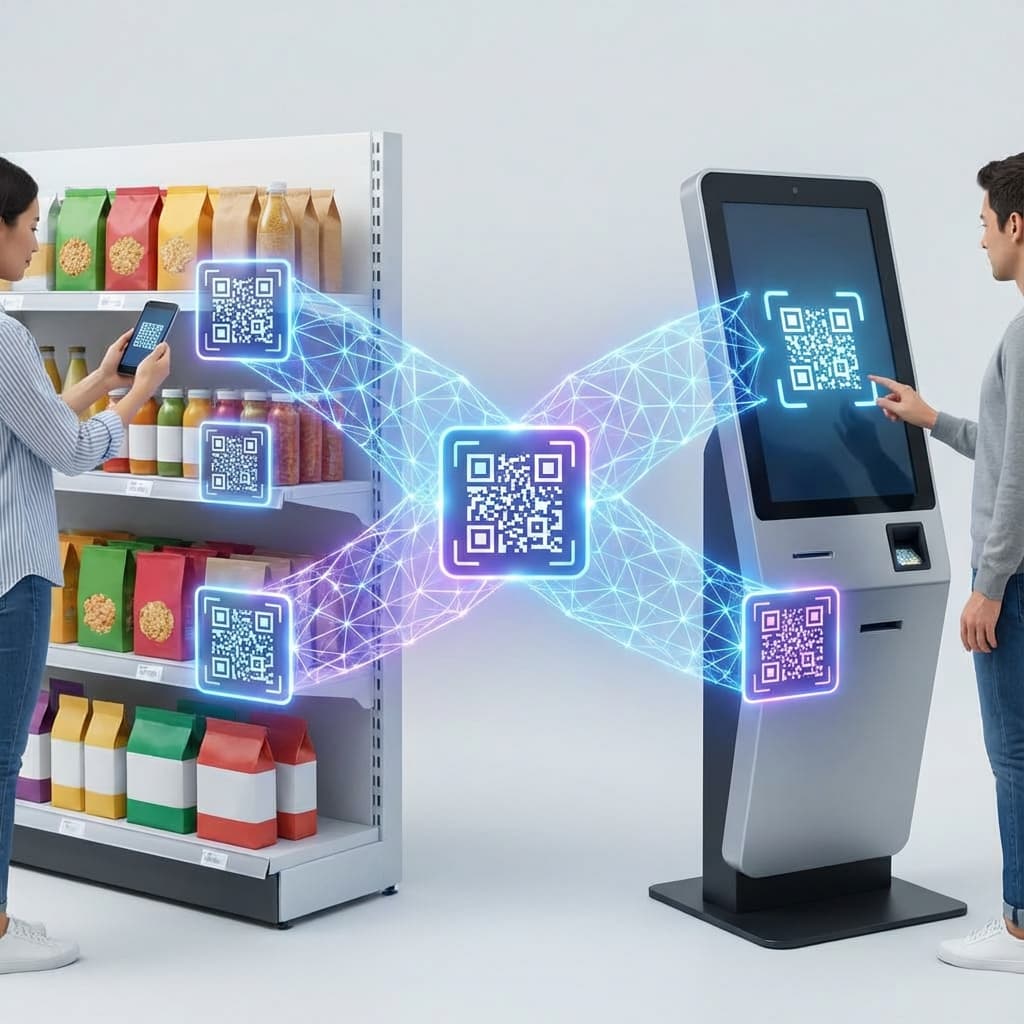
Retail Self-Checkout – In-store displays use QR codes to enable quick payments, product information, or promotional lookups without additional hardware.
Case Study Impact: A coffee chain in China reported 30% higher engagement by adding QR codes to disposable cups that connected customers to digital raffles and loyalty rewards.
QR code marketing vs. other channels
QR codes occupy a unique space: low cost with real-time data and instant engagement. Traditional print ads offer no tracking. Digital ads require screen time and compete for attention. Email needs an existing list. QR codes work at the moment of physical contact—packaging, signage, receipts—and convert that moment into measurable action.
The future of QR code marketing
Augmented reality integration
QR codes are becoming portals for immersive experiences. Scan a code, see a product in your room, try before you buy.
Gamification and rewards
Scans trigger instant rewards, unlock levels, or build toward prizes. This transforms mundane transactions into engaging micro-experiences.
Enhanced analytics
Advanced tracking reveals patterns about optimal timing for campaigns, audience segmentation, and engagement modeling.
Connected packaging
QR codes on products create two-way communication—customers scan for info, brands learn about usage and preferences.
QR code marketing security: what you need to know
Is it safe? Yes, if you generate codes from secure platforms. The real risk is malicious codes—ones that redirect to phishing sites or scams. Mitigation: use established platforms, verify code sources, and educate users.
Do all phones work? Nearly all modern smartphones read QR codes natively via the camera app. Compatibility is nearly universal.
What about offline content? QR codes can store offline data like text, contact information, or WiFi credentials. Internet isn't always required.
Getting started: your QR code marketing checklist
Start by defining your campaign objective. Choose a reliable QR code platform. Create dynamic QR codes that you can edit after printing. Decide on distribution channels—physical, digital, or events. Design clear calls-to-action that tell people exactly what they get. Set up tracking and analytics from day one. Test codes across devices before launch. Monitor performance and optimize based on data. Iterate and scale what works.
Conclusion
QR Code Marketing is no longer a nice-to-have—it's essential infrastructure for modern campaigns. It connects offline to online seamlessly, delivers instant engagement, and provides measurable data that drives real business decisions.
The combination of low cost, high accessibility, real-time tracking, and instant engagement makes QR codes one of the most efficient marketing tools available. Whether you're a small business testing new channels or a global brand scaling campaigns, QR codes work.
The question isn't whether to use QR codes. It's how to use them strategically.
Ready to turn every scan into revenue?
You can keep guessing what works or start measuring every interaction with VISU.
Frequently asked questions about QR code marketing
What is QR code marketing in simple terms?
QR code marketing means using QR codes as entry points into your campaigns—sending people from physical touchpoints like packaging, posters, or tables to digital experiences such as landing pages, discounts, apps, and loyalty flows you can track.
Do people really scan marketing QR codes?
Yes. Studies show that most smartphone users scan QR codes regularly, especially on packaging, menus, event materials, and ads. Results depend on clear value, good placement, and a simple call to action explaining why they should scan.
Where should I place QR codes in my campaigns?
Place QR codes on high-intent touchpoints such as product packaging, receipts, table tents, in-store posters, event badges, and printed tickets. Keep them visible, avoid cluttered backgrounds, and always include a clear call to action next to the code.
How do I measure the success of QR code marketing?
Measure total scans, unique visitors, time and location of scans, device types, and post-scan actions like signups, purchases, app installs, or repeat visits. Dynamic QR codes with analytics and UTM parameters let you compare placements and calculate ROI per campaign.
Do I need a special app or platform for QR code marketing?
You do not need a special app to scan QR codes because most modern cameras handle that natively. However, you do need a dedicated platform if you want dynamic codes, analytics, A/B testing, rewards, and monetization features that go beyond basic generation.