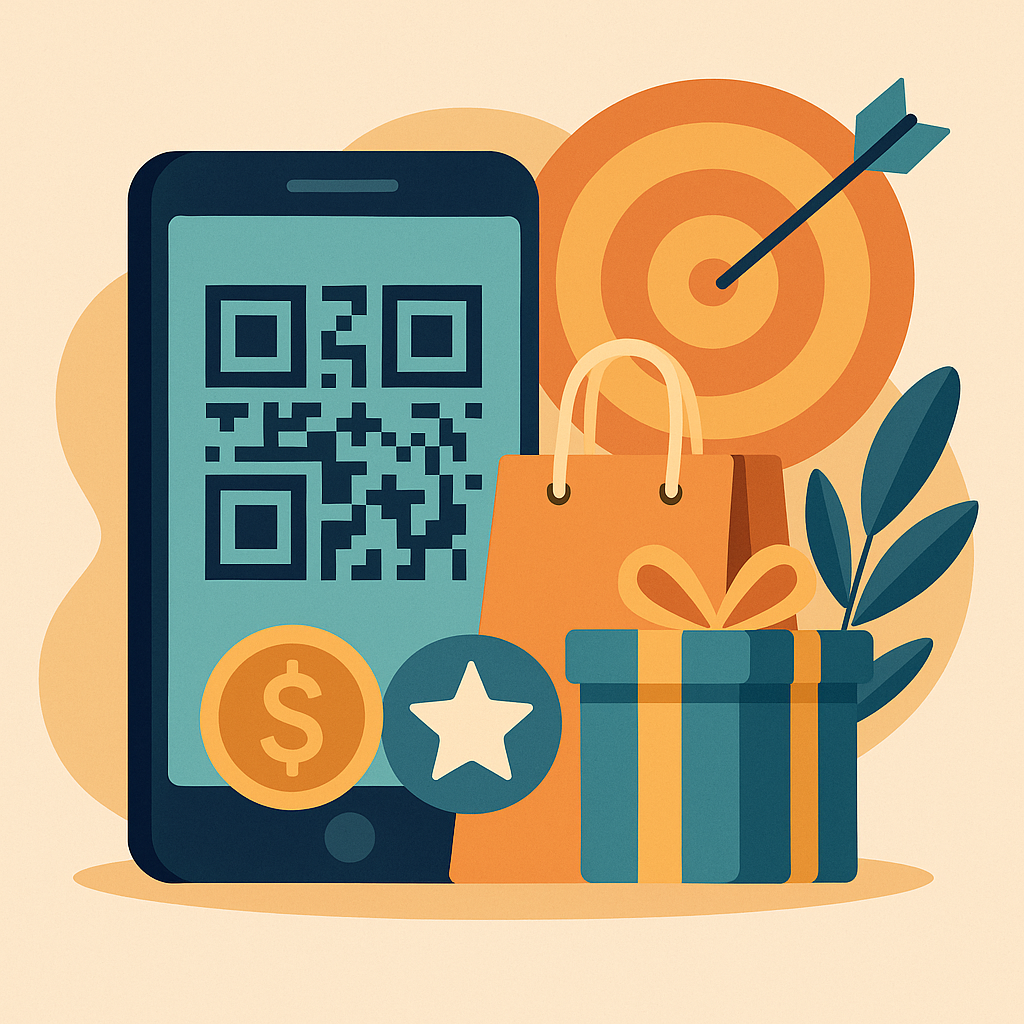

Retail is transforming. Rather than relying on static displays and passive shoppers, forward-thinking stores now combine QR codes with game mechanics to create interactive, rewarding experiences that drive engagement, loyalty, and sales.
By turning everyday shopping into an interactive journey, retailers aren’t just displaying products anymore—they’re creating moments that matter.
Why Traditional Retail Marketing Is Failing
The conventional retail marketing model faces a fundamental breakdown.
Rising costs force small and mid-sized retailers out of the competitive landscape. According to Digital 2025: Global Advertising Trends, marketers spent nearly USD 1.1 trillion on global advertising in 2024—a 7.3% increase from 2023. For independent stores, competing at these price points is economically impossible.
Consumer resistance compounds the problem. Globally, 31.5% of internet users say they use ad blockers at least sometimes (as of Q1 2024). Beyond that, shoppers actively skip and ignore intrusive advertising. Traditional display banners and in-store signage generate minimal engagement because customers have learned to tune them out.
Attention itself has become the scarcest resource. Shoppers multitask, check their phones, and mentally filter out marketing noise. Brands have perhaps five seconds to make an impression before losing customer focus entirely.
This environment demands a fundamentally different approach. Gamification provides it.
How Gamification Changes the Equation
Rather than interrupting customers, gamified QR codes reward engagement. The shift is subtle but powerful: customers stop being targets and become participants.
Here’s the core mechanism. A shopper scans a QR code on packaging, a shelf display, or a receipt. Instead of opening a static link, the code triggers an interactive element: a spin-the-wheel game, a scratch-to-win card, or a mini-challenge. The customer instantly receives tangible value—a discount, loyalty points, or digital tokens.
This structure creates simultaneous value for all three parties:
The customer receives immediate gratification and feels their attention has genuine worth.
The store generates new revenue streams from sponsored content while deepening customer relationships.
The advertiser reaches genuinely engaged audiences rather than passive viewers.
Market Validation: Gamification Is Working
The numbers confirm what forward-thinking retailers already know.
Gamification boosts user engagement by 100-150% compared to traditional approaches. Moreover, retail accounts for 28.5% of the global gamification market in 2024, with reward programs and engaging shopping apps driving participation.
More impressively, gaming aspects have been shown to increase customer acquisition by as much as 700%. The gamification industry itself is expanding rapidly, growing at a compound annual rate of 26.1%, with the market projected to reach $172.4 billion by 2030.
These aren’t marginal improvements. They’re fundamental shifts in customer behavior.
Practical Applications Across Retail Categories
Coffee Shops and Quick Service A QR code on a coffee cup unlocks instant rewards or loyalty points. Importantly, customers who scan once are significantly more likely to return. Moreover, the barrier to participation is essentially zero—anyone with a smartphone can engage immediately.
Supermarkets and Grocery Strategic QR codes in specific sections encourage exploration throughout the store. For instance, a shopper scanning codes across different departments might unlock progressive rewards, increasing basket size and dwell time. This approach essentially turns the entire retail space into an engagement ecosystem.
Fashion and Beauty Retailers like Sephora already use QR codes to connect customers with tutorials and reviews. Furthermore, adding gamified layers—leaderboards, challenges, or achievement badges—transforms passive scanning into genuine interaction. Consequently, customers feel invested in the experience rather than merely viewing static content.
Events and Pop-Ups Limited-time activations inherently create urgency through scarcity. Additionally, attendees scan for raffle entries, exclusive content, or sponsor offers. Combined with gamification mechanics, this structure drives exceptional engagement because customers know the opportunity is temporary.
How Gamified QR Codes Create Business Value
New Revenue Channels Retailers monetize physical touchpoints by allowing advertisers to pay for scan-triggered content. Essentially, every shelf, bag, and receipt becomes potential revenue-generating real estate. This model transforms passive spaces into active marketing channels.
Deeper Customer Loyalty Customers who receive rewards are measurably more likely to return. Importantly, small, frequent incentives build habit formation more effectively than occasional large discounts. Subsequently, a shopper returning weekly for loyalty points becomes genuinely embedded in the store’s ecosystem rather than a transactional customer.
First-Party Data Collection Unlike traditional promotions, gamified QR codes track engagement in real time. Consequently, retailers can analyze which products generate interest, when customers engage most, and which demographics respond to specific offers. Moreover, this intelligence enables precise, data-driven campaign optimization that continuously improves performance.
Reduced Marketing Dependency Rather than spending heavily on external advertising, retailers create word-of-mouth momentum. Additionally, engaged customers naturally share experiences with friends, creating organic reach that paid channels cannot match. As a result, the business develops sustainable growth through genuine customer advocacy.
Implementation: Getting Started
Step 1: Define Your Objective Are you seeking increased loyalty? Higher sales volume? New customer acquisition? Clarity here shapes every subsequent decision.
Step 2: Choose Appropriate Rewards Consider what drives behavior in your specific context. A coffee shop might offer free refills. A clothing store might provide discounts. The key is ensuring rewards feel substantial enough to motivate action.
Step 3: Design Clear Call-to-Action Make the path to engagement obvious. “Scan to play and win” works better than vague instructions. Visual clarity reduces friction.
Step 4: Test and Optimize Start with a limited rollout. Track which game mechanics resonate. A/B test different reward structures. Let data guide expansion.
Step 5: Promote Consistently Placement matters enormously. QR codes on receipts reach recent customers. Codes on packaging reach a broader audience. Codes on displays reach engaged in-store shoppers. Use multiple placements for comprehensive reach.
Addressing Common Concerns
Won’t customers tire of scanning? Only if there’s insufficient value. Meaningful, immediate rewards—not generic ones—drive repeat engagement. Crucially, the key is perceived fairness: customers know their attention has worth and feel respected by the brand.
Is implementation expensive? QR code printing costs nearly nothing. Importantly, the primary investment is campaign design and reward fulfillment, both of which modern platforms handle efficiently. Consequently, most retailers can launch with minimal upfront cost and scale gradually.
Do gamified QR codes work for small businesses? Absolutely, they do. Indeed, a neighborhood café benefits just as much as a large supermarket. Furthermore, gamification’s effectiveness doesn’t depend on business size—it depends on genuine customer rewards and consistent engagement.
Are QR code scans secure? Yes, when using secure HTTPS links and trusted platforms. Moreover, reputable platforms prioritize data privacy and encryption to protect customer information.
The Future of Retail Engagement
Emerging technologies will expand these applications substantially. Augmented reality treasure hunts could guide customers through stores. AI-driven personalization might deliver offers tailored to individual purchase history. Real-time multiplayer games tied to brand sponsorships could create community experiences.
These aren’t distant possibilities. Forward-thinking retailers are implementing them now.
Turn Every Aisle Into an Engagement Engine
VISU connects every in-store QR scan to gamified campaigns, rewards, and real-time analytics — so you can prove, repeat, and scale the revenue impact of each interaction.
Conclusion
Retail is shifting from interruptive marketing to participatory engagement. Gamified QR codes sit at the center of this transformation, enabling retailers to reward attention, deepen loyalty, and generate measurable returns.
Stores adopting this approach early develop sustainable competitive advantages. They understand their customers better. They build stronger relationships. They create engagement opportunities that traditional channels simply cannot replicate.
The question isn’t whether gamification works. The data confirms it does. The question is how quickly retailers will adapt to this new reality.